

What Determines Brick Machine Output Capacity and How Can Manufacturers Optimize It?
January 21, 2026
Yes, brick machine output capacity is not determined by a single specification or machine parameter. Instead, it is the result of multiple interrelated technical, operational, and organizational variables working together across the entire production system. For brick manufacturers, investors, and plant managers, understanding brick machine output capacity factors is essential because output directly affects unit cost, delivery capability, and return on investment. For example, two factories using the same machine model may achieve very different daily production volumes due to differences in material preparation, automation level, or curing logistics. This article breaks down the core factors that influence output capacity and explains how B2B decision-makers can optimize production performance in a structured and sustainable way.
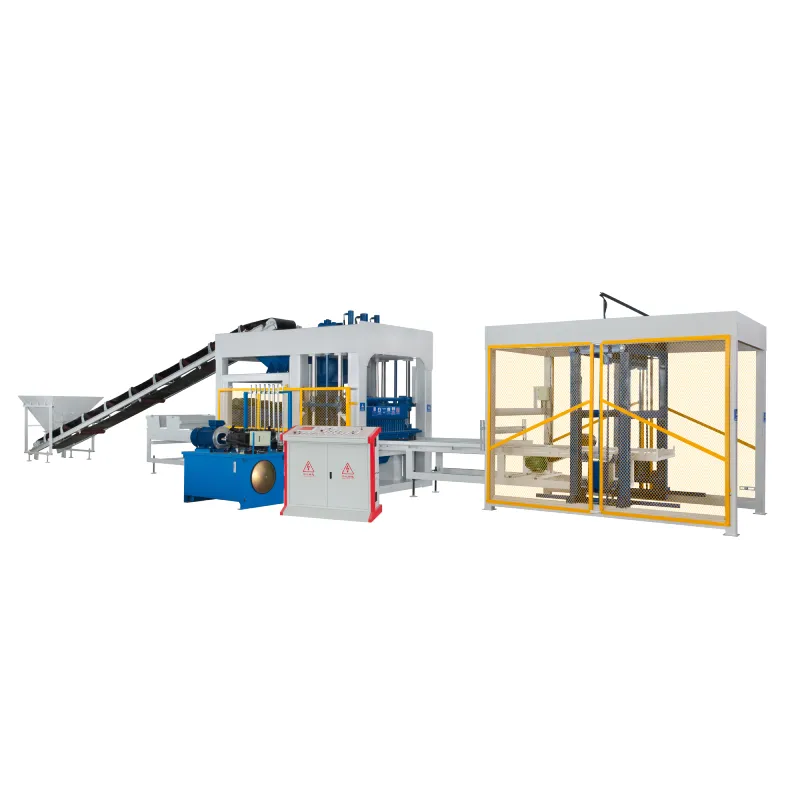
Machine Design and Mechanical Configuration
The machine itself forms the foundation of production capacity. Its design determines how efficiently raw materials are transformed into finished bricks.
Structural Rigidity and Frame Design
A brick machine designed for industrial-scale operation must maintain structural stability under continuous vibration and pressure. Frame deformation, even at a micro level, leads to inconsistent compaction and cycle delays.
Machines with reinforced frames and precision-welded structures maintain stable cycle times over long production runs, which is critical for predictable output.
Vibration System and Pressing Technology
Vibration frequency, amplitude, and synchronization directly influence how quickly material settles into molds. Efficient vibration reduces cycle time while maintaining product density.
Hydraulic or servo-controlled pressing systems further improve consistency, especially in high-capacity operations where small timing variations can accumulate into significant output losses.
Mold Change Efficiency
Output capacity is also affected by how quickly molds can be changed or adjusted. Factories producing multiple product types benefit from modular mold systems that reduce downtime during product transitions.
Raw Material and Mix Design Factors
Even the most advanced machine cannot achieve high output if material preparation is inconsistent.
Aggregate Quality and Grading
Uniform particle size distribution allows faster filling and compaction. Poorly graded aggregates increase cycle time and raise rejection rates due to incomplete filling or surface defects.
Material screening and controlled storage play an important role in stabilizing output.
Cement Content and Moisture Control
Moisture variation has a direct impact on compaction speed. Too dry and the mix resists consolidation; too wet and it requires longer vibration to achieve strength.
In cement-based production, consistent binder distribution is essential for rapid demolding and high throughput. This is particularly relevant when operating a cement block machine in continuous production environments.
Mixing System Capacity
The mixer must support the machine’s cycle speed without interruption. Undersized mixers often become hidden bottlenecks that cap daily output despite high machine capability.
Production Line Integration and Material Flow
Brick machine output capacity should always be evaluated at the system level rather than as a standalone metric.
Integrated vs Standalone Equipment
A standalone machine may achieve impressive cycle speeds but suffer from downstream congestion in pallet handling, stacking, or curing.
An integrated concrete block production line connects batching, molding, conveying, stacking, and curing into a continuous process, significantly improving effective output capacity.
Pallet Circulation and Handling
Insufficient pallets slow production because the machine must wait for empty pallets to return. Automated pallet circulation systems reduce idle time and stabilize output across shifts.
Curing Space and Turnover Rate
Curing capacity often limits output more than molding speed. If cured products cannot be cleared quickly enough, production must slow down regardless of machine performance.
Automation Level and Human Factors
Automation influences both peak output and output consistency over time.
Manual vs Automatic Operation
Manual and semi-automatic systems rely heavily on operator skill and reaction time. Output fluctuates with staffing levels and experience.
Fully automatic systems reduce variability, maintain consistent cycle times, and allow higher sustained output with fewer operators.
Operator Training and Process Discipline
Even automated plants require trained personnel. Incorrect machine settings, delayed maintenance responses, or improper material adjustments can significantly reduce effective output.
Well-trained teams maintain stable production and prevent small issues from escalating into extended downtime.
Maintenance Strategy and Equipment Reliability
Capacity planning must account for long-term performance, not just initial output.
Preventive Maintenance Scheduling
Unplanned downtime is one of the most significant negative brick machine output capacity factors. Preventive maintenance reduces unexpected stoppages and stabilizes daily production.
Wear Parts and Replacement Planning
Molds, liners, and vibration components wear over time. Monitoring wear patterns allows planned replacements without disrupting production schedules.
Data Tracking and Performance Monitoring
Factories that track cycle time, downtime causes, and rejection rates gain actionable insights into capacity losses and improvement opportunities.
Comparison Table: Key Output Capacity Factors and Their Impact
| Factor Category | Primary Influence on Output | Risk if Neglected |
|---|---|---|
| Machine structure | Cycle stability | Frame deformation, vibration loss |
| Raw material quality | Compaction speed | High rejection rate |
| Production line layout | Material flow | Bottlenecks, idle time |
| Automation level | Output consistency | Labor dependency |
| Maintenance planning | Long-term capacity | Unplanned downtime |
Aligning Output Capacity with Market Demand
High capacity is valuable only when aligned with real demand.
Volume Production vs Product Flexibility
Factories focused on infrastructure or housing projects prioritize stable, high-volume output. Others producing customized blocks may accept lower output for higher margins.
Choosing the right block making machine configuration allows manufacturers to balance flexibility and capacity based on market strategy.
Shift Planning and Energy Considerations
Extending production hours increases output only if utilities, staffing, and maintenance support scale accordingly. Energy availability often becomes a limiting factor in multi-shift operations.
Contact our technical team to discuss your brick machine output capacity goals.
Common Misconceptions About Output Capacity
One common misconception is that higher vibration automatically increases output. In reality, excessive vibration can damage molds and increase maintenance downtime.
Another misunderstanding is equating rated capacity with actual production. Real-world output must account for curing, handling, and operational variability.
FAQ: Brick Machine Output Capacity Factors
Q1: What is the most critical factor affecting brick machine output capacity?
System integration is often the most critical factor, as bottlenecks outside the machine can limit overall output.
Q2: Can automation alone guarantee higher capacity?
Automation improves consistency, but material preparation and curing capacity must also support higher output.
Q3: How often should capacity performance be reviewed?
Regular monthly reviews help identify trends and prevent gradual output decline.
Q4: Is it better to invest in a larger machine or a complete production line?
In many cases, a well-integrated production line delivers higher effective capacity than a single larger machine.
About Kimberly Machinery
Kimberly Machinery is a professional brick machine supplier dedicated to providing reliable, high-efficiency block and brick production solutions. With a strong focus on engineering integrity, scalable automation, and long-term operational performance, Kimberly Machinery supports manufacturers worldwide in optimizing output capacity and controlling lifecycle costs. Our equipment and technical services are designed to help customers build stable, profitable production systems.
References
- Wikipedia, Concrete masonry unit, https://en.wikipedia.org/wiki/Concrete_masonry_unit
- Wikipedia, Industrial automation, https://en.wikipedia.org/wiki/Industrial_automation
- International Labour Organization, Productivity in Manufacturing