


Buyer’s Guide: 7 Expert Factors for Choosing a Cement Block Maker in 2025
December 10, 2025
Abstract
This analysis explores the multifaceted process of selecting a cement block maker in the context of 2025's construction industry, with a specific focus on the burgeoning markets of Southeast Asia and the Middle East. It posits that the decision transcends a mere capital expenditure, representing a strategic investment that shapes a business's productivity, market competitiveness, and environmental stewardship. The discourse provides a granular examination of seven pivotal factors, beginning with the foundational choice between high-frequency vibration technology, characteristic of QT series automatic machines, and the immense force of static hydraulic presses. It further investigates the imperatives of production capacity, raw material versatility, mold quality, manufacturer reliability, ancillary systems, and overall economic viability. By synthesizing technical specifications with regional economic and regulatory landscapes, the guide aims to equip prospective buyers with a comprehensive framework for making an informed, profitable, and forward-looking decision that aligns operational capacity with long-term business objectives.
Key Takeaways
- Evaluate if a QT series or hydraulic press cement block maker better suits your materials.
- Calculate desired production capacity against machine cycle time and automation level.
- Prioritize machines that efficiently process sustainable materials like fly ash.
- Invest in high-quality, heat-treated molds for producing diverse, precise blocks.
- Verify manufacturer support, warranty, and availability of spare parts in your region.
- Plan for the entire production line, including mixers, batchers, and curing systems.
- Analyze long-term ROI based on operational savings in labor, energy, and materials.
Table of Contents
- Factor 1: Deconstructing Core Technologies – Vibration vs. Static Hydraulic Pressure
- Factor 2: Quantifying Success – Production Capacity, Speed, and Automation
- Factor 3: The Recipe for Resilience – Raw Material Compatibility and Efficiency
- Factor 4: The Shape of Profit – Mold Quality, Versatility, and Precision
- Factor 5: The Assurance of Longevity – Machine Construction and Manufacturer Support
- Factor 6: The Ecosystem of Production – Integrating Ancillary Equipment
- Factor 7: The Final Calculation – Economic Viability and Regulatory Alignment
- Frequently Asked Questions (FAQ)
- Conclusion
- References
Factor 1: Deconstructing Core Technologies – Vibration vs. Static Hydraulic Pressure
The journey toward acquiring the ideal cement block maker begins not with a catalogue of models, but with a fundamental understanding of the forces that shape a simple mixture of sand, cement, and water into a durable building component. At the heart of every machine lies a core technology responsible for compaction—the process of transforming a loose, granular mix into a dense, solid mass. The two dominant philosophies in modern block manufacturing are high-frequency vibration, often paired with hydraulic assistance, and high-pressure static hydraulic compaction. These are not merely different mechanisms; they represent distinct approaches to achieving density, strength, and finish, each with profound implications for the types of raw materials you can use, the products you can create, and the overall quality of your output. To choose wisely is to first comprehend these forces with clarity.
The Dynamic World of High-Frequency Vibration: The QT Series Method
Imagine trying to pack a jar with sand and pebbles as tightly as possible. Shaking the jar vigorously causes the smaller particles to shift and settle into the voids between the larger ones, creating a denser arrangement. This is the intuitive principle behind the technology that drives the popular QT series of automatic block making machines. These systems employ powerful, eccentrically weighted motors that generate intense, high-frequency vibrations, typically in the range of 4,500 to 5,100 revolutions per minute (Hongfa Mach, 2021). This vibration energy is transferred directly to the mold box and, in many advanced designs, simultaneously to the tamper head that presses from above.
When the wet concrete mix is subjected to this vibration, a fascinating phenomenon known as liquefaction occurs. The intense shaking temporarily reduces the internal friction between the aggregate particles, causing the mixture to behave like a fluid. This fluid-like state allows the particles to rearrange themselves into their most compact configuration, drastically reducing the volume of air voids. While the vibration is arranging the particles, a hydraulic system applies a supplementary, yet significant, downward pressure. This combined action—vibration for particle arrangement and hydraulic pressure for final consolidation—is exceptionally effective for a wide range of standard concrete mixes. It excels at producing lightweight hollow blocks, as the vibration ensures the mix flows evenly around the core pins of the mold, creating uniform wall thicknesses. The result is a block that is both strong and dimensionally precise, manufactured with a remarkably short cycle time, often just 15 to 25 seconds. A modern cement block maker of this type is a symphony of controlled chaos, turning a loose pile of aggregate into a perfect geometric form with speed and repetition.
The Unyielding Force of Static Hydraulic Pressure
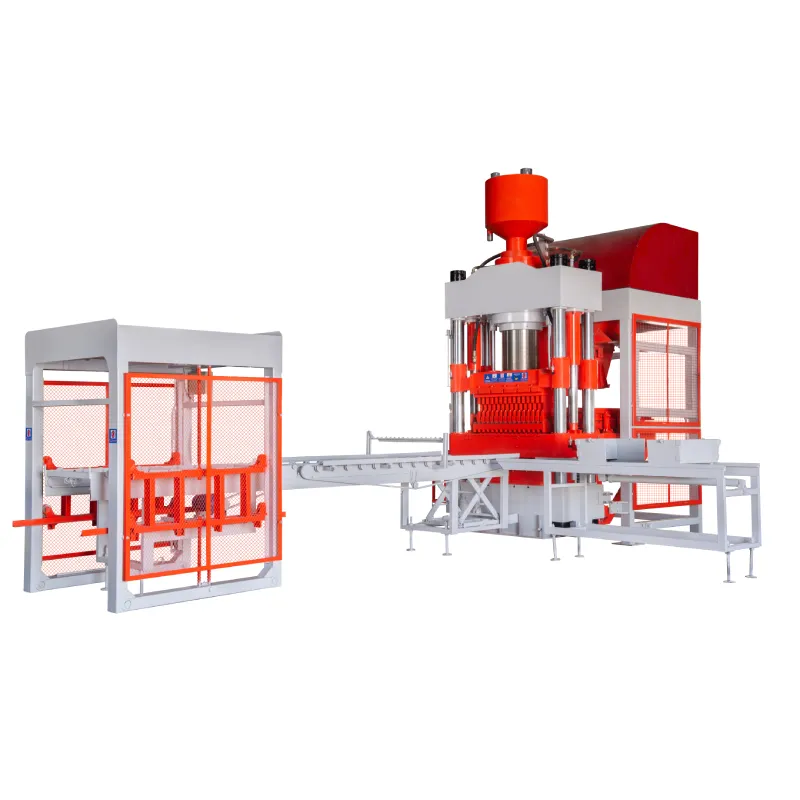
If the vibration method is a dynamic dance of particles, the static hydraulic press method is an exercise in overwhelming, deliberate force. This technology places its faith primarily in the immense power of hydraulics to achieve compaction. Instead of relying on vibration to arrange the particles, a static hydraulic cement block maker utilizes one or more large hydraulic cylinders to exert massive, direct pressure on the material within the mold. While some models may incorporate a light, secondary vibration to aid in filling the mold, the defining characteristic is the application of immense static force, often exceeding 100 tons.
This approach is particularly well-suited for semi-dry or low-moisture mixes, which do not flow as easily under vibration. The sheer pressure is capable of forcing these stiffer materials into a dense, solid state. Think of it as compressing coal dust into a briquette; the force itself binds the material. This makes hydraulic presses the technology of choice for producing items that require exceptional density and compressive strength, such as high-end architectural pavers, heavy-duty industrial slabs, and certain types of interlocking blocks. The resulting products often have an exceptionally smooth, almost polished surface finish and razor-sharp edges, a direct consequence of the material being pressed against the hardened steel of the mold with such extreme force. The cycle time may be slightly longer than that of a top-tier vibration machine, but the focus is on achieving maximum density and a premium finish.
Matching Technology to Your Vision: Materials and Products
The choice between these two core technologies is not an abstract one; it is a practical decision dictated by your business plan. What raw materials are most abundant and cost-effective in your region? What specific products does your target market demand? Answering these questions will illuminate the correct technological path.
| Feature | QT Series (Vibration + Hydraulic) | Static Hydraulic Press |
|---|---|---|
| Primary Compaction | High-frequency vibration | High static hydraulic pressure |
| Ideal Mix Type | Standard wet concrete mixes | Semi-dry and low-moisture mixes |
| Key Advantage | High speed, excellent for hollow blocks | Exceptional density and surface finish |
| Best For Products | Hollow blocks, standard pavers, curb-stones | High-density solid blocks, architectural pavers |
| Raw Material Focus | Sand, gravel, cement, fly ash | Soil, clay, industrial waste with low water content |
| Energy Profile | Powers vibration motors and hydraulics | Primarily powers a large hydraulic pump |
For a business in Southeast Asia aiming to serve the mass housing market, where the demand for standard hollow blocks is high and access to aggregates like sand and gravel is good, a QT series machine is almost certainly the superior choice. Its speed, efficiency, and effectiveness with conventional mixes make it an engine of mass production. Several manufacturers, such as Yixin and QGM, offer a wide range of these machines, from smaller, introductory models to massive, fully automatic production lines (; ).
Conversely, an entrepreneur in the Middle East looking to supply a luxury villa project with unique, high-strength architectural pavers might find a static hydraulic press to be a better fit. The ability to create products with superior aesthetic qualities and density could provide a significant competitive advantage in a market that values premium finishes. This type of cement block maker allows for a focus on quality over sheer quantity, catering to a niche but profitable segment. The decision, therefore, rests on a clear-eyed assessment of your resources, your market, and your ultimate product goals.
Factor 2: Quantifying Success – Production Capacity, Speed, and Automation
Once you have a grasp of the core technologies, the next consideration shifts from the "how" of block making to the "how much" and "how fast." Production capacity is the engine of your revenue. It dictates your ability to fulfill large orders, meet tight construction deadlines, and achieve the economies of scale that lead to profitability. However, capacity is not a single number on a spec sheet; it is the result of a complex interplay between the machine's molding cycle time, the number of blocks produced per cycle, and the level of automation that governs the entire workflow. For a business owner, evaluating these interconnected variables is the process of translating a machine's mechanical potential into a tangible financial forecast.
From Cycle Time to Daily Output: The Core Calculation
At its most basic level, a machine's theoretical capacity is a simple calculation. You take the number of blocks the mold can produce in one drop, and you divide it by the molding cycle time. Then you multiply this out over the course of a working day.
Let's consider a practical example. A mid-range QT6-15 cement block maker might have a mold that produces 6 standard 8-inch (400x200x200mm) hollow blocks per drop. The manufacturer's specification sheet might list a molding cycle time of 15 seconds (Hongfa Mach, 2021).
The calculation would look like this:
- Blocks per cycle: 6
- Cycles per minute: 60 seconds / 15 seconds = 4 cycles
- Blocks per minute: 6 blocks/cycle * 4 cycles/minute = 24 blocks
- Blocks per hour: 24 blocks/minute * 60 minutes/hour = 1,440 blocks
- Blocks per 8-hour shift: 1,440 blocks/hour * 8 hours = 11,520 blocks
This number, 11,520 blocks per day, represents the machine's theoretical maximum output. It is a vital benchmark for comparison. A larger machine, like a QT12-15, might produce 12 blocks per cycle, effectively doubling this output to over 20,000 blocks per day under ideal conditions (). However, it is a deep mistake to take this theoretical number as a guarantee. Real-world production is always lower due to factors like operator shift changes, routine cleaning, mold changes, and unforeseen stoppages. A prudent business plan will factor in an efficiency rate, typically around 80-90% of the theoretical maximum, to arrive at a more realistic daily production target. When you ask a supplier for a quote, don't just ask for the daily capacity; ask for the cycle time and the number of blocks per mold. This allows you to perform the calculation yourself and build a more robust financial model.
The Spectrum of Automation: From Semi-Automatic to Fully Integrated Lines
The level of automation is perhaps the single most significant factor influencing both the upfront investment and the long-term operational cost of a cement block maker plant. The distinction between a semi-automatic and a fully automatic machine is not just a matter of convenience; it defines the entire production philosophy.
A semi-automatic machine, like a QT4-24 model, automates the core processes of feeding material into the mold, compaction, and demolding the blocks onto a pallet. However, the subsequent steps are manual. A worker must physically take the pallet of fresh, "green" blocks and transport it to the curing area. Another worker is needed to feed empty pallets into the machine. While the initial cost of such a machine is significantly lower, it requires a larger labor force and its overall production speed is limited by the efficiency of these manual tasks. This can be an excellent entry point for a small business or for operations in areas where labor costs are very low, but it is difficult to scale.
A fully automatic production line represents a quantum leap in efficiency. In such a system, the cement block maker is just one component in a seamlessly integrated ecosystem, all orchestrated by a central Programmable Logic Controller (PLC).
- Automatic Batching & Mixing: Raw materials are automatically weighed and conveyed to the mixer.
- Block Making: The main machine operates continuously, dropping finished blocks onto pallets.
- Automatic Stacking (Stacker): A machine called a stacker, or "elevator," automatically lifts the pallets of green blocks and arranges them into a tall stack, typically 5-10 layers high.
- Wet Block Transport: A specialized forklift or a "finger car" system then transports the entire stack to the curing kiln.
- Dry Block Handling: After curing, a "finger car" retrieves the stack and a "de-stacker" or "lowerator" separates the pallets.
- Cubing & Packaging: The cured blocks are then sent to a cuber, which arranges them into neat cubes for shipping, which can then be automatically strapped or wrapped.
This level of automation, as seen in high-end QT10-15 or QT12-15F lines, requires a much higher initial investment but offers profound long-term benefits (). Labor costs are slashed, as a whole line might be managed by only 3-5 people. Production is faster, more consistent, and less prone to human error. For any business with ambitions of becoming a major supplier in its region, a fully automatic concrete block making machine is not a luxury; it is the standard for competitive manufacturing.
The Brain of the Operation: The Importance of the PLC and Control System
In a modern cement block maker, the PLC is the central nervous system. It is a ruggedized industrial computer that controls every motor, valve, and sensor in the production line. The quality and sophistication of this system are paramount. Look for machines that use PLCs and touch-screen interfaces from globally recognized brands like Siemens, Mitsubishi, or Schneider Electric. The benefits of a high-quality control system are threefold.
First, reliability. A well-programmed system from a reputable brand is less likely to suffer from software glitches that can halt production. The hardware itself is designed to withstand the dust, vibration, and temperature fluctuations of an industrial environment.
Second, user-friendliness. A modern touch-screen interface allows the operator to monitor the entire production line in real-time, adjust parameters like vibration time and pressure, and receive diagnostic information if a fault occurs. A system that can be displayed in multiple languages, including English, is a massive advantage for training and operating in the diverse markets of Southeast Asia and the Middle East.
Third, flexibility. A sophisticated PLC allows for the storage of multiple "recipes" or production parameters for different types of blocks. Changing from producing hollow blocks to solid pavers can be as simple as physically changing the mold and then selecting the corresponding program on the touch screen. This allows a manufacturer to be agile and responsive to changing market demands. When evaluating a machine, do not be afraid to ask for a demonstration of the control system. Its intuitive operation and robust design are a strong indicator of the overall quality of the cement block maker.
Factor 3: The Recipe for Resilience – Raw Material Compatibility and Efficiency
A cement block maker is an instrument of transformation, but its performance is fundamentally dependent on the quality and nature of the ingredients it is fed. The selection of a machine cannot be made in a vacuum; it must be directly informed by a deep consideration of the raw materials that are locally available, economically viable, and environmentally sustainable. In the rapidly developing economies of Southeast Asia and the Middle East, this calculation is becoming increasingly complex. While traditional materials like cement, sand, and gravel remain the bedrock of the industry, a powerful shift is underway toward the utilization of industrial byproducts and alternative aggregates. The most resilient and profitable block production businesses in 2025 will be those whose machinery is not only efficient with traditional mixes but also adept at turning yesterday's waste into tomorrow's building materials.
The Classic Formula: Cement, Sand, and Aggregates
The conventional concrete block is a composite material, a carefully balanced recipe of several key components. Understanding their roles is the first step in designing a proper mix.
- Cement: This is the binder, the active ingredient that reacts with water in a process called hydration to form the crystalline matrix that glues everything together. Ordinary Portland Cement (OPC) is the most common type. The proportion of cement in the mix is a primary determinant of both the final strength and the cost of the block.
- Fine Aggregate (Sand): Sand fills the smaller voids between the larger aggregate particles. The quality of the sand is vital. It must be clean, free from clay, silt, and organic impurities, which can interfere with the cement's hydration process and weaken the block. The particle size distribution, or "grading," of the sand also plays a role in the workability of the mix.
- Coarse Aggregate: This typically consists of crushed stone or gravel, usually up to 10mm in size for block production. These larger particles form the structural skeleton of the block, contributing to its overall strength and stability. Like sand, it must be clean and well-graded.
- Water: Water is the catalyst. It is required to initiate the chemical reaction of hydration. The water-to-cement ratio is one of the most parameters in concrete technology. Too little water, and the cement will not fully hydrate, resulting in a weak, porous block. Too much water, and the block will be weak, prone to shrinkage cracking, and difficult to handle when "green." Block making machines use what is known as a "low-slump" or "semi-dry" mix, which has just enough water for hydration but is stiff enough to hold its shape immediately after being demolded.
A prospective buyer must first assess the local availability and cost of these core ingredients. Are there reliable suppliers of high-quality cement? Are there quarries or riverbeds providing clean, well-graded sand and gravel at a reasonable price? The economics of your entire operation will hinge on the answers to these questions.
The Green Revolution: Embracing Fly Ash, Slag, and Construction Waste
The reliance on virgin materials, particularly cement, comes with a significant environmental and economic cost. Cement production is incredibly energy-intensive and is responsible for an estimated 8% of global CO2 emissions (Chatham House, 2018). This reality has spurred a global search for supplementary cementitious materials (SCMs) that can replace a portion of the cement in a mix, reducing cost and environmental impact without compromising performance.
Fly Ash: As discussed previously, fly ash is a fine powder byproduct from coal-fired power plants. When used in a concrete mix, it undergoes a "pozzolanic reaction," reacting with a byproduct of cement hydration (calcium hydroxide) to form more of the strength-giving calcium-silicate-hydrate gel. This means a block made with, for example, 30% fly ash can be just as strong, or even stronger, than a block made with 100% cement, and it will be cheaper to produce. Fly ash bricks also tend to have a finer surface texture and lower permeability, making them more durable (Thomas, 2021). For regions with coal power infrastructure, fly ash represents a massive, underutilized resource. A modern cement block maker, particularly a vibration-based QT series machine, is perfectly capable of handling fly ash mixes. The key is to ensure the control system allows for precise batching to maintain a consistent mix design.
Ground Granulated Blast-Furnace Slag (GGBS): A byproduct of iron and steel manufacturing, GGBS is another powerful SCM. It also contributes to long-term strength gain and significantly improves the durability of concrete, making it more resistant to chemical attack from sulfates and chlorides—a particularly valuable attribute in the coastal and saline environments common in the Middle East and parts of Southeast Asia.
Crushed Construction Waste: The demolition of old buildings generates mountains of concrete and masonry waste. With the right crushing and screening equipment, this waste can be processed into recycled aggregate. Using recycled aggregate reduces the demand on virgin quarries and alleviates the strain on landfills. A robust cement block maker with a durable mold and powerful compaction system can effectively utilize a certain percentage of recycled aggregate in its mix, further enhancing the operation's sustainability credentials.
Machine Features for Material Versatility
When selecting a cement block maker with material versatility in mind, several features become particularly salient.
- A Precise Batching System: Whether you are using fly ash, slag, or just a standard cement mix, consistency is paramount. An automated batching plant with accurate load cells is non-negotiable for a professional operation. It ensures that every batch has the exact same proportions, leading to uniform block quality.
- A High-Performance Mixer: Materials like fly ash are extremely fine and can be difficult to disperse evenly. A planetary or twin-shaft mixer provides a more intense and homogenous mixing action than a simple pan mixer, ensuring that the SCMs are fully integrated into the mix.
- Adjustable Vibration and Pressure: The optimal compaction parameters for a fly ash mix may be different from those for a standard sand/gravel mix. A machine with a sophisticated PLC that allows the operator to easily adjust the vibration frequency, amplitude, and hydraulic pressure provides the flexibility to fine-tune the production process for different recipes. This adaptability is a hallmark of a high-quality machine designed for the modern materials landscape. By choosing a machine with these capabilities, you are not just buying a piece of equipment; you are investing in the resilience and future-readiness of your business.
Factor 4: The Shape of Profit – Mold Quality, Versatility, and Precision
The cement block maker provides the force, but it is the mold that gives the block its form, its dimensions, and its identity. The mold is arguably the most critical and hardest-working component of the entire machine. It is subjected to immense pressure, intense vibration, and constant abrasion from the raw materials in every single cycle. The quality of the mold directly determines the quality of the final product, while its versatility dictates the range of products your business can offer to the market. To overlook the significance of the mold is to focus on the engine of a car while ignoring its wheels; without high-quality, precise wheels, the engine's power is useless.
The Anatomy of a High-Quality Mold
A block mold is not a simple steel box. It is a precision-engineered assembly consisting of the mold frame (the outer box) and the tamper head (or pressure head), which presses down from above. For hollow blocks, it also includes core pins that form the internal cavities. The difference between a cheap, low-quality mold and a professional-grade one lies in three key areas: material, heat treatment, and manufacturing tolerance.
Material: The steel used to construct the mold must be exceptionally hard and wear-resistant. Common, low-grade steel will quickly wear down from the abrasive action of sand and aggregate, causing the dimensions of the blocks to change. High-quality molds are made from special alloy steels, like manganese steel (e.g., Mn13), which are known for their toughness and ability to withstand impact and abrasion.
Heat Treatment: This is the invisible but vital process that transforms a good steel into a great one. After the mold is machined into its final shape, it undergoes a series of heating and cooling cycles known as heat treatment. Processes like carburizing and quenching create an extremely hard outer "case" on the steel surface, often reaching a Rockwell hardness of HRC 60 or more, while keeping the inner core of the steel slightly softer and tougher to prevent it from becoming brittle. A carburized depth of 1.2mm or more ensures that the mold can endure millions of cycles before its dimensions begin to degrade. When you inquire about a cement block maker, you must specifically ask about the mold's material and the heat treatment process. A reputable manufacturer like Zhengchen Machinery will readily provide these details, as they are a key indicator of quality (Zhengchen Machinery, 2022).
Manufacturing Tolerance: A precision mold is machined to extremely tight tolerances, often within a fraction of a millimeter. This ensures that every block produced is identical in size and shape. This uniformity is vital for masons on the construction site, as it allows them to build walls that are straight, level, and have consistent mortar joints. Blocks from a poor-quality, imprecise mold will cause frustration, slow down construction, and result in a lower-quality finished building.
Versatility as a Business Strategy
The construction market is not monolithic. It demands a wide variety of concrete masonry units. A business that can only produce one type of block is at a significant competitive disadvantage. The ability to quickly and easily change molds in your cement block maker allows you to be an agile and diversified supplier.
A single machine platform can be used to produce:
- Hollow Blocks: The staple of the construction industry, used for load-bearing and non-load-bearing walls in virtually every type of building.
- Solid Blocks: Used where higher strength or better sound insulation is required.
- Pavers: A huge and profitable market, including interlocking pavers for driveways, roads, and pedestrian areas, as well as decorative pavers for landscaping.
- Curbstones (Kerbstones): Essential for road construction and landscaping to define edges and manage water runoff.
- Specialty Blocks: This can include retaining wall blocks, grass pavers (which allow vegetation to grow through), and other architectural units.
The key is a machine designed for easy mold changes. In a well-designed system, a trained team can swap out a complete mold set in under an hour. This allows a manufacturer to switch production from hollow blocks in the morning to pavers in the afternoon, responding dynamically to customer orders. When investing in a cement block maker, consider the cost and availability of additional molds as part of the total package. A supplier who can provide a wide range of high-quality, custom-designed molds is a valuable long-term partner, not just a machine vendor. Several suppliers, such as Yixin, explicitly showcase their ability to provide diverse block molds ().
The Economic Impact of a Superior Mold
Investing in a high-quality, heat-treated mold might add to the initial cost of the plant, but it pays for itself many times over during its operational life.
| Aspect | High-Quality Mold | Low-Quality Mold |
|---|---|---|
| Lifespan | Typically 100,000+ cycles before major refurbishment | May fail or wear out of tolerance after 20,000-30,000 cycles |
| Product Quality | Consistent dimensions, sharp edges, smooth finish | Variable dimensions, rounded edges, poor finish |
| Downtime | Minimal; less frequent need for replacement | Frequent downtime for mold repair or replacement |
| Material Waste | Low; minimal rejected blocks due to imperfections | High; significant percentage of blocks may be rejected |
| Market Reputation | Builds a brand known for quality and precision | Leads to customer complaints and a poor reputation |
Consider the cost of downtime. If a cheap mold fails and production has to stop for a day while it is repaired or replaced, the lost revenue can easily exceed the initial savings on the mold's price. A superior mold is not an expense; it is an insurance policy against lost production and a cornerstone of a brand built on quality. The smooth surface and crisp edges of a block made from a precision mold are a physical testament to the professionalism of the manufacturing operation, a tangible piece of marketing that you deliver with every pallet.
Factor 5: The Assurance of Longevity – Machine Construction and Manufacturer Support
A cement block maker is a significant capital investment expected to be a productive asset for many years, even decades. Its ability to deliver a return on that investment is directly tied to its durability and the reliability of the manufacturer standing behind it. A machine that is built with robust materials and high-quality components will withstand the rigors of daily production with minimal downtime. Just as importantly, a reputable manufacturer provides a safety net of technical support, readily available spare parts, and a comprehensive warranty. For a buyer in Jakarta or Dubai, thousands of miles from the factory, this after-sales support is not a minor detail; it is a fundamental pillar of a secure investment.
Reading the Steel: Assessing the Structural Integrity
The foundation of a durable machine is its frame. This is the heavy steel structure that bears the immense static and dynamic loads of the compaction process. When inspecting a machine, whether in person or through detailed photographs and videos, pay close attention to the thickness and quality of the steel used. A heavy-duty frame, constructed from thick rectangular steel tubes and plates, is a good sign. Look for clean, consistent welds. Messy, irregular welding can indicate poor workmanship and potential points of structural weakness.
The overall weight of the machine can also be a rough but useful indicator of its robustness. A heavier machine, like a QT10-15 weighing around 12,500 kg, generally implies the use of more and thicker steel in its construction compared to a lighter-duty model (Hongfa Mach, 2021). This mass is not just for show; it is necessary to absorb the intense vibrations of the machine without flexing or failing over time. A machine that physically shakes or "walks" during operation is a sign of an inadequately designed frame, which will inevitably lead to premature wear and tear.
The Ecosystem of Components: A Symphony of Brands
A cement block maker is an assembly of numerous systems: hydraulic, electrical, and mechanical. The reliability of the whole is dependent on the quality of each individual part. Reputable machine manufacturers do not make every component themselves; they integrate high-quality components from specialized, internationally recognized brands. The presence of these brands is a strong signal of a commitment to quality.
- Hydraulic System: This is the muscle of the machine. Look for hydraulic pumps, valves, and seals from established manufacturers like Yuken (Japan), Rexroth (Germany), or Calyca. A high-quality hydraulic system will run cooler, quieter, and be less prone to leaks, ensuring consistent pressure delivery cycle after cycle.
- Electrical and Control System: As discussed earlier, the PLC, touch screen, sensors, and contactors are the machine's brain and nervous system. The use of components from Siemens (Germany), Schneider Electric (France), or Mitsubishi (Japan) is the industry standard for high-end machines (). These components are known for their reliability and global availability.
- Motors: The electric motors that drive the vibrators and hydraulic pump are the workhorses of the machine. Look for motors from reputable brands that are known for their efficiency and durability. A Siemens motor, for example, is often highlighted by manufacturers as a premium feature.
A manufacturer who proudly lists these brands in their specification sheets is demonstrating transparency and confidence in their product. A manufacturer who is vague about their component suppliers should be approached with caution.
The Unseen Value: Warranty, Training, and After-Sales Support
The relationship with your machine supplier should not end when the payment is made. In fact, that is when the most important phase begins. A strong after-sales support system is what separates a mere vendor from a true partner.
Warranty: A comprehensive warranty is a manufacturer's vote of confidence in their own product. A one-year warranty is standard, but some manufacturers, like Zhengchen Machinery, may offer extended warranties of up to three years on key components as a major selling point (Zhengchen Machinery, 2022). Carefully read the terms of the warranty. What does it cover? Does it include both parts and labor? What is the process for making a claim?
Installation and Training: Will the manufacturer send a technician to your site to supervise the installation and commissioning of the machine? This is a vital service. An experienced technician will ensure the machine is set up correctly and will provide hands-on training for your local operators. This initial training is invaluable for preventing common operational errors and ensuring your team can run the plant safely and efficiently from day one.
Spare Parts Availability: Every machine will eventually require spare parts due to normal wear and tear. Molds, hydraulic seals, conveyor belts, and sensors are common consumables. How quickly and easily can you get these parts? A manufacturer with a dedicated after-sales department and a well-stocked inventory of spare parts can ship a required component within days, minimizing your downtime. A manufacturer with a poor logistics system could leave you waiting for weeks, with your entire operation at a standstill. Before purchasing, ask about their spare parts policy and the typical lead time for shipping to your country.
Technical Support: What happens when you have a problem you cannot solve? Is there a technical support hotline or email address you can contact? Can they provide remote diagnostic assistance by connecting to your machine's PLC over the internet? This level of support can be the difference between solving a problem in minutes and waiting days for a technician to arrive. Choosing a supplier like QGM or Hongfa, who have decades of experience and a global presence, often means access to a more mature and responsive support network (; ). This unseen value—the peace of mind that comes from knowing you have expert support on call—is one of the most important factors in your long-term success.
Factor 6: The Ecosystem of Production – Integrating Ancillary Equipment
Purchasing a cement block maker is like buying the engine for a car; it is the most powerful and important component, but it cannot function in isolation. To establish a professional and efficient block production facility, you must think in terms of a complete, integrated system. This "ecosystem" of ancillary equipment handles every stage of the process, from storing and preparing the raw materials to curing and packaging the final product. A failure to plan for and invest in these supporting systems will create bottlenecks that cripple the productivity of your main machine, no matter how advanced it is. A holistic approach, which considers the entire production flow, is the only way to unlock the full potential of your investment.
The Starting Point: Batching and Mixing Plant
The quality of your blocks begins long before the material reaches the main machine. It begins at the batching and mixing plant, the "kitchen" where your concrete recipe is prepared.
- Cement Silo: For any serious operation, buying cement in bulk bags and storing it in a dedicated silo is far more cost-effective than buying individual paper sacks. A silo protects the cement from moisture, which can cause it to prematurely hydrate and become useless. It is typically equipped with a screw conveyor (or auger) that automatically transports the cement to the batching plant's weighing hopper, ensuring accuracy and minimizing dust.
- Aggregate Bins and Batcher: Sand and different sizes of crushed stone are stored in separate hoppers or bins. Below these bins is the aggregate batcher, which consists of a conveyor belt situated on load cells. The PLC control system opens gates on each bin in sequence to release the precise, pre-programmed weight of each aggregate onto the belt. This automated weighing is infinitely more accurate than manual volumetric batching with a front-end loader.
- Concrete Mixer: Once all the dry ingredients (cement, sand, aggregates, and any SCMs like fly ash) are weighed, they are conveyed into the mixer. As mentioned previously, a compulsory mixer, such as a twin-shaft or planetary model, is essential for the low-slump mixes used in block production. The intense, shearing action ensures a rapid and completely homogenous mix. After the dry ingredients are blended, water is added via a metered system to achieve the perfect consistency. The entire batching and mixing cycle is automated and synchronized with the needs of the main cement block maker.
The Flow of Production: Conveyors, Stackers, and Curing Systems
Once the block is formed, its journey is only halfway complete. A series of machines is responsible for handling the "green" blocks carefully and efficiently.
- Block Conveyor and Sweeper: As the freshly molded blocks exit the main machine on their pallet, they pass along a short conveyor. Often, a rotating brush or "sweeper" is positioned here to clean off any loose material from the top surface of the blocks, ensuring a clean finish.
- Stacker (Elevator): This is a critical piece of automation. A semi-automatic line requires a person to manually lift each 30-40 kg pallet, which is slow, strenuous, and a major safety risk. An automatic stacker lifts each pallet and places it onto a rack, creating a stack of 5-10 layers. This allows the main machine to run continuously without waiting for manual off-loading.
- Curing System: The stacks of green blocks must then be moved to a protected area to cure and gain strength. The most basic method is natural air curing under a roof, but this is slow and dependent on weather. For consistent quality and high-speed production, a dedicated curing kiln is the professional solution. In this enclosed chamber, low-pressure steam or a fine mist is introduced to maintain high humidity and a moderately elevated temperature (around 40-50°C). This warm, moist environment dramatically accelerates the cement hydration process. Blocks can achieve sufficient handling strength in 12-24 hours, compared to several days or weeks for air curing. This allows for a much faster production turnover and is essential for operations in cooler or drier climates.
The Final Stretch: De-stacking, Cubing, and Packaging
After curing for the specified period, the hardened blocks are ready for the final stages of handling.
- De-stacker (Lowerator): The reverse of the stacker, this machine takes the cured stacks and separates them back into individual pallets.
- Cuber: The blocks are pushed off the pallets and onto a conveyor leading to the cuber. This clever machine uses hydraulic clamps to pick up layers of blocks and arrange them into a neat, stable cube (e.g., 1m x 1.2m x 1.2m). This is far faster and more precise than manual stacking.
- Packaging Line: The finished cubes can then be transported to a packaging station. This might involve an automatic strapping machine that applies plastic or steel bands to secure the cube for transport, or a stretch-wrapping machine that encases the cube in plastic film to protect it from the elements.
When planning your facility, it is vital to work with a supplier who can provide not just the cement block maker but also a complete, integrated solution. They should be able to help you design the optimal plant layout, ensuring a smooth, logical flow from raw material delivery to finished product dispatch. Investing in this complete ecosystem is what transforms a simple machine into a highly productive and profitable block factory. The right choice in selecting the right block making machine and its supporting cast is the blueprint for operational excellence.
Factor 7: The Final Calculation – Economic Viability and Regulatory Alignment
The preceding factors have dealt with the mechanical, operational, and material heart of a block production plant. The final, and perhaps most decisive, factor is the synthesis of all these elements into a coherent financial and strategic plan. A cement block maker is a business tool, and its ultimate measure of success is its ability to generate a sustainable profit. This requires a hard-nosed analysis of the return on investment (ROI), a keen awareness of the evolving regulatory landscape in your target market, and a strategic vision for positioning your products. In the dynamic markets of Southeast Asia and the Middle East, aligning your investment with both economic realities and green building trends is not just good practice; it is the key to long-term survival and prosperity.
The Anatomy of Return on Investment (ROI)
Calculating the potential ROI of a block production plant is a detailed exercise that goes far beyond simply dividing the projected profit by the initial investment. It requires a comprehensive feasibility study that accounts for both capital expenditures (CapEx) and operational expenditures (OpEx).
Capital Expenditures (CapEx): This is the upfront investment.
- Cost of the cement block maker and all ancillary equipment (batching plant, mixer, stacker, molds, etc.).
- Cost of land and construction of the factory shed and curing area.
- Shipping, import duties, and taxes.
- Installation and commissioning fees.
- Cost of a generator (if local power supply is unreliable).
Operational Expenditures (OpEx): These are the ongoing monthly costs of running the plant.
- Raw Materials: Cost of cement, sand, aggregate, fly ash, etc. This is often the largest single operational cost.
- Labor: Salaries for operators, supervisors, maintenance staff, and administrative personnel.
- Energy: Cost of electricity to run the plant and fuel for forklifts or loaders.
- Maintenance & Spares: A budget for routine maintenance and replacement of wear parts.
- Financing Costs: Interest payments if the investment was financed with a loan.
Revenue: This is calculated based on your realistic daily production capacity (factoring in efficiency) multiplied by the selling price per block.
The ROI calculation involves projecting these costs and revenues over a period of years. A key metric to determine is the Payback Period—the length of time it takes for the accumulated net profit to equal the initial investment. A shorter payback period indicates a more attractive investment. A fully automatic line, despite its higher CapEx, often has a surprisingly short payback period because its lower OpEx (especially labor and energy savings) and higher production capacity generate revenue much faster than a semi-automatic line.
For example, switching to a mix that uses 20% fly ash to replace cement can reduce material costs by 5-10%. A fully automatic line might reduce labor costs by 70% compared to a manual operation. These operational savings are recurrent, accumulating month after month, and are the primary drivers of a strong ROI.
Navigating the Tides of Regulation and Sustainability
As governments in Southeast Asia and the Middle East become more focused on environmental issues, the regulatory landscape for the construction industry is tightening. What was permissible yesterday may be restricted or taxed tomorrow.
- Carbon Taxes and Emissions Standards: Traditional clay brick kilns are major polluters and are increasingly being targeted by environmental agencies. The imposition of carbon taxes or stricter emissions standards can make fired clay brick production significantly more expensive, creating a direct market opportunity for eco-friendly alternatives like fly ash bricks, which are produced with minimal emissions.
- Green Building Codes: Nations across both regions are adopting green building standards like LEED, Green Mark (Singapore), or Estidama (Abu Dhabi). These rating systems explicitly incentivize the use of materials with recycled content and low embodied energy. A cement block maker that produces fly ash bricks or blocks with recycled aggregate allows contractors to earn valuable points towards these certifications, making your product more specified by architects and more valuable to developers.
- Waste Management Policies: Regulations restricting landfilling or promoting a "circular economy" make industrial byproducts like fly ash and slag more readily available and economically attractive. Some governments even mandate their use in public construction projects (KBL Machinery, 2025).
A savvy investor will not see these regulations as a burden but as a tailwind. By investing in a green-capable cement block maker, you are aligning your business with the future direction of the industry, insulating yourself from the risks associated with outdated, polluting technologies and positioning yourself to benefit from government incentives for sustainable construction.
Positioning for the Premium: Marketing a Sustainable Product
In a competitive market, you can compete on price or you can compete on value. While efficiency gains may allow you to be price-competitive, the true long-term strategy is to build a brand based on superior quality and sustainability.
This means you are not just selling a "block"; you are selling a "high-strength, low-absorption, dimensionally accurate, eco-friendly building solution." This requires an educational marketing approach.
- Develop Technical Data Sheets: Provide architects and engineers with clear, verifiable data on your blocks' compressive strength, water absorption, and thermal properties.
- Obtain Certifications: Get your products tested by a certified third-party laboratory. An official test certificate is a powerful marketing tool.
- Highlight the "Green" Story: Clearly communicate how your products are made using recycled materials and an energy-efficient process. This story resonates with environmentally conscious clients and can be a deciding factor in their purchasing decision.
By demonstrating superior performance and a commitment to sustainability, you can often command a premium price for your products. The market is increasingly willing to pay more for materials that offer better long-term durability and a smaller environmental footprint. The final calculation, therefore, is not just about minimizing costs, but about maximizing value—for your customers, for the environment, and ultimately, for your bottom line.
Frequently Asked Questions (FAQ)
What is the primary difference in output between a QT series machine and a static hydraulic press?
A QT series cement block maker, which uses high-frequency vibration, is generally designed for higher speed and volume, especially for standard products like hollow blocks. A static hydraulic press focuses on achieving maximum density and a premium finish, so its cycle time might be slightly longer, making its total daily output moderately lower, but it excels in producing high-strength solid pavers and architectural blocks.
How much labor is required to operate a fully automatic cement block maker line?
A key benefit of full automation is the significant reduction in labor. A complete production line, from batching raw materials to cubing the finished blocks, can typically be managed by a small, skilled team of just 3 to 5 people per shift. This contrasts sharply with manual or semi-automatic methods that can require 15 or more workers.
Can I use desert sand to make blocks in the Middle East?
While it may seem abundant, most desert sand is not suitable for making high-quality concrete blocks. The grains are often too fine, too rounded by wind erosion, and may contain harmful salts or minerals. These rounded particles do not interlock well, leading to weaker concrete. It is usually necessary to source coarser, more angular "washed sand" or manufactured sand (m-sand) from quarries for professional block production.
What is the typical lifespan of a high-quality block mold?
The lifespan of a mold is measured in production cycles. A cheap, untreated mold may start to wear out of tolerance after just 20,000-30,000 cycles. In contrast, a professional-grade mold made from high-quality alloy steel and subjected to proper heat treatment (like carburizing) can often endure 100,000 cycles or more before requiring major refurbishment or replacement.
How does steam curing benefit the block production process?
Steam curing dramatically accelerates the strengthening process of concrete. By placing fresh "green" blocks in a chamber with high humidity and elevated temperature, you can achieve sufficient handling strength in 12-24 hours. This is much faster than the 7-14 days required for natural air curing. This speed increases production turnover, ensures more consistent quality, and is less dependent on ambient weather conditions.
Is a three-phase electrical supply necessary for a cement block maker?
Yes, absolutely. These are heavy industrial machines with powerful electric motors for vibration and hydraulics. They require a stable, high-capacity three-phase electrical supply to operate correctly and safely. A standard single-phase residential power supply is completely inadequate. You must confirm the availability and stability of a three-phase connection at your proposed factory site.
Conclusion
The selection of a cement block maker in 2025 is an act of profound consequence for any construction enterprise in Southeast Asia or the Middle East. It is a decision that requires a synthesis of engineering insight, financial acumen, and strategic foresight. The journey moves from understanding the fundamental forces of vibration and pressure to calculating the tangible metrics of production capacity and automation. It demands a sophisticated appreciation for the evolving palette of raw materials, where industrial byproducts now stand as pillars of sustainability and cost-efficiency. The deliberation must extend to the precision of the mold, the robustness of the machine's construction, and the invisible yet invaluable network of manufacturer support. Ultimately, the process culminates in a holistic evaluation of the entire production ecosystem, weighing the intricate balance of economic viability against the unyielding advance of environmental regulation. By thoughtfully navigating these seven critical factors, a business owner does more than simply purchase a machine; they lay the very foundation for a resilient, profitable, and responsible manufacturing operation poised for success.
References
Chatham House. (2018). Making concrete change: Innovation in low-carbon cement and concrete. The Royal Institute of International Affairs.
Hongfa Mach. (2021). High quality QT6-15 construction building machine. Shandong Hongfa Scientific Industrial and Trading Co., Ltd. https://www.hongfamach.com/product/high-quality-qt6-15-construction-building-machine-new-hollow-solid-block-making-diesel-powered-plc-motor-production-line
KBL Machinery. (2025). 5 actionable steps for eco-friendly brick production: A 2025 guide for SEA & Middle East contractors. https://www.kblmachinery.com/5-actionable-steps-for-eco-friendly-brick-production-a-2025-guide-for-sea-middle-east-contractors-2/
Manzan, M. (2022). Energy and environmental analysis of the brick production process. Energies, 15(15), 5697. https://doi.org/10.3390/en15155697
QGM Quangong Machinery Co.,Ltd. (n.d.). Block machine.
Thomas, A. (2021). A review on the properties of fly ash-based concrete. Journal of Cleaner Production, 319, 128629.
Yixin Machinery. (n.d.). QT series block making machine. Quanzhou Yixin Machinery Technology Co., Ltd.
Zhengchen Machinery. (2022). Concrete block machine.