


Ein praktischer Leitfaden für die Herstellung einer Ziegelsteinmaschine 2025: Do-it-yourself vs. Kauf einer professionellen Maschine
Dezember 4, 2025
Abstrakt
The endeavor of constructing a brick making machine, as opposed to procuring a professionally manufactured one, presents a complex decision for businesses and individuals in the construction sector. This analysis examines the constituent processes and components involved in fabricating a functional block-forming apparatus, from the foundational frame and mould box to the critical compaction and power systems. It presents a nuanced exploration of the material science, engineering principles, and mechanical skills requisite for such a project. A comparative framework is established to evaluate the tangible and intangible costs associated with a do-it-yourself (DIY) approach versus the acquisition of a commercial unit, such as a QT series or hydraulic press machine. The investigation considers factors including financial outlay, time investment, output quality, operational safety, and long-term reliability. The findings suggest that while a DIY build is theoretically possible, the pursuit often entails unforeseen expenses, significant time expenditure, and substantial risks in safety and product consistency, ultimately positioning professionally engineered solutions as a more viable and economically sound path for achieving scalable, high-quality block production in a 2025 context.
Wichtigste Erkenntnisse
- Assess the true cost of a DIY brick machine, including labor, materials, and potential failures.
- Understand the critical engineering differences between vibration and hydraulic compaction systems.
- Recognize that professional machines offer superior quality, safety, and long-term reliability.
- Evaluate your project's scale to determine if a DIY or professional solution is more suitable.
- Learn how to make a brick machine by starting with a professional blueprint for higher success.
- Professional QT series machines ensure consistent block density and strength for superior results.
- Hydraulic presses deliver exceptional compaction for high-density and specialized block types.
Inhaltsübersicht
- The Alluring Proposition: Why Consider Making Your Own Brick Machine?
- Deconstructing the Machine: The Core Components of a Brick Maker
- The DIY Gauntlet: A Step-by-Step Examination of How to Make a Brick Machine
- The True Cost of 'Free': A Comparative Analysis of DIY vs. Professional Machines
- The Professional Path: Exploring QT Series and Hydraulic Block Pressing Machines
- Making an Informed Decision for Your 2025 Construction Project
- Häufig gestellte Fragen (FAQ)
- A Concluding Reflection on Craftsmanship and Practicality
- Referenzen
The Alluring Proposition: Why Consider Making Your Own Brick Machine?
The notion of self-sufficiency possesses a powerful, almost primal, allure. In the sphere of construction, particularly within the dynamic and rapidly expanding markets of Southeast Asia and the Middle East, this allure manifests as the temptation to construct one's own tools of production. The question of how to make a brick machine is not merely a technical query; it is an economic and philosophical one. It speaks to a desire for autonomy, a drive to reduce initial capital expenditure, and a belief in the power of ingenuity to overcome financial barriers. It is a proposition that seems, on its surface, to be imbued with common sense: why purchase what one can, with skill and effort, create? This line of reasoning, however, warrants a deeper, more structured examination, one that moves beyond the initial appeal and delves into the practical realities of such an undertaking.
The DIY Dream: Perceived Benefits and Motivations
The primary driver behind the impulse to build one's own brick-making apparatus is, almost invariably, economic. The upfront cost of a professionally manufactured machine, especially a high-capacity fully automatic block making machine, can appear daunting to a startup enterprise or a small-scale contractor. The DIY path seems to offer a way to circumvent this significant capital outlay. The builder envisions sourcing raw steel, motors, and hydraulic parts at a fraction of the cost, investing "sweat equity" to bridge the financial gap. This perspective is particularly compelling in regions where skilled labor for welding and mechanics might be more affordable than in Western markets.
A second motivation is the desire for customization. A standard machine is built for a standard purpose. The DIY builder, in contrast, imagines a machine perfectly tailored to their specific needs—a unique mould size for a signature paver, a specific compaction force for an experimental aggregate, or a smaller footprint to fit within a constrained workshop. This dream is one of perfect alignment between the tool and the task, a level of specificity that off-the-shelf models may not immediately offer.
Finally, there is the undeniable pride of craftsmanship. To build the machine that builds the business is a powerful narrative. It is a testament to one's technical prowess and problem-solving ability. This psychological reward, the satisfaction of creating a complex piece of capital equipment from scratch, should not be underestimated as a motivating factor. It transforms the builder from a mere consumer of technology into a creator and a master of their own means of production.
A Reality Check for the Southeast Asian and Middle Eastern Context
While these motivations are understandable, their application within the specific contexts of Southeast Asia and the Middle East requires a sober assessment. The economic calculation, for instance, often fails to account for the hidden costs. The price of high-tensile steel, precision-machined mould components, reliable hydraulic valves, and industrial-grade motors (like the Siemens or Schneider components often cited by professional manufacturers) is not trivial, even in globalized markets (Yixin Machinery, 2024). The search for these components consumes time, and opting for lower-quality substitutes introduces a significant risk of premature failure, which can lead to project delays and costly repairs.
The dream of customization confronts the reality of engineering complexity. A brick machine is not simply a box that presses mud. It is a finely tuned system where the vibration frequency, amplitude, hydraulic pressure, and cycle timing must work in perfect harmony. Achieving the correct balance to produce consistently strong, dense, and dimensionally accurate blocks is a matter of profound engineering knowledge, often supported by finite element analysis and years of empirical data (QGM Quangong Machinery Co.,Ltd, 2024). A DIY machine, without this underlying engineering rigor, is far more likely to produce substandard blocks with high failure rates, ultimately costing more in wasted material and labor than was saved on the initial build.
Furthermore, the climate of many parts of Southeast Asia and the Middle East—characterized by high heat and humidity—places immense stress on machinery. Professional machines are designed with these conditions in mind, featuring robust cooling systems for hydraulics, sealed electrical cabinets to prevent moisture ingress, and corrosion-resistant coatings. A homemade apparatus, perhaps lacking these considerations, is susceptible to rapid degradation and unreliable performance, turning the pride of craftsmanship into the frustration of constant maintenance. The question, therefore, evolves from "how to make a brick machine" to "how to make a brick machine that can reliably withstand the demands of a professional construction environment in a tropical or arid climate."
Deconstructing the Machine: The Core Components of a Brick Maker
To truly grasp the complexity of fabricating a brick machine, one must first dissect it into its constituent systems. Each part represents a distinct engineering challenge, requiring specific materials, tools, and expertise. A brick machine is a symphony of mechanical and often electrical systems, and the failure of a single component can render the entire apparatus useless.
The Frame and Structure: The Machine's Skeleton
The frame is the foundational element upon which all other components are mounted. It must be exceptionally strong and rigid to withstand the intense, repetitive forces of vibration and compression.
- Material: Professional manufacturers almost exclusively use high-strength, thick-walled rectangular steel tubing and heavy steel plates. The specific grade of steel (e.g., Q235 or higher) is chosen for its tensile strength and weldability. A DIY builder must not only source this material but also have the means to cut it with high precision.
- Fabrication: The frame is not merely bolted together. It is welded using techniques like MIG (Metal Inert Gas) or Stick welding to create joints that are as strong as the parent metal. The quality of these welds is paramount. A poor weld can become a stress concentration point, leading to fatigue cracking and catastrophic failure under the machine's operational vibrations. Professional frames are often stress-relieved after welding—a process of heating the entire frame in a large furnace and then cooling it slowly to remove internal stresses created during fabrication. This step, which is virtually impossible for a DIY builder, is crucial for long-term dimensional stability and durability (Henry Intelligent Machinery, 2025).
- Design: The geometric design of the frame must effectively distribute the immense forces generated during a compaction cycle. This involves the strategic placement of cross-bracing and gussets, a design aspect that is typically refined through computer-aided engineering (CAE) simulations in a professional setting.
The Mould Box: Shaping Your Blocks
The mould is the heart of the machine, as it directly determines the final product's size, shape, and quality. It consists of the outer mould box and the inner tamper head (or pressure head).
- Präzision: The dimensional accuracy required for a mould is extremely high. Tolerances are often measured in fractions of a millimeter. Any deviation will result in misshapen blocks that will not stack properly or meet construction standards. This level of precision demands advanced machining capabilities, such as CNC (Computer Numerical Control) milling and line-cutting, which are not typically available in a small workshop.
- Hardness and Durability: The mould is subject to intense abrasive wear from the aggregate (sand, crushed stone) and high compressive stress. To combat this, professional moulds are made from specialized, high-carbon steel alloys. After machining, they undergo a crucial heat treatment process called carburizing (Henry Intelligent Machinery, 2025). This involves heating the steel in a carbon-rich atmosphere to infuse carbon into its surface, creating an incredibly hard, wear-resistant "case" while leaving the core of the steel tough and resilient to shock. This is a highly specialized industrial process that is fundamental to the mould's longevity. A DIY mould made from untreated mild steel would likely wear out and deform after producing only a few thousand blocks, making it economically unviable.
The Compaction System: Vibration vs. Hydraulic Pressure
This is the system that consolidates the raw material into a dense, solid block. The two primary methods are vibration and hydraulic pressing, which are sometimes used in combination.
- Vibration System: This is common in many QT series machines. It involves mounting one or more powerful, off-balance electric motors to a vibration table beneath the mould. The frequency and amplitude of the vibration are critical parameters. The goal is to fluidize the concrete mix, allowing particles to settle into a densely packed arrangement, eliminating voids. In professional machines, these motors are often controlled by a Variable Frequency Drive (VFD), which allows the operator to fine-tune the vibration for different mixes and block types. Sourcing and correctly mounting these motors, and ensuring the vibration table is engineered to resonate effectively without self-destructing, is a significant challenge.
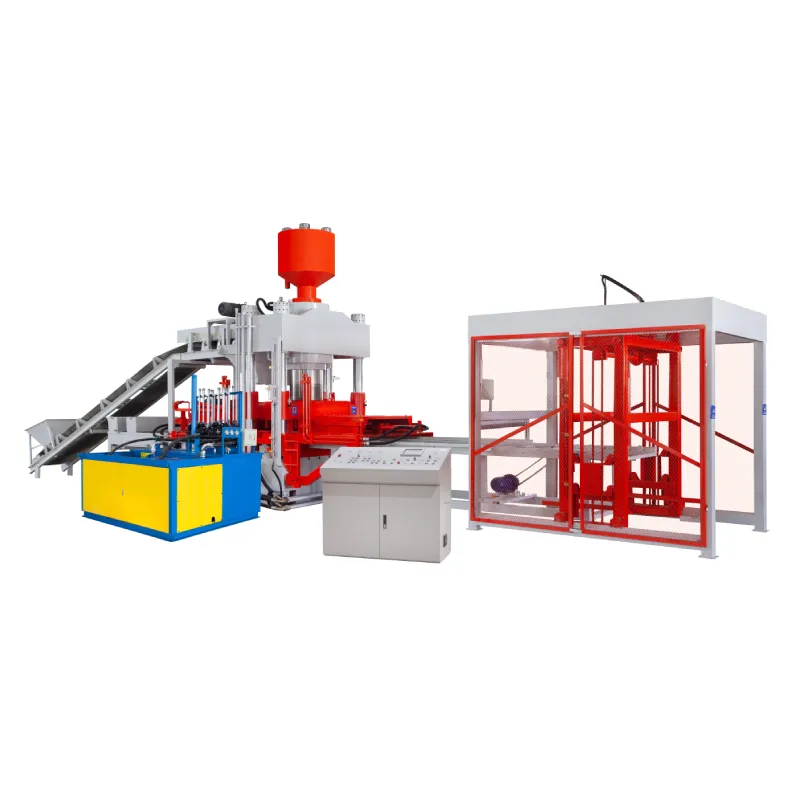
- Hydraulic System: This system uses Pascal's principle to generate immense compressive force. It consists of a hydraulic power pack (motor, pump, reservoir), control valves, hoses, and one or more hydraulic cylinders. The pressure head, driven by the cylinders, presses down on the material in the mould. The beauty of hydraulics is the ability to generate enormous force in a compact space. However, designing and assembling a safe and leak-free hydraulic system requires specialized knowledge. Selecting the correct pump flow rate, cylinder bore size, and valve type is essential for achieving the desired force and cycle speed. An improperly designed system can be dangerously unpredictable or woefully underpowered. Professional manufacturers often use high-quality components from brands like Yuken to ensure reliability and performance (HF Block Machine, 2024).
| Merkmal | DIY Vibration System | Professional QT Series Vibration System |
|---|---|---|
| Vibration Source | Typically repurposed or basic off-balance motors. | High-frequency, purpose-built vibrators (e.g., from Siemens). |
| Control | Simple on/off switch; no frequency control. | PLC with Variable Frequency Drive (VFD) for precise amplitude/frequency tuning. |
| Synchronization | Difficult to achieve; can lead to uneven block density. | Mechanical or electronic synchronization ensures uniform compaction across the mould. |
| Dauerhaftigkeit | Bearings in standard motors fail quickly under constant vibration. | Vibrators are designed for continuous, high-g-force operation. |
| Effectiveness | Often results in poor compaction, high porosity, and weak blocks. | Achieves optimal particle arrangement and high-density, high-strength blocks. |
The Power Unit and Control System
This is the brain and muscle of the machine.
- Power Source: A robust three-phase electrical supply is typically required. The total power can range from around 15 kW for a smaller semi-automatic machine to over 30 kW for a larger Vollautomatische Betonsteinfertigungsmaschine (Henry Intelligent Machinery, 2025).
- Control System: In the simplest manual machines, control might be a series of levers directly actuating hydraulic valves. However, any level of automation requires an electrical control system. Professional semi-automatic and fully automatic machines use a Programmable Logic Controller (PLC). This is a ruggedized industrial computer that controls the entire sequence: material feeding, mould filling, vibration, compression, and block ejection. Programming a PLC requires a specific skill set and software. It orchestrates the timing of each step down to the millisecond, which is essential for both the speed of production and the consistency of the product. Building a reliable control panel with proper motor starters, circuit breakers, relays, and safety interlocks (like emergency stops) is a task for a qualified industrial electrician, not a hobbyist.
The DIY Gauntlet: A Step-by-Step Examination of How to Make a Brick Machine
Embarking on the journey of how to make a brick machine is to enter a gauntlet of technical challenges. Each stage builds upon the last, and a failure in an early stage can doom the entire project.
Stage 1: Design and Blueprinting – The Intellectual Foundation
Before a single piece of metal is cut, a comprehensive design must exist. This is far more than a simple sketch. It requires detailed engineering drawings (blueprints) for every single component, specifying materials, dimensions with tolerances, and assembly instructions.
- Force Calculation: The designer must calculate the forces involved. How much clamping force is needed to hold the mould box together during compaction? How much compressive force must the hydraulic press exert? How much vibration force is needed to compact the material? These calculations inform the sizing of steel beams, the specifications of the hydraulic cylinders, and the power of the motors. An error here can lead to a machine that either fails to make good blocks or catastrophically breaks apart.
- Kinematics: The movement of each part must be mapped out. How does the material hopper slide over the mould? How does the tamper head lower and retract without colliding with the mould box? This involves designing linkages, guide rails, and limit switches to control the sequence of operations.
- Sourcing Plan: A detailed list of all required components must be created, from the largest steel beam to the smallest hydraulic fitting. The builder must then research suppliers and confirm the availability and cost of these items. Often, the realization of the true cost and difficulty of sourcing specialized parts derails the project at this early stage.
Stage 2: Material Sourcing and Fabrication – The Physical Labor
This stage transforms the blueprint into physical parts. It is a test of workshop capability and manual skill.
- Cutting and Drilling: Heavy steel sections must be cut to precise lengths, often with band saws or abrasive chop saws. Holes must be drilled with high accuracy using a drill press to ensure components will align correctly during assembly.
- Welding: This is arguably the most critical fabrication skill. The integrity of the entire machine rests on the quality of the welds. It requires not just the equipment but a high level of proficiency to create strong, deep-penetrating welds without distorting the components due to excessive heat. The frame must be assembled on a perfectly flat surface, clamped securely to prevent warping as the welds cool.
- Machining: As discussed, the mould box and tamper head require precision machining that is beyond the scope of most DIY workshops. This single aspect often forces the DIY builder to outsource the most critical component, adding significant cost and complexity to the project. Even simple components like shafts and bearing mounts may require a metal lathe for accurate fabrication.
Stage 3: Assembly and Integration – Bringing the Parts Together
This is where the fabricated and purchased components are assembled into a cohesive machine.
- Mechanical Assembly: The hydraulic cylinders, vibration motors, guide rods, and bearings must be mounted to the frame. The alignment is critical. A misaligned cylinder will quickly destroy its seals, and misaligned guide rods will cause the machine to jam. This process is painstaking and requires precision measuring tools like dial indicators and calipers.
- Hydraulic Plumbing: The hydraulic pump, valves, cylinders, and filters must be connected with high-pressure hoses and fittings. Every connection must be perfectly sealed to prevent leaks. Hydraulic fluid under pressure is extremely dangerous; a pinhole leak can inject fluid into the skin, causing severe injury. The system must be carefully filled and bled of air.
- Electrical Wiring: The control panel must be wired to the motors, solenoids (which control the hydraulic valves), limit switches, and operator controls. This must be done according to a clear wiring diagram and in compliance with local electrical safety standards. Improper wiring can destroy expensive components or create a severe electrocution hazard.
Stage 4: Testing and Calibration – The Moment of Truth
The final stage is to see if the machine actually works. This is rarely a smooth process.
- Initial Power-Up: Each system is tested individually. Does the hydraulic pump run without leaking? Do the motors turn in the correct direction? Do the control buttons activate the correct functions?
- Dry Cycling: The machine is run through its cycle without any raw material. This is to check for any mechanical binding, collisions, or incorrect sequencing. Limit switches are adjusted, and the PLC program is debugged.
- First Production Run: A small batch of concrete mix is prepared, and the first blocks are made. The results are almost never perfect. The blocks may be too weak, crumbly, or uneven. This begins a long and often frustrating process of calibration. Is the vibration frequency too high or too low? Is there enough compaction force? Is the mix too wet or too dry? Each variable affects the others, and finding the "sweet spot" can take days or even weeks of trial and error, consuming large amounts of cement, sand, and time.
An honest appraisal of these stages reveals that the question of how to make a brick machine is less about following a simple recipe and more about undertaking a full-fledged industrial engineering project.
The True Cost of 'Free': A Comparative Analysis of DIY vs. Professional Machines
The initial sticker price of a professional brick machine can cause hesitation, prompting the seemingly frugal choice of a DIY build. However, a holistic cost-benefit analysis, extending beyond the initial purchase price to include operational costs, efficiency, and product quality, paints a far more complex picture. The "free" labor of a DIY project has a significant opportunity cost, and the "cheaper" materials often lead to cascading expenses down the line.
Financial Outlay: Hidden Costs of a DIY Build
A common misconception is that the primary cost of a professional machine is profit margin for the manufacturer. In reality, a large portion of the cost is tied to specialized materials, precision manufacturing processes, and high-quality components that are simply not available at a retail level. A DIY builder attempting to replicate this quality will find the costs escalating rapidly.
| Cost Component | DIY Build (Estimated) | Professional Machine (Included in Price) |
|---|---|---|
| Raw Steel (High-Grade) | $2,000 – $4,000 | Bulk purchasing power reduces unit cost. |
| Hydraulisches System | $2,500 – $5,000 (for quality, non-industrial grade components) | $4,000 – $8,000+ (for industrial-grade, reliable systems like Yuken). |
| Mould Box (Outsourced) | $1,500 – $3,500 (for a single, heat-treated mould) | Multiple moulds are often part of a package; lower cost per unit. |
| Motors & PLC | $2,000 – $4,000 (e.g., Siemens PLC, VFDs, vibrators) | Integrated, pre-programmed, and tested system. |
| Specialized Tools | $1,000 – $3,000+ (welder, drill press, precision tools if not owned) | Amortized over thousands of machines. |
| Wasted Materials | $500 – $1,500 (during testing and calibration) | Minimal; machines are factory-calibrated. |
| Opportunity Cost | 200-500 hours of skilled labor (value: $5,000 – $12,500+) | Zero; machine arrives ready for installation. |
| Total Estimated Cost | $14,500 – $30,500+ | Varies by model (e.g., $7,000 – $30,000 for QT4/QT5 models). |
Note: DIY costs are highly variable and do not include the cost of workshop space or potential medical bills from accidents.
As the table demonstrates, the cost of building a single, robust machine can easily approach or even exceed the cost of purchasing a professionally made, entry-level automatic model like a QT4-25 (Henry Intelligent Machinery, 2025). The professional manufacturer benefits from economies of scale, established supply chains, and optimized production workflows that a one-off builder cannot replicate.
Time and Labor: The Unseen Investment
The most frequently underestimated cost is time. A DIY brick machine project is not a weekend affair. It is a multi-month commitment, even for a skilled individual. This is time that could be spent on core business activities: securing contracts, managing projects, or generating revenue. If a contractor's time is valued at even a modest rate, the "sweat equity" invested can quickly become the single largest expense of the project. A professional machine, by contrast, can be delivered, installed, and commissioned within a matter of weeks, allowing production—and revenue generation—to begin almost immediately.
Quality and Consistency: The Professional Advantage
This is perhaps the most crucial point of comparison. The purpose of a brick machine is to produce a large quantity of uniform, high-strength blocks that meet building codes and client expectations.
- Density and Strength: Professional machines, particularly QT series and hydraulic models, use synchronized, high-frequency vibration and immense, evenly distributed pressure. This combination expels air voids and ensures a homogenous, dense compaction throughout the block. The result is high compressive strength and low water absorption, qualities essential for structural integrity, especially in the demanding climates of Southeast Asia (cyclones) and the seismic zones of the Middle East. A DIY machine with an un-tuned vibration system or an underpowered press will likely produce "honeycombed," porous, and weak blocks.
- Maßgenauigkeit: The precision-machined, heat-treated moulds of professional machines ensure that every block is identical. This uniformity is critical for masons, allowing for faster, easier, and stronger wall construction with consistent mortar joints. The inevitable inaccuracies of a home-fabricated mould will result in blocks of varying heights and widths, leading to construction difficulties and a poor final appearance.
| Quality Metric | DIY Machine | Professional Machine (e.g., QT Series) |
|---|---|---|
| Druckfestigkeit | Highly variable, often below standard. | Consistently high, meets or exceeds international standards. |
| Dimensional Tolerance | Poor; blocks may be uneven and difficult to lay. | Excellent; high precision for uniform size and shape. |
| Oberflächenbehandlung | Often rough, crumbly edges. | Smooth, clean finish with sharp, durable edges. |
| Produktionsgeschwindigkeit | Very slow; long cycle times and frequent jamming. | Fast and efficient; optimized cycles (e.g., 15-25 seconds). |
| Failure Rate | High; significant material and labor wastage. | Extremely low; maximizes material usage and profitability. |
Safety and Reliability: The Non-Negotiable Factors
An industrial machine is an inherently dangerous piece of equipment. Professional manufacturers invest heavily in safety engineering. This includes emergency stop buttons, safety guards over moving parts, hydraulic pressure relief valves, and properly grounded electrical systems that adhere to certifications like CE and ISO (Made-in-China.com, 2025). A DIY machine, built without this rigorous safety oversight, poses a significant risk of severe injury from crushing, high-pressure fluid injection, or electrical shock.
Reliability is the other side of the safety coin. A professional machine is designed for thousands of hours of continuous operation with minimal downtime. The use of high-quality bearings, motors, and hydraulic seals, combined with robust engineering, ensures it is a reliable asset. A DIY machine is an unknown quantity, prone to breakdowns at the most inconvenient times, bringing production to a halt and jeopardizing project deadlines.
The Professional Path: Exploring QT Series and Hydraulic Block Pressing Machines
For those whose goal is not the process of building but the result of building, the professional path offers a clear and efficient solution. Understanding the types of machines available allows for an informed investment that aligns with specific project needs.
Understanding the QT Series: The Workhorse of Modern Construction
The "QT" designation is widely used by Chinese manufacturers to denote a class of block-making machine that primarily relies on vibration for compaction (Yixin Machinery, 2024). These machines are the backbone of small to medium-sized block production plants across the globe.
- Mechanism: They use a "table vibration" plus "head pressure" system. The mould is filled with a relatively dry concrete mix and then subjected to intense, high-frequency vibration from below. Simultaneously, a pressure head comes down from above to compress the material. This dual-action method is highly effective for producing a wide range of standard products like hollow blocks, solid bricks, and pavers.
- Versatility: A key advantage of the QT series is its versatility. By simply swapping out the mould, the same machine can produce dozens of different block types and sizes. This allows a producer to adapt to changing market demands without investing in a new machine.
- Scalability: The QT series comes in a range of sizes and automation levels, from the smaller, semi-automatic QT4-25 to the large, fully automatic QT10-15 or QT12-15 models (HF Block Machine, 2024). This allows a business to start with a smaller investment and scale up as their operation grows.
The Power of Hydraulic Presses: For High-Density and Specialized Blocks
While most QT machines use hydraulics for movement, a true hydraulic block pressing machine uses hydraulics as the primary means of compaction.
- Mechanism: These machines apply immense, static pressure—often exceeding 100 tons—to the material in the mould. This is different from the dynamic force of vibration.
- Application: Hydraulic pressing is ideal for producing extremely high-density products where strength and a superb surface finish are paramount. This includes high-strength pavers, curbtones, and specialized architectural blocks. The immense pressure squeezes out nearly all water and air, resulting in a product with very low porosity and high frost resistance, a valuable trait in regions with temperature fluctuations.
- Single vs. Double Press: Some advanced machines feature a "double static hydraulic" system, which applies pressure from both the top and bottom simultaneously. This ensures even more uniform density throughout the height of the block, a level of quality that is impossible to achieve with a simple DIY press.
Automation Levels: From Semi-Automatic to Fully Auto Concrete Block Making Machines
The level of automation is a key determinant of both price and production capacity.
- Semi-Automatic: In a machine like the QT4-26, some steps, like material feeding and block discharge, might be manually assisted. This lowers the initial cost and complexity but requires more labor per block produced. It is an excellent entry point for small businesses.
- Fully Automatic: A fully auto concrete block making machine, such as a QT5-15 or higher, integrates all processes into a seamless, PLC-controlled sequence. From mixing and batching to stacking the finished, cured blocks (cubing), the entire line can be managed by just a few operators. This dramatically increases output, reduces labor costs, and improves consistency, making it the superior choice for medium to large-scale commercial production.
Sourcing from a Professional Supplier: Long-Term Value and Support
The relationship with a professional supplier extends far beyond the initial sale.
- Consultation: A reputable supplier acts as a consultant, helping you choose the right machine for your raw materials, desired products, and production goals.
- Installation und Schulung: Many suppliers offer installation services and on-site training for your operators, ensuring you can get the machine running correctly and safely from day one (Henry Intelligent Machinery, 2025).
- After-Sales-Unterstützung: This is a critical, often overlooked, value. When a part eventually wears out or a problem arises, a professional supplier can quickly provide spare parts, technical drawings, and expert advice, minimizing downtime. A DIY machine has no such support system; the builder is entirely on their own.
Making an Informed Decision for Your 2025 Construction Project
The choice between building and buying is a strategic one. It is not a simple matter of cost but an evaluation of risk, efficiency, and long-term goals.
Assessing Your Project Scale and Block Requirements
The first question to ask is not "how to make a brick machine," but "what do I need my bricks to do?"
- Small, Non-Structural Projects: If your need is for a few thousand rustic, non-structural garden pavers for a personal project, and you possess advanced metalworking skills and a great deal of free time, a DIY build might be a rewarding, albeit challenging, hobby.
- Commercial Production: If your goal is to produce tens of thousands of blocks for commercial sale or for use in structural applications (houses, retaining walls, commercial buildings), the quality, consistency, and safety standards are non-negotiable. The blocks must reliably meet specific compressive strength standards. In this scenario, the risks associated with a DIY machine's output are simply too high. The reliability and certified performance of a professional machine are essential.
Evaluating Your Technical Expertise and Resources
A frank self-assessment is necessary. Do you have a fully equipped machine shop with industrial-grade welding equipment, a heavy-duty drill press, and access to a metal lathe and CNC mill? Do you have expert-level knowledge of mechanical engineering, hydraulics, and industrial electrical control systems, including PLC programming? Do you have the several hundred hours of focused time to dedicate to the project? If the answer to any of these is no, the DIY path is fraught with peril.
The Strategic Value of Reliability and After-Sales Support
For a business, a machine is not just a tool; it is an asset that must generate a return on investment. Downtime is lost revenue. A professional machine from a reputable supplier is a predictable, reliable asset with a support network. A DIY machine is an unpredictable liability with no support network. In the competitive construction markets of 2025, the efficiency and reliability provided by a professionally engineered solution like a QT series or hydraulic block machine represent a decisive strategic advantage. The initial investment is not merely a cost; it is a purchase of peace of mind, quality assurance, and the capacity for sustained, profitable production.
Häufig gestellte Fragen (FAQ)
1. Is it significantly cheaper to build your own brick machine? While the upfront cost of materials for a DIY build might seem lower than purchasing a new machine, this is often misleading. Once you factor in the cost of specialized tools, outsourced precision machining for the mould, wasted materials during testing, and the immense value of your own time and labor, the total cost of a reliable DIY machine can easily equal or exceed that of an entry-level professional semi-automatic model.
2. What are the biggest challenges in building a DIY brick machine? The three greatest challenges are: 1) Fabricating the mould box and tamper head to the required precision and hardness, which usually requires specialized heat treatment (carburizing). 2) Designing and tuning the compaction system (vibration or hydraulic) to produce consistently dense and strong blocks. 3) Safely building and integrating the electrical and hydraulic systems without creating a safety hazard.
3. What raw materials can be used in these machines? Professional machines like the QT series are highly versatile. They can process a wide range of materials including crushed stone, sand, cement, industrial fly ash, slag, and cinder (Made-in-China.com, 2025). This adaptability is crucial in regions like Southeast Asia and the Middle East, where using locally available or waste materials can significantly reduce production costs.
4. What is the difference between a QT series machine and a hydraulic press? A QT series machine primarily uses high-frequency vibration combined with top pressure to compact the material, making it excellent for a wide variety of common blocks and pavers. A true hydraulic press uses immense static force as the main compaction method, which is ideal for producing extremely high-density, high-strength products like curbtones and specialized architectural blocks where a superior surface finish is required.
5. Why is professional after-sales support so important? A brick machine is a piece of heavy industrial equipment that operates under intense stress. Parts will eventually wear out. Having a professional supplier means you have access to a reliable source for spare parts, technical support, and troubleshooting advice. This minimizes downtime and keeps your production running. With a DIY machine, you are entirely on your own when a breakdown occurs.
A Concluding Reflection on Craftsmanship and Practicality
The human capacity for creation is a profound and worthy impulse. The ambition to understand and construct the very tools that shape our world lies at the heart of engineering and progress. The intellectual exercise of learning how to make a brick machine is valuable, offering deep insight into the interplay of mechanics, hydraulics, and material science. It fosters an appreciation for the immense engineering that underpins the built environment.
However, a distinction must be drawn between the pursuit of knowledge and the demands of commerce. For the entrepreneur or contractor in 2025, whose primary objective is the efficient, safe, and profitable production of high-quality building materials, the path of practicality is clear. The unseen costs, technical hurdles, and profound risks of a DIY project stand in stark contrast to the reliability, consistency, and long-term support offered by a professionally manufactured apparatus. The decision is not a rejection of craftsmanship but an embrace of it in its most developed form—the form of a machine born from decades of specialized research, refinement, and dedicated engineering. Investing in a professional QT series or hydraulic block making machine is an investment in certainty, a foundational block upon which a successful and enduring construction enterprise can be built.
Referenzen
HF Block Machine. (2024). QT series block making machine. Retrieved from
Made-in-China.com. (2025). Block machine full automatic block maker Qt 5-15 hot sale. Retrieved from
Made-in-China.com. (2025). Qt4-25 factory price fully automatic concrete block making machine paver brick machine in Africa. Retrieved from
QGM Quangong Machinery Co.,Ltd. (2024). China block machine, brick making machine suppliers & manufacturers & factory. Retrieved from
Yixin Machinery. (2024). Block making machine manufacturer & supplier. Retrieved from
Yixin Machinery. (2024). QT series concrete block machine supplier. Retrieved from