

An Expert’s 5-Point Checklist for Selecting Your 2025 Bricks Machine in the Middle East & SEA
diciembre 19, 2025
Resumen
The selection of a bricks machine for construction projects in Southeast Asia and the Middle East represents a significant capital investment influenced by unique regional factors. This analysis examines the critical decision-making criteria for acquiring concrete block and hydraulic press machinery in 2025. It deconstructs the process into five core evaluative points: production capacity and scalability, levels of automation, local raw material compatibility, technological and build quality, and total cost of ownership, including supplier support. The study synthesizes technical specifications from contemporary models, such as the QT series, with the practical realities of operating in diverse economic and geological environments. It posits that a successful investment hinges not only on the initial purchase price but on a holistic assessment of the machine's adaptability to local aggregates (including industrial byproducts), the reliability of its hydraulic and control systems, and the long-term viability of the manufacturer's after-sales service network. The objective is to provide a comprehensive framework that empowers prospective buyers to align equipment capabilities with strategic business goals, thereby maximizing return on investment and ensuring sustainable production of high-quality building materials.
Principales conclusiones
- Assess your required output and scalability to choose the right production capacity.
- Match automation levels—from semi-automatic to fully hydraulic—to your labor costs.
- Verify the bricks machine’s compatibility with locally available sands and aggregates.
- Examine the quality of hydraulic systems, PLCs, and steel frames for longevity.
- Calculate the total cost, including installation, training, and after-sales support.
- Choose a supplier who offers robust technical support for the Middle East and SEA.
Índice
- 1. Assessing Production Capacity and Scalability
- 2. Navigating Automation Levels: Manual, Semi-Auto, and Fully Automatic
- 3. Material Compatibility: Adapting to Local Resources
- 4. Evaluating Machine Technology and Build Quality
- 5. Total Cost of Ownership and Supplier Support in the Region
- PREGUNTAS FRECUENTES
- Conclusión
- Referencias
1. Assessing Production Capacity and Scalability
The act of choosing a bricks machine is not merely a technical decision; it is an articulation of a business's ambition. The humming of the motor, the percussive stamp of the press, the steady march of finished blocks—these are the rhythms of your enterprise. Before you can even begin to compare models or solicit quotes, you must first engage in a deep and honest reflection on the scale and scope of the future you intend to build. This initial step, centered on production capacity, is the foundational stone upon which all subsequent decisions will rest. Getting it right is paramount, as a mismatch between capacity and demand can lead either to idle, inefficient machinery or, conversely, to an operation that is perpetually struggling to keep pace, unable to seize larger opportunities.
Defining Your Output Needs: From Small-Scale to Industrial Production
Imagine, for a moment, the landscape of your intended market. Are you envisioning a localized operation, supplying essential building materials for a single town or a series of community housing projects in a rural province of the Philippines? In this context, your daily output needs might be modest, perhaps a few thousand blocks per day. The goal here is consistency and reliability, not overwhelming volume. A machine that produces 3,000 to 5,000 standard hollow blocks in an eight-hour shift, such as some smaller semi-automatic models, could be the perfect fit. It represents a balanced investment, one that meets immediate needs without the financial and operational burden of a much larger, more complex system.
Now, shift your perspective. Picture a sprawling urban development on the outskirts of Dubai or a major infrastructure project in Saudi Arabia. The demand here is not measured in thousands, but in tens or even hundreds of thousands of units per day. The rhythm is relentless. In this arena, a small-scale machine would be utterly overwhelmed. Your focus must turn toward industrial-grade, fully automatic production lines. You would be looking at high-capacity models, like the QT10-15 or QT12-15 series, which are engineered for high-volume output. For example, a QT12-15 machine can theoretically produce over 11,000 standard 400x200x200mm hollow blocks in a single 8-hour shift (). This is not just a quantitative leap; it is a qualitative one. Such a machine is the heart of a factory, designed for continuous operation and integrated into a larger system of batching plants, mixers, and curing racks. The decision, therefore, transcends a simple calculation of blocks per day. It becomes a strategic alignment of your production capability with the very pulse of the market you aim to serve.
Understanding Cycle Time and Its Impact on Daily Output
Within the technical specifications of any bricks machine, you will find a figure for "cycle time," typically expressed in seconds. It might be listed as 15-25s, 25-30s, or something similar. It is easy to glance over this number, but to do so is to misunderstand the very engine of your productivity. Cycle time is the duration of a single, complete operation: the mold filling with material, the hydraulic press compacting, the vibration settling the aggregate, and the finished block being ejected. It is the machine's heartbeat.
Let us break this down with a simple thought experiment. Consider two machines. Machine A has a cycle time of 15 seconds. Machine B has a cycle time of 25 seconds. Both produce 10 standard blocks per cycle. Over a single minute, Machine A can complete four cycles, yielding 40 blocks. Machine B, in that same minute, completes just over two cycles, yielding roughly 24 blocks. Now, extrapolate that over an eight-hour shift (28,800 seconds).
- Machine A: (28,800s / 15s/cycle) * 10 blocks/cycle = 1,920 cycles * 10 blocks/cycle = 19,200 blocks.
- Machine B: (28,800s / 25s/cycle) * 10 blocks/cycle = 1,152 cycles * 10 blocks/cycle = 11,520 blocks.
This is, of course, a theoretical maximum. It does not account for operator breaks, material loading, or routine maintenance. However, the delta—a staggering 7,680 blocks—vividly illustrates the profound impact of a mere 10-second difference in cycle time. A shorter cycle time, as seen in many advanced fully automatic models like the QT10-15 or QT12-15, is a direct result of superior engineering: more efficient hydraulic systems, faster material feeders, and optimized PLC programming (Shandong Gaotang Huatong, n.d.). When you evaluate a machine, do not just see the cycle time as a number. See it as a direct multiplier of your revenue potential. A faster cycle time means more product to sell each day, faster fulfillment of large orders, and a quicker return on your initial investment.
Future-Proofing Your Investment: Planning for Growth
The final consideration in this primary stage of assessment is perhaps the most difficult, as it requires you to be not just an operator but a visionary. The bricks machine you purchase in 2025 should not only serve your needs for that year but should also accommodate your projected growth for 2028, 2030, and beyond. Buying a machine that perfectly matches your current, fledgling demand might seem prudent, but it can become a bottleneck that stifles future expansion.
This is where the concept of scalability comes into play. A highly scalable solution is one that can grow with your business. This can manifest in several ways. Firstly, you might opt for a machine with a higher theoretical capacity than you currently need. For example, if your immediate need is 6,000 blocks per day, investing in a machine capable of 10,000 blocks per day provides a significant buffer for growth. You can run it for a single shift initially and add a second shift as demand increases, effectively doubling your output without any new capital expenditure on the primary machine.
Secondly, consider the modularity of the production line. A well-designed system allows for future additions. You might start with a core automatic concrete block making machine and a mixer. Later, as cash flow improves and orders increase, you can add an automatic stacker, a pallet return system, or even a secondary color-mixing unit for producing high-value paving stones. This modular approach allows you to scale your level of automation and efficiency in step with your business's success. Choosing a supplier who offers a complete, integrated ecosystem of equipment, rather than just a standalone machine, is crucial for this strategy. It ensures that future components will integrate seamlessly with your existing setup, creating a cohesive and ever-more-powerful production facility. Planning for growth is an act of faith in your own future success, and your choice of machinery should be a testament to that faith.
2. Navigating Automation Levels: Manual, Semi-Auto, and Fully Automatic
Once you have a clear vision of your production scale, the next logical step is to determine how you will achieve that output. The level of automation in a bricks machine is one of the most significant factors influencing its price, operational complexity, and labor requirements. The spectrum ranges from almost entirely manual processes to sophisticated, computer-controlled systems that require minimal human intervention. Your choice along this spectrum will be deeply informed by the economic realities of your specific location in Southeast Asia or the Middle East—particularly the relative costs of capital and labor. What is an optimal solution in a labor-abundant market like Vietnam might be economically unviable in a capital-rich, labor-scarce market like the UAE.
The Human Element: Manual and Semi-Automatic Machines
Let's begin with the most hands-on approach. Manual and semi-automatic machines represent the entry point into mechanized block production. A simple manual machine, often called an "egg-laying" block machine, is mobile and requires workers to manually fill the mold, tamp the material, and then move the machine to the next spot on the concrete floor, leaving the freshly made blocks behind to cure. Its primary advantages are its extremely low initial cost and simplicity. However, its output is low, the quality can be inconsistent, and it is highly labor-intensive.
A more common and practical choice for small to medium-sized enterprises is the semi-automatic bricks machine, such as the QT4-25 or QT4-26 models. In this setup, some key processes are automated, while others still require direct operator involvement. Typically, the mixing of raw materials is done in a separate mixer and then manually loaded into the machine's hopper. The machine will then automatically feed the material into the mold, vibrate, and press the blocks. However, the movement of the pallets holding the finished blocks usually requires a worker to manually transport them to the curing area.
The appeal of a semi-automatic machine lies in its balance. It offers a significant leap in production volume and consistency compared to a manual machine, yet its initial investment is considerably lower than a fully automatic line. It requires more workers—often 3 to 5 people to operate the line efficiently—but in regions where labor is readily available and affordable, this can be a very cost-effective model. It provides a pathway to mechanization without the daunting capital outlay of a top-tier system, making it an excellent choice for entrepreneurs entering the market or for businesses serving a moderately sized, stable demand.
The Rise of the Machine: Fully Automatic QT Series Systems
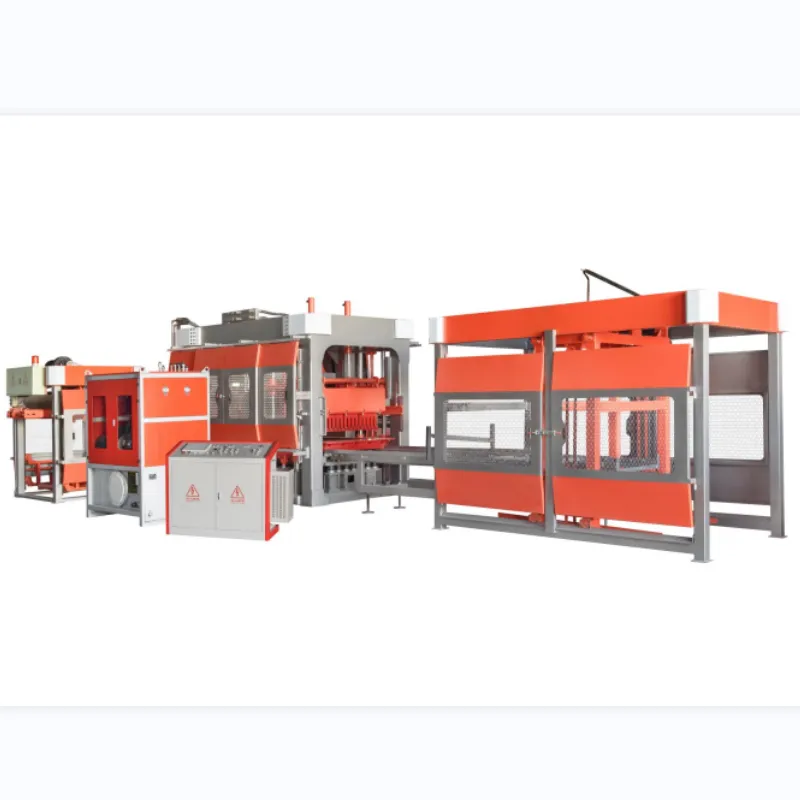
Moving up the ladder, we encounter the fully automatic bricks machine, exemplified by the popular QT series (e.g., QT5-15, QT8-15, QT10-15). The term "fully automatic" signifies a transformative leap in operational philosophy. Here, the goal is to minimize manual labor and maximize efficiency and consistency through integrated systems. A typical fully automatic line is not just a single machine but a symphony of interconnected components controlled by a central Programmable Logic Controller (PLC).
Let's walk through the process. Raw materials are stored in silos and hoppers and are automatically weighed and batched according to a pre-set recipe. They are then conveyed to a large mixer. Once mixed, the concrete is transported via a conveyor belt to the main block machine's hopper. From there, everything is automated: the machine feeds the material, vibrates and presses the blocks onto a pallet, and then pushes the pallet out onto a conveyor. An automatic stacker, or "elevator," then picks up the pallet of wet blocks and places it onto a multi-level curing rack. The entire process, from mixing to stacking, occurs with minimal human intervention. The role of the operator shifts from manual laborer to system supervisor, monitoring the process via a control panel and ensuring the smooth flow of materials.
The advantages are profound. Production capacity is dramatically increased. Block quality and uniformity are exceptionally high due to the precise, repeatable actions of the machine. Labor costs are significantly reduced, often requiring only two operators to oversee the entire line. For businesses in the Middle East, where labor can be expensive and subject to complex regulations, or for large-scale operations anywhere that need to meet demanding production schedules, the fully automatic QT series is often the most logical and profitable choice.
| Característica | Semi-Automatic (e.g., QT4-25) | Fully Automatic (e.g., QT10-15) | Fully Hydraulic Press |
|---|---|---|---|
| Inversión inicial | Low to Medium | Alta | Very High |
| Requisitos laborales | High (3-5 workers) | Low (1-2 operators) | Very Low (1 operator) |
| Daily Output | Medium (e.g., 3,000-5,000 blocks) | High (e.g., 15,000+ blocks) | Very High & Fast |
| Block Consistency | Good | Excelente | Superior |
| Operational Control | Manual buttons & levers | PLC Touch Screen | Advanced PLC Control |
| Aplicación ideal | Small-to-medium enterprises, labor-abundant regions | Large-scale production, industrial projects | High-density pavers, specialized products |
| Flexibility | Moderado | High (with mold changes) | High (with mold changes) |
The Apex of Efficiency: Hydraulic Pressing Machines and PLC Integration
At the very top of the automation and technology pyramid are the large-tonnage static hydraulic pressing machines. While QT series machines rely on a combination of hydraulic pressure and high-frequency vibration to compact the material, a static hydraulic press primarily uses immense, sheer force. These machines are often used to produce extremely dense and high-strength products like high-end paving stones, curbstones, and specialized architectural blocks.
The core of these machines is a massive hydraulic system capable of generating hundreds of tons of pressure. This intense compaction results in blocks with very low porosity, exceptional strength (often exceeding 50 MPa), and precise dimensional accuracy (Huatong Machinery, n.d.). The role of vibration is often secondary, used more to help settle the material in the mold before the main pressing action.
These systems are almost invariably fully automatic and controlled by advanced PLC systems. The PLC is the brain of the entire operation. Modern machines often feature touch-screen interfaces with user-friendly graphical displays. From this central console, an operator can set and adjust every parameter of the production process: the mixing ratios, the material feeding time, the vibration frequency and amplitude, the hydraulic pressure levels, and the curing times. Brands like Siemens, Mitsubishi, and Schneider are often highlighted by manufacturers because they represent a global standard of quality and reliability in industrial automation (). A Siemens PLC, for example, not only offers robust and reliable control but also features advanced diagnostics. If a fault occurs anywhere in the line, the system can pinpoint the problem, display an error code, and suggest a solution, dramatically reducing downtime.
Investing in such a high-level system is a decision for a specialized, mature business. It is for the producer who aims to dominate the premium segment of the market, where quality and performance command a higher price. The initial cost is substantial, but for the right application, the return on investment through superior product quality, minimal labor, and high efficiency can be equally significant.
3. Material Compatibility: Adapting to Local Resources
A bricks machine, no matter how technologically advanced, is ultimately only as good as the raw materials it is fed. The ability to produce strong, durable, and consistent blocks is fundamentally dependent on the physical and chemical properties of the aggregates, binders, and water used. A critical error that many first-time investors make is assuming that a standard "recipe" for concrete will work universally. The geological and industrial landscapes of Southeast Asia and the Middle East are incredibly diverse, and the most successful block producers are those who learn to adapt, leveraging the specific resources available to them locally. Your choice of machine must reflect this need for adaptability; it must be a versatile partner capable of handling the unique character of your regional materials.
The Universal Recipe: Cement, Sand, and Aggregate
At its core, the production of concrete blocks relies on a simple, timeless formula: a binder (typically Portland cement), a fine aggregate (sand), a coarse aggregate (like crushed stone or gravel), and water. The cement and water react in a process called hydration, forming a paste that coats the aggregates and binds them together into a rock-like mass. The properties of the final block—its strength, density, and durability—are a direct function of the quality and proportion of these ingredients.
However, the "sand" and "gravel" available in Oman are vastly different from those found in Malaysia. Sand, for instance, is not a uniform material. Its properties are defined by factors like particle size distribution (fineness modulus), shape, and cleanliness. The fine, wind-blown desert sands of the Middle East, for example, often have a very uniform, rounded particle shape and a low fineness modulus. Using this sand alone can lead to concrete that is weak and porous because the uniform particles do not pack together efficiently, leaving voids. In contrast, the river sands common in many parts of Southeast Asia are often more angular and have a better gradation of particle sizes, which is ideal for creating dense, strong concrete.
A high-quality bricks machine must be able to compensate for these variations. The key lies in the combination of hydraulic pressure and vibration. A powerful and adjustable vibration system is crucial. It imparts energy into the mix, causing the particles to overcome inter-particle friction and settle into a densely packed arrangement, minimizing voids even when using less-than-ideal aggregates. The hydraulic pressure then provides the final compaction, squeezing out excess water and ensuring an intimate bond between the cement paste and the aggregates. When evaluating a machine, inquire deeply about the adjustability of its vibration system (both frequency and amplitude) and the maximum pressure of its hydraulic unit. A machine with a wide range of adjustable parameters is far more likely to successfully adapt to your local materials.
Leveraging Industrial Byproducts: Fly Ash, Slag, and More
One of the most exciting developments in modern construction is the move towards sustainability and the circular economy. This is particularly relevant in the rapidly industrializing nations of Southeast Asia. Industrial processes from power generation and steel manufacturing produce vast quantities of byproduct materials, such as fly ash (from coal-fired power plants) and ground granulated blast-furnace slag (from steel mills). For decades, these materials were considered waste and were sent to landfills at great expense and environmental cost.
Today, we understand that these materials, known as supplementary cementitious materials (SCMs), are valuable resources. They can be used to replace a significant portion of the Portland cement in a concrete mix. This has multiple benefits. Firstly, it is economic; SCMs are often cheaper than cement. Secondly, it is environmental; the production of Portland cement is extremely energy-intensive and accounts for a significant percentage of global CO2 emissions. Replacing cement with fly ash or slag directly reduces the carbon footprint of your blocks.
Thirdly, and perhaps most importantly, using SCMs can actually improve the quality of the concrete. Fly ash particles are typically very fine and spherical, which allows them to fill the microscopic voids between cement particles, leading to a denser, less permeable block. This increases the block's long-term strength and its resistance to chemical attack and water penetration (ACI Committee 232, 2012). Many modern bricks machine manufacturers explicitly state that their equipment is designed to work with materials like fly ash and slag (). When choosing your equipment, consider it not just a block maker, but a tool for resourcefulness and innovation, capable of turning regional industrial "waste" into high-value, sustainable building products.
| Materia prima | Primary Use | Suitable Machine Type | Consideraciones clave |
|---|---|---|---|
| Cement, Sand, Crushed Stone | Standard concrete blocks, pavers | All types (Semi-auto, Full-auto QT, Hydraulic Press) | Aggregate quality (size, shape, cleanliness) is critical. |
| Fly Ash | Cement replacement (15-35%) | Full-auto QT, Hydraulic Press | Improves long-term strength and durability; requires precise batching. |
| Blast Furnace Slag | Cement replacement (20-70%) | Full-auto QT, Hydraulic Press | Enhances strength and chemical resistance; can affect setting time. |
| Soil/Clay + Cement | Compressed Stabilized Earth Blocks (CSEB) | Specialized Hydraulic Press, Interlocking Brick Machine | Requires high pressure for compaction; low cement content (5-10%). |
| Crushed Glass, Recycled Concrete | Aggregate replacement | Full-auto QT, Hydraulic Press | Promotes sustainability; requires proper processing and testing. |
| Industrial Wastes (Cinder, etc.) | Lightweight or standard aggregate | Semi-auto, Full-auto QT | Properties vary widely; extensive testing of mix design is essential. |
Soil, Clay, and Interlocking Bricks: Specialized Applications
While the majority of modern block production focuses on concrete, there is a growing interest in alternative materials, particularly for affordable and sustainable housing. Compressed Stabilized Earth Blocks (CSEB) or Interlocking Bricks are a prime example. These are made primarily from local soil or clay, which is mixed with a small amount of a stabilizer—usually 5-10% cement—and then compacted under high pressure in a specialized bricks machine.
The resulting blocks are not fired in a kiln like traditional clay bricks, which saves an enormous amount of energy. They are simply cured in the sun. The interlocking design of many of these blocks allows for "dry-stack" construction, reducing the need for mortar and skilled masonry labor. This technology is particularly promising for rural development projects and affordable housing initiatives across Africa and parts of Southeast Asia.
However, producing high-quality interlocking bricks requires a specific type of machine. A standard concrete block machine that relies heavily on vibration may not be suitable. The fine particles in soil and clay require immense pressure to achieve proper compaction and density. Therefore, a hydraulic press machine is the ideal choice. These machines are designed to exert the necessary force to create durable, water-resistant earth blocks. If your business model is focused on this niche but important market, you must specifically seek out suppliers who manufacture hydraulic interlocking brick machines. This underscores the central theme of this section: your machine must be chosen not in a vacuum, but in direct dialogue with the materials you have and the products you wish to create.
4. Evaluating Machine Technology and Build Quality
A bricks machine is a formidable piece of industrial equipment, a complex assembly of steel, hydraulics, and electronics working in concert. While production capacity and automation level define what the machine does, the underlying technology and build quality determine how well and for how long it will do it. Investing in a machine is a long-term commitment, and its longevity and reliability are directly tied to the quality of its core components and the precision of its construction. For a buyer in the Middle East or Southeast Asia, where access to specialized technicians or replacement parts can be challenging, scrutinizing the technological heart and structural integrity of a machine before purchase is not just wise—it is an essential act of risk mitigation.
The Heart of the Machine: Hydraulic Systems and Vibration Technology
Imagine the machine in action. Two fundamental forces are at play: the immense, steady power of hydraulics and the rapid, energetic agitation of vibration. Together, they transform a loose pile of aggregate into a dense, solid block. The quality of these two systems is paramount.
The hydraulic system is the muscle of the operation. It consists of a hydraulic pump, valves, cylinders, and hoses, all working to transmit force through pressurized fluid. This system powers the main press that compacts the blocks and often actuates other movements like the feeding box and the mold assembly. When evaluating a machine, look for evidence of high-quality hydraulic components. Many reputable Chinese manufacturers, such as those found on platforms like Made-in-China.com, will explicitly state their use of components from internationally recognized brands like YUKEN from Japan or brands from Germany. For example, the product description for a QT12-15 machine highlights the use of a "YUKEN proportional valve" which allows for fine-tuned, sensitive control over the machine's movements (). This is not just brand-name dropping; a high-quality proportional valve ensures smoother, more precise actions, reducing shock and wear on the machine's frame and extending the life of the cylinders and seals. A robust hydraulic station with efficient cooling is also critical, especially in the high ambient temperatures of the Middle East, to prevent the hydraulic oil from overheating and losing its effectiveness.
The vibration system is the machine's way of persuading every particle of sand and gravel to find its most compact arrangement. It typically involves one or more powerful electric motors with eccentric weights, which are mounted to a vibration table or directly to the mold. The key here is not just raw power, but intelligent design. Advanced machines often use a "platform vibration" and "mold vibration" system, meaning both the mold and the pallet underneath it are vibrated simultaneously. This synchronization ensures that the vibrational energy is distributed evenly throughout the material, resulting in a block with uniform density from top to bottom. Some top-tier machines also feature frequency conversion technology. This allows the operator to adjust the frequency of the vibration via the PLC. Different materials and block types respond best to different frequencies; having this control is a powerful tool for optimizing block quality.
The Brains of the Operation: PLC and Control Systems (Siemens, Mitsubishi)
If the hydraulics are the muscle, the Programmable Logic Controller (PLC) is the brain. In any automatic or semi-automatic bricks machine, the PLC is the central computer that coordinates every action in the production cycle. It receives input from sensors (e.g., proximity switches that detect if a pallet is in place) and sends output signals to activate motors, valves, and cylinders in the correct sequence and for the correct duration.
The reliability of the PLC and its associated electrical components is non-negotiable. A failure in the control system can bring the entire production line to a standstill, and diagnosing an electronic fault can be far more difficult than fixing a mechanical one. This is why discerning buyers pay close attention to the brands of the electronic components used. When a manufacturer states they use a Siemens PLC, Schneider contactors, and Omron sensors, they are communicating a commitment to quality and reliability (). These are globally respected brands known for their robust performance in harsh industrial environments.
Furthermore, a Siemens or Mitsubishi PLC is a globally recognized standard. This means that in the unlikely event of a failure, finding a local technician in a major city like Bangkok, Kuala Lumpur, or Dubai who is familiar with programming and troubleshooting that brand is far more likely than for an obscure, unbranded controller. The user interface is also part of this system. A clear, intuitive touch screen with a multi-language interface (including English) is essential for efficient operation, allowing operators to easily monitor production, adjust parameters, and respond to system alarms.
The Skeleton: Frame Durability, Mold Quality, and Component Sourcing
Finally, we must consider the physical structure that contains and endures these powerful forces. The main frame of the bricks machine is its skeleton. It must be incredibly strong and rigid to withstand the constant cycles of high pressure and intense vibration without flexing or fatiguing over time. Look for machines built with heavy-duty, thick-walled steel, with clean, strong welds. Some manufacturers use advanced techniques like heat treatment on the entire frame to relieve internal stresses created during welding, further enhancing its long-term durability and dimensional stability.
The mold is the component that experiences the most direct wear and tear. It is the tool that shapes the final product, and its precision determines the quality of your blocks. High-quality molds are not simply welded steel boxes. They are precision-engineered tools made from special manganese steel alloys that are highly resistant to abrasion. They undergo a series of heat treatments—such as carburizing, quenching, and tempering—to create an extremely hard surface while maintaining a tough, less brittle core. A well-made mold can produce hundreds of thousands of blocks before needing replacement, while a poorly made one might fail much sooner, leading to costly downtime and inconsistent product quality. When discussing a machine with a supplier, ask detailed questions about their mold manufacturing process and the expected lifespan of the molds.
The quality of a machine is the sum of its parts. A reputable manufacturer will be transparent about their supply chain. Beyond the major components like the PLC and hydraulics, consider the quality of the bearings, motors, chains, and even the nuts and bolts. Investing in a modern concrete block making machine built with high-quality, internationally sourced components may come at a higher initial price, but it pays dividends in the form of reduced maintenance, less downtime, and a significantly longer operational life.
5. Total Cost of Ownership and Supplier Support in the Region
The final piece of the puzzle, and in many ways the most critical for long-term success, is to look beyond the initial price tag of the bricks machine and evaluate its Total Cost of Ownership (TCO). A lower initial price can be seductive, especially for a new enterprise, but it can often conceal higher long-term costs in the form of frequent breakdowns, expensive spare parts, and inadequate support. TCO encompasses every expense associated with the machine over its entire lifecycle, from the moment it leaves the factory in China to the day it is eventually decommissioned. For a business operating in Southeast Asia or the Middle East, a crucial component of this calculation is the quality and accessibility of the supplier's support network within your region.
Beyond the Sticker Price: Installation, Training, and Spare Parts
The purchase price is just the beginning of your investment. The first significant post-purchase cost is shipping and installation. A large automatic block production line is not a plug-and-play device. It is a complex industrial plant that must be assembled, calibrated, and commissioned on-site. Most reputable suppliers will offer to send their own technicians to your location to oversee this process. While this service comes at a cost (covering their travel, accommodation, and fees), it is an invaluable investment. An expert installation ensures that the machine is set up correctly from day one, preventing a host of potential future problems.
Following installation is training. The supplier's technician should provide comprehensive training for your local operators on how to run the machine, perform daily maintenance, change molds, and troubleshoot common faults. A well-trained team is your first line of defense against downtime. They will operate the machine more efficiently and safely, and they will be able to handle minor issues without needing to call for external help.
The third, and ongoing, cost is spare parts. Any machine with moving parts will eventually require replacements. The most common "wear and tear" parts on a bricks machine include hydraulic seals, conveyor belts, proximity switches, and, of course, the molds themselves. A prudent supplier will provide a set of essential spare parts along with the initial machine shipment (). Before you buy, you must have a clear understanding of the supplier's spare parts policy. How quickly can they ship a critical component to your location in Indonesia or Kuwait? What are the costs? Do they have a regional distributor who stocks common parts? Having a machine idle for weeks while waiting for a small part to arrive from overseas can be a devastating blow to a business's profitability and reputation.
Warranty, After-Sales Service, and Technician Availability
The warranty is your insurance policy against manufacturing defects. A typical warranty period is one year, though some may offer longer terms (). Carefully read the terms of the warranty. What does it cover? More importantly, what does it exclude? Most warranties cover defects in materials and workmanship but exclude damage caused by improper operation or normal wear and tear.
After-sales service is the true test of a supplier's long-term commitment. What happens when you have a problem after the warranty has expired? A good supplier will offer lifetime technical support. In 2025, this often takes the form of remote assistance via video calls and messaging apps, where their engineers can guide your local team through diagnostics and repairs. However, for more complex issues, the availability of a technician for an on-site visit is crucial. Inquire about their track record of sending engineers to your specific region. Do they have experience navigating the visa requirements for your country? Do they have technicians who have worked in the climate and conditions of the Middle East or the humid tropics of Southeast Asia? This regional experience is invaluable.
Choosing a Partner, Not Just a Product: Vetting Chinese Suppliers
The global market for construction machinery is vast, and China is a dominant player, offering a wide range of equipment at competitive prices. However, the quality and reliability of suppliers can vary enormously. Your task is to find a true partner who is invested in your success, not just a trader looking for a quick sale.
How do you vet a supplier from thousands of miles away? Start with due diligence. Look for established companies with a long history of manufacturing and exporting. A company that has been in business for 20 or 30 years and has exported to over 100 countries has a proven track record. Look for customer testimonials and case studies, particularly from your region. If possible, ask the supplier for references of existing clients in your country or a neighboring one.
Examine their online presence. A professional, detailed website and active profiles on B2B platforms like Made-in-China.com are good signs. Pay attention to the details they provide. Do they clearly specify the brands of their key components? Do they show detailed photos and videos of their factory and their machines in operation?
Finally, engage in direct and detailed communication. Ask probing questions based on the points raised in this guide. A reputable supplier will welcome your questions and provide clear, comprehensive answers. They will be more interested in understanding your specific needs to recommend the right machine than in simply pushing their most expensive model. The process of investing in a versatile brick making plant is a significant undertaking, and choosing the right supplier is as important as choosing the right machine. It is a decision that establishes a long-term relationship that will be fundamental to the growth and prosperity of your business.
PREGUNTAS FRECUENTES
Q1: What is the main difference between a QT series machine and a static hydraulic press?
A QT series machine, which is the most common type of automatic concrete block machine, uses a combination of high-frequency vibration and hydraulic pressure. The vibration is key to settling the aggregate particles into a dense configuration, while the hydraulic press provides the final compaction. These are highly versatile for producing a wide range of products like hollow blocks, solid bricks, and pavers. A static hydraulic press, on the other hand, relies primarily on immense hydraulic force with less emphasis on vibration. This massive pressure (often hundreds of tons) creates extremely dense, high-strength products, making it the ideal choice for specialized items like premium paving stones, curbstones, and compressed stabilized earth blocks (CSEB) that require maximum compaction.
Q2: Can I use desert sand from the Middle East in a concrete block machine?
Yes, but with careful management. Desert sand is often very fine and has rounded particles, which is not ideal for creating strong concrete as it doesn't pack well. To use it successfully, you must blend it with other aggregates. This typically involves mixing it with coarser, more angular manufactured sand (crushed rock) or other available aggregates to create a well-graded mix. A good mix will have a balanced distribution of particle sizes that can pack together tightly, minimizing voids and maximizing strength. You will need to work with a lab to test different mix designs to find the optimal ratio for your specific sand and your machine's capabilities.
Q3: How much land is required for a typical automatic bricks machine production line?
The land requirement varies significantly with the scale of the operation. For a medium-sized semi-automatic line (e.g., QT4-25), you might need a minimum of 1,500-2,000 square meters. For a large-scale, fully automatic line (e.g., QT10-15), you should plan for at least 4,000-6,000 square meters or more. This space is not just for the machine itself. It must accommodate storage areas for raw materials (sand, gravel, cement silos), the mixing plant, the main machine area, a large covered curing area for the fresh blocks (this is critical), and a storage yard for the finished, cured products.
Q4: What is the expected lifespan of a high-quality mold?
The lifespan of a mold depends on its quality and the abrasiveness of the aggregates being used. A standard, poorly made mold might only last for 50,000-80,000 cycles. However, a high-quality mold, made from specialized manganese steel and subjected to rigorous heat treatments (carburizing, quenching), can have a much longer life, often ranging from 150,000 to 200,000 cycles or more. Investing in superior quality molds results in a lower cost per block over the long run and reduces downtime associated with mold changes.
Q5: Is it better to buy a cheaper machine or invest in one with branded components like Siemens?
While a cheaper machine has a lower initial cost, it almost always leads to a higher total cost of ownership. Investing in a machine that uses reputable, internationally recognized components (like a Siemens PLC, YUKEN hydraulic valves, or Schneider electrical parts) offers significant long-term advantages. These components are more reliable, leading to less downtime. They are more efficient, potentially lowering energy consumption. Crucially, if a part does fail, it is much easier to source a replacement and find a technician familiar with the brand, especially in major commercial hubs across Southeast Asia and the Middle East. The higher initial investment is an insurance policy for reliability and longevity.
Q6: What are the main raw materials for making concrete blocks?
The primary raw materials are a binder (Portland cement), fine aggregate (sand), coarse aggregate (crushed stone, gravel), and water. Many modern operations also incorporate supplementary cementitious materials (SCMs) like fly ash or slag to replace a portion of the cement, which reduces cost and improves the block's long-term properties. The specific type and quality of locally available sand and stone are critical factors in determining the final mix design.
Q7: How do I choose the right block machine for my project budget?
First, define your absolute maximum budget. Then, work backward. Prioritize a machine that can meet your minimum required daily output. If the budget is tight, a semi-automatic machine is a viable option, as it has a lower initial cost, though you must factor in higher long-term labor costs. If you have more capital, a fully automatic machine is a better long-term investment due to its higher efficiency and lower labor needs. Always allocate a portion of your budget (at least 15-20%) for shipping, installation, training, and an initial stock of spare parts. Do not spend your entire budget on the machine's sticker price alone.
Conclusión
The journey to selecting the right bricks machine in 2025 is a complex but navigable one. It requires a thoughtful synthesis of technical knowledge, economic realism, and strategic foresight. The decision cannot be reduced to a simple comparison of price or power. Instead, it must be viewed as a holistic assessment, a five-fold inquiry into the very nature of your business. By first grounding your choice in a clear understanding of your required production capacity and aspirations for growth, you set a firm foundation. From there, you can intelligently navigate the spectrum of automation, aligning your capital investment with the labor realities of your specific market in Southeast Asia or the Middle East. The crucial step of evaluating the machine's compatibility with your unique local materials transforms a potential challenge into a source of competitive advantage. This is reinforced by a deep dive into the machine's technological core—its hydraulic, vibration, and control systems—where build quality translates directly into reliability and longevity. Finally, by embracing the concept of Total Cost of Ownership, you shift your perspective from a one-time purchase to a long-term partnership, where after-sales support and supplier reliability become as valuable as the steel itself. The machine you choose will be more than just equipment; it will be the engine of your enterprise, a tool for building not only structures but also a sustainable and prosperous future.
Referencias
ACI Committee 232. (2012). Use of fly ash in concrete (ACI 232.2R-03). American Concrete Institute.
hfblockmachine.com. (n.d.). QT Series Block Making Machine. Retrieved from
huatongmachinery.en.made-in-china.com. (n.d.). Qt10-15automatic Cement Block Machine Block Making Machine Concrete Block Machine. Retrieved from
chinablockmachine.en.made-in-china.com. (n.d.). Full Automatic Block Machine Qt 4-25 Hot Sale. Retrieved from
chinablockmachine.en.made-in-china.com. (n.d.). Qt5 Full Automatic Block Making Machinery. Retrieved from
cyunmachinery.en.made-in-china.com. (n.d.). Qt 12-15 Full Automatic Block Making Machine. Retrieved from
brickmachine.en.made-in-china.com. (n.d.). Qt4-20 Full Automatic Hydraulic Henry Hollow Block Machine in Factory. Retrieved from
hongfamach.com. (n.d.). Block Machine. Retrieved from