


How to Calculate Daily Brick Production Capacity and Scale a Profitable Brick Factory?
enero 23, 2026
The short answer is that daily brick production capacity is determined by a combination of machine configuration, mold design, operating hours, labor efficiency, and curing logistics. For industrial investors and brick manufacturers, understanding this metric is essential because it directly impacts unit cost, return on investment, and market responsiveness. For example, two factories using similar raw materials may produce dramatically different daily outputs simply due to differences in automation level and production planning. This article explains how daily brick production capacity is calculated, what factors influence it, and how decision-makers can scale output sustainably.
What Daily Brick Production Capacity Really Means in Industrial Terms
In a B2B manufacturing context, daily brick production capacity refers to the maximum number of qualified bricks a production line can consistently produce within a standard working day under normal operating conditions.
Rated Capacity vs Actual Output
Machine suppliers often quote rated capacity based on ideal cycle times and uninterrupted operation. However, actual daily output is influenced by material preparation, mold changeover, curing constraints, and downtime.
For decision-makers, the key metric is not theoretical maximum output but stable, repeatable production over weeks and months.
Why Capacity Matters for Business Planning
Daily capacity affects pricing strategy, delivery lead times, labor planning, and energy consumption. Underestimating required capacity can lead to missed contracts, while overinvestment increases fixed costs and extends payback periods.
Understanding daily brick production capacity helps align equipment investment with realistic market demand.
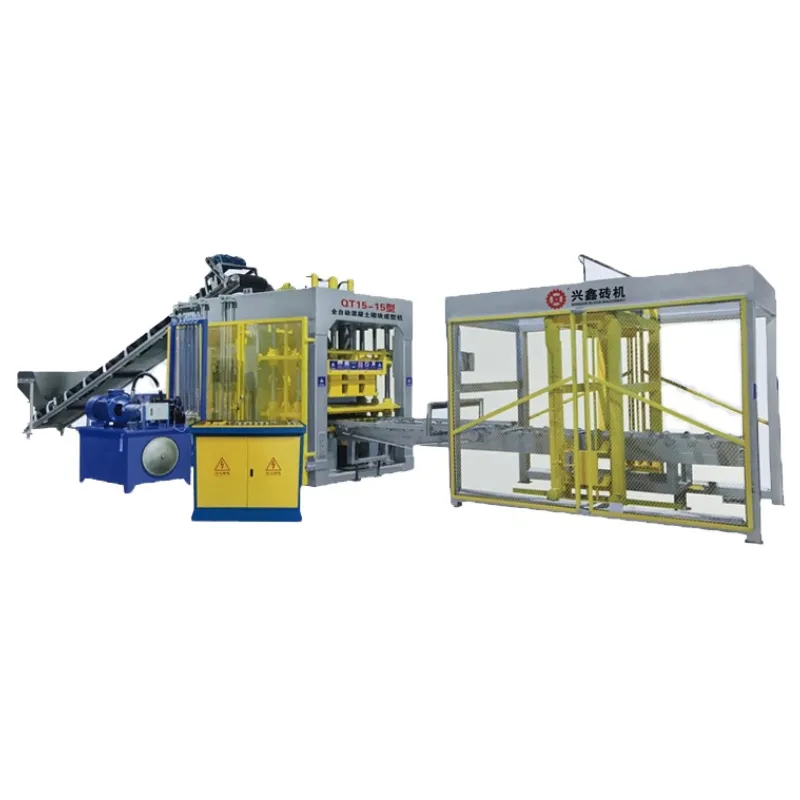
Core Factors That Determine Daily Brick Production Capacity
Brick production capacity is not defined by a single machine. It is the result of system-level coordination.
Machine Cycle Time and Automation Level
Cycle time refers to how long it takes to complete one molding cycle. Fully automatic machines with hydraulic and vibration systems can achieve shorter and more consistent cycle times than semi-automatic setups.
Automation reduces reliance on manual handling, minimizes variability, and supports higher daily output without increasing labor intensity.
Mold Design and Brick Type
Different brick sizes and shapes directly influence capacity. Solid blocks, hollow blocks, and pavers all require different mold configurations and compaction times.
For example, larger hollow blocks typically reduce the number of units produced per cycle but may deliver higher value per unit, which must be factored into production planning.
Raw Material Preparation and Mixing
Inconsistent material feeding or poor mixing slows production and increases rejection rates. High-capacity plants rely on continuous batching systems to ensure uniform material quality and uninterrupted machine operation.
Production Line Configuration and Capacity Scaling
Daily output is heavily influenced by how equipment is arranged and integrated.
Single Machine vs Integrated Production Line
A standalone machine may achieve high cycle speed but become constrained by pallet handling, stacking, or curing space.
An integrated línea de producción de bloques de hormigón connects batching, molding, conveying, stacking, and curing into a continuous flow, significantly improving effective daily capacity.
Curing and Storage Bottlenecks
Even if molding capacity is high, insufficient curing space can limit daily output. Bricks must reach handling strength before stacking or shipment.
Efficient curing systems, whether natural or controlled, are essential to prevent production backlogs.
Shift Structure and Operating Hours
Daily capacity scales linearly with operating hours only if supporting systems keep pace. Extending from one shift to two shifts requires proportional increases in staffing, maintenance planning, and material supply.
Equipment Selection and Its Impact on Output Stability
Choosing the right equipment is central to achieving predictable daily production.
Machine Structural Design and Durability
Machines designed for continuous industrial use maintain stable cycle times under load. Frame rigidity, hydraulic system quality, and vibration consistency all influence long-term capacity retention.
A robust máquina para fabricar bloques ensures that output remains stable even as operating hours accumulate.
Maintenance Strategy and Downtime Control
Preventive maintenance scheduling reduces unplanned downtime, which is one of the largest hidden drains on daily capacity.
Factories that track performance metrics such as cycle consistency and fault frequency are better positioned to maintain output targets.
Operator Skill and Training
Even highly automated systems require trained operators. Improper setup or delayed response to alarms can significantly reduce effective daily production.
Aligning Daily Capacity with Market Demand and Construction Use
Production capacity must align with downstream demand to avoid overproduction or missed opportunities.
Understanding End-Use Applications
Capacity planning should reflect how bricks are used in construction projects. Knowing what is block work in construction helps manufacturers anticipate demand fluctuations tied to housing, infrastructure, and seasonal building cycles.
Customization vs Volume Production
Factories producing customized blocks may accept lower daily capacity in exchange for higher margins, while large infrastructure suppliers prioritize volume and consistency.
Balancing these factors is a strategic decision rather than a purely technical one.
Capacity Comparison Table by Production Configuration
| Configuration Type | Typical Daily Output Range | Nivel de automatización | Suitable Business Model |
|---|---|---|---|
| Semi-automatic line | 5,000–15,000 blocks | Medium | Small to mid-scale local supply |
| Fully automatic line | 20,000–60,000 blocks | Alta | Regional commercial projects |
| High-capacity integrated plant | 80,000+ blocks | Very high | Infrastructure and export supply |
Scaling Daily Brick Production Capacity Without Excessive Risk
Scaling output should be a controlled process supported by data.
Modular Expansion Approach
Adding machines, pallets, or curing racks incrementally allows manufacturers to increase capacity without disrupting existing operations.
Energy and Utility Planning
Higher capacity increases demand for electricity, water, and compressed air. Early utility planning prevents bottlenecks that limit production despite equipment upgrades.
Financial and ROI Considerations
Capacity expansion should be tied to confirmed orders or long-term contracts. This reduces financial exposure and improves investment efficiency.
Contact our technical team to discuss your daily brick production capacity goals.
Common Misconceptions About Daily Brick Production Capacity
One common misconception is that faster machines always deliver higher daily output. In reality, supporting systems such as curing and stacking often limit capacity.
Another misunderstanding is assuming capacity remains constant over time. Wear, maintenance quality, and operator turnover all influence long-term performance.
FAQ: Daily Brick Production Capacity
Q1: How do I calculate daily brick production capacity for my factory?
Multiply effective cycle output by operating hours, then adjust for downtime, curing constraints, and rejection rate.
Q2: Can one machine meet both small and large project demands?
Some machines offer flexible mold systems, but sustained high-volume production usually requires integrated lines.
Q3: Does higher capacity always mean lower cost per brick?
Not always. Energy use, labor, and maintenance costs must be balanced against increased output.
Q4: How long does it take to scale capacity after installation?
Most factories require a stabilization period of several weeks to reach consistent rated output.
Acerca de Kimberly Machinery
Kimberly Machinery is a professional brick machine supplier specializing in reliable, high-efficiency block and brick production solutions. With a focus on engineering integrity, scalable automation, and long-term operational stability, Kimberly Machinery supports manufacturers worldwide in achieving predictable output and sustainable growth. Our equipment and technical services are designed to help customers maximize daily production capacity while controlling lifecycle costs.
Referencias
- Wikipedia, Concrete masonry unit, https://en.wikipedia.org/wiki/Concrete_masonry_unit
- Wikipedia, Manufacturing, https://en.wikipedia.org/wiki/Manufacturing
- International Labour Organization, Productivity in Manufacturing