


What Materials Can Be Used in a Brick Machine? A Practical Guide for Industrial Buyers
enero 9, 2026
What materials can be used in a brick machine? In short, modern brick machines can process a wide range of raw materials, including cement, sand, aggregates, fly ash, slag, stone dust, recycled construction waste, and even certain industrial by-products. The exact material combination depends on the brick type, strength requirements, local regulations, and the machine’s design. For industrial buyers, understanding material compatibility is critical to controlling production cost, ensuring consistent quality, and maximizing return on investment.
Core Raw Materials Used in Brick Machines
The most common materials used in brick machines form the backbone of concrete and block production worldwide. These materials are widely available, cost-effective, and easy to control during mass production.
Cement is the primary binding material. Ordinary Portland cement is typically used because it offers predictable setting time and compressive strength. The cement content directly influences brick strength, curing time, and long-term durability.
Sand acts as a fine aggregate and fills voids between coarse particles. Clean, well-graded river sand or manufactured sand is preferred. Excessive clay or silt content can weaken bricks and affect surface quality.
Coarse aggregates, such as crushed stone or gravel, provide structural strength. Aggregate size must match mold design and vibration parameters to ensure proper compaction.
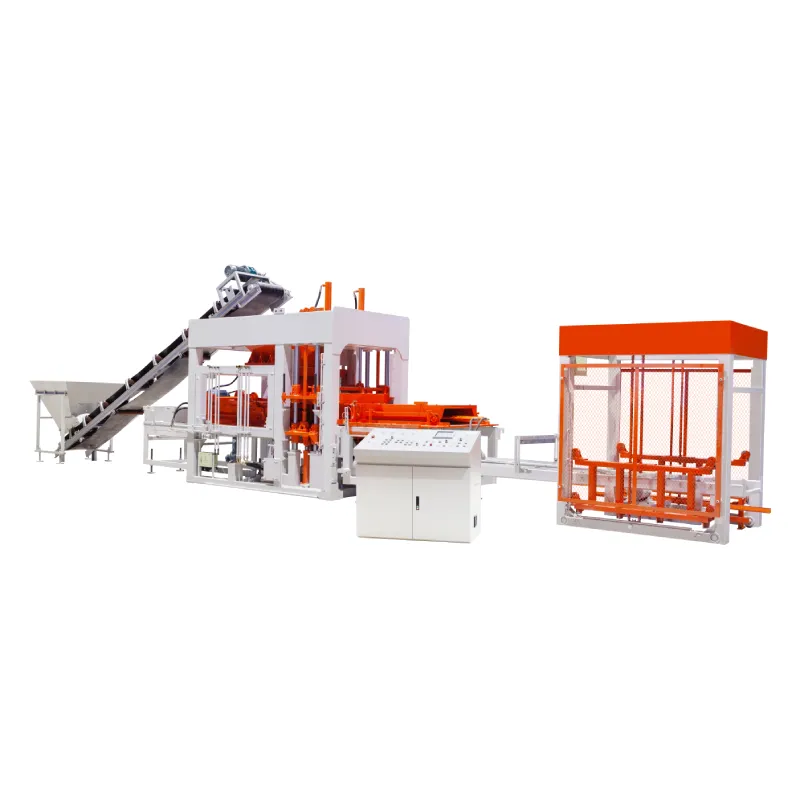
Many manufacturers rely on a máquina para fabricar bloques to process these core materials efficiently, producing uniform blocks with consistent density and strength for large-scale construction projects.
Industrial By-Products and Supplementary Materials
To reduce costs and improve sustainability, many brick manufacturers incorporate industrial by-products into their material mix.
Fly ash is one of the most widely used alternatives. It is a by-product of coal-fired power plants and can partially replace cement. Fly ash improves workability, reduces heat of hydration, and enhances long-term strength when properly cured.
Ground granulated blast furnace slag (GGBS) is another valuable material. It improves durability, sulfate resistance, and compressive strength while reducing cement consumption.
Lime powder is sometimes added to improve early strength development and surface finish, especially in fly ash-based bricks.
These materials can be efficiently handled by a modern máquina de bloques designed with accurate batching systems and high-frequency vibration to ensure consistent quality despite material variation.
Recycled and Alternative Materials in Brick Production
As sustainability becomes a priority in construction, recycled materials are increasingly used in brick machines.
Construction and demolition waste, such as crushed concrete and bricks, can be processed into recycled aggregates. When properly screened and graded, these materials can replace part of natural aggregates without significantly compromising strength.
Stone dust and quarry fines are often used as filler materials. They improve particle packing and reduce voids, resulting in denser bricks.
Some regions also experiment with glass powder, ceramic waste, and even mining tailings. While promising, these materials require careful testing to ensure compliance with local standards.
A high-performance máquina de bloques de hormigón with strong compaction force and precise control is essential when working with recycled materials, as variability in particle size and moisture content can affect final product quality.
Material Selection Based on Brick Types
Different brick products require different material combinations. Understanding this relationship helps buyers choose the right production strategy.
Solid concrete bricks typically use higher cement content and well-graded aggregates to achieve high compressive strength.
Hollow blocks rely on optimized aggregate grading and controlled cement dosage to maintain strength while reducing weight and material cost.
Paving blocks often include higher cement content, fine aggregates, and sometimes pigments for color consistency and surface durability.
Fly ash bricks prioritize industrial by-products and require longer curing periods to reach design strength.
Choosing the right material mix is just as important as choosing the right machine. Poor material compatibility can lead to cracking, low strength, or inconsistent dimensions.
Key Factors Affecting Material Performance in Brick Machines
Several technical factors influence how materials behave during brick production:
- Moisture content must be tightly controlled. Too much water reduces strength, while too little prevents proper compaction.
- Particle size distribution affects mold filling and surface finish.
- Cement quality impacts early strength and curing behavior.
- Vibration frequency and pressure determine compaction efficiency.
- Curing conditions influence long-term durability.
Below is a practical comparison table showing common materials and their characteristics:
| Material Type | Primary Function | Cost Impact | Strength Contribution | Sustainability Benefit |
|---|---|---|---|---|
| Cement | Binding | Alta | Very High | Low |
| Sand | Fine aggregate | Medium | Medium | Low |
| Crushed Stone | Structural support | Medium | Alta | Low |
| Fly Ash | Cement replacement | Low | Medium–High | Alta |
| GGBS | Durability enhancement | Medium | Alta | Alta |
| Recycled Aggregate | Cost reduction | Low | Medium | Very High |
How Industrial Buyers Should Choose Materials Strategically
For industrial buyers, material selection is not only a technical decision but also a commercial one.
Local availability plays a major role. Transport costs can exceed raw material costs if sourcing is inefficient.
Regulatory standards must be considered. Some regions limit the percentage of industrial waste allowed in structural bricks.
Production volume and automation level also matter. High-output plants require stable material supply and consistent quality to avoid downtime.
Finally, long-term maintenance and customer expectations should guide decisions. Bricks used in load-bearing structures demand higher safety margins than non-structural blocks.
FAQ: Materials Used in Brick Machines
Q1: Can one brick machine use multiple types of materials?
Yes. Most modern brick machines are designed to handle various material combinations, provided proper mix design and calibration are applied.
Q2: Is fly ash suitable for structural bricks?
Fly ash can be used for structural bricks if the mix design, curing process, and strength testing meet local building codes.
Q3: Can recycled materials reduce production costs?
Yes. Recycled aggregates and industrial by-products often reduce raw material costs, but quality control is essential.
Q4: Do different materials affect machine wear?
Yes. Abrasive materials like crushed stone and recycled aggregates can increase mold and liner wear if not properly managed.
Q5: How often should material mixes be tested?
Material mixes should be tested whenever raw material sources change or when product specifications are updated.
About Kimberly
Kimberly specializes in advanced brick and block production solutions for global construction markets. With a focus on automation, durability, and material adaptability, Kimberly provides reliable machinery designed to handle diverse raw materials while maintaining consistent quality and high productivity. Our solutions help manufacturers reduce costs, improve efficiency, and meet evolving industry standards.