


A Data-Backed Guide: 5 Factors for Selecting the Right Brick Manufacturing Machine in 2025 for SEA & ME Markets
décembre 26, 2025
Résumé
The selection of an appropriate brick manufacturing machine represents a foundational investment for enterprises aiming to capitalize on the robust construction sectors of Southeast Asia and the Middle East in 2025. This document examines the pivotal factors influencing this decision, presenting a comparative analysis between fully automatic systems, such as the QT series, and static hydraulic presses. It explores the intricate relationship between machine type and the availability of regional raw materials, including sand, aggregates, and industrial byproducts like fly ash. The analysis extends to production capacity, levels of automation, and their direct implications on labor costs and operational efficiency. Furthermore, the versatility of different machines in producing a wide array of products—from hollow blocks to interlocking pavers—is evaluated against market demands. A comprehensive framework for assessing the Total Cost of Ownership (TCO) and Return on Investment (ROI) is provided, considering elements beyond the initial acquisition price. The importance of after-sales support and adherence to regional building codes and sustainability standards is also thoroughly discussed, offering a holistic guide for prospective investors.
Principaux enseignements
- Analyze local raw materials to reduce costs and enhance sustainability.
- Match automation levels to your labor market and production volume goals.
- Choose a versatile brick manufacturing machine to meet diverse market needs.
- Evaluate Total Cost of Ownership, not just the initial purchase price.
- Prioritize suppliers offering strong after-sales support and regional expertise.
- Ensure your chosen machine complies with local green building standards.
- Select equipment capable of producing high-density, durable concrete blocks.
Table des matières
- A Deep Dive into Raw Materials: The Foundation of Your Blocks
- Decoding Production Needs: Capacity, Automation, and Labor
- The Art of Versatility: Maximizing Your Product Portfolio
- Financial Prudence: Calculating True Cost and Long-Term Returns
- The Human Element: Support, Compliance, and Future-Proofing
- Foire aux questions (FAQ)
- Conclusion
- Références
A Deep Dive into Raw Materials: The Foundation of Your Blocks
The journey to producing high-quality bricks begins not with the machine itself, but with the earth. The materials you have readily available will fundamentally shape your operational strategy, cost structure, and even the type of brick manufacturing machine best suited for your enterprise. In the diverse geological landscapes of Southeast Asia and the Middle East, a one-size-fits-all approach to raw materials is a recipe for inefficiency. A thoughtful examination of local resources is the first principle of a successful block production business. This involves more than just identifying what is cheap or abundant; it requires a nuanced understanding of material properties and their interaction with different machine technologies.
Imagine two entrepreneurs, one in the sandy plains near Riyadh, Saudi Arabia, and another near a major industrial zone outside of Ho Chi Minh City, Vietnam. The former has nearly limitless access to desert sand, while the latter can source fly ash, a byproduct of coal-fired power plants. Their optimal choice of machinery and production process will, and should, differ dramatically. The ability to adapt the material mix to local conditions is a powerful economic and environmental advantage. For instance, incorporating waste materials not only lowers input costs but also positions a company as a contributor to the circular economy, an increasingly important credential in markets with growing environmental regulations (Gursel et al., 2014).
Analyzing Local Aggregates and Sands
The primary components of a concrete block are aggregates (crushed stone, gravel), sand, a binder (typically cement), and water. The quality, size, and shape of these aggregates are not minor details; they are the very skeleton of the final product.
In many parts of the Middle East, the prevalence of fine desert sand presents a unique challenge. While abundant, this sand often consists of rounded, smooth particles. Think of trying to build a stable structure with marbles versus one with jagged, interlocking stones. The marbles will slide past each other. Similarly, rounded sand particles create a weaker bond within the concrete matrix, potentially requiring a higher ratio of cement to achieve the necessary compressive strength. This, in turn, increases costs, as cement is often the most expensive ingredient. A prospective buyer in this region must ask: Can the brick manufacturing machine I am considering effectively compact a mix with a high percentage of fine, rounded sand? Machines with high-frequency vibration combined with strong hydraulic pressure are often better equipped to handle such materials. The vibration helps the fine particles settle into a dense arrangement, while the hydraulic press ensures a powerful compaction that compensates for the less-than-ideal particle shape.
Conversely, in many parts of Southeast Asia, access to high-quality crushed stone and river sand is more common. These materials, with their angular shapes and varied sizes, create a natural interlocking effect. This is known as good particle size distribution or grading. A well-graded aggregate mix requires less cement paste to fill the voids between particles, leading to a stronger, more durable, and more economical block. For a business with access to such materials, a wider range of machines might be suitable. However, the consistency of the supply chain must be vetted. A machine calibrated for a specific aggregate size will perform poorly if the supplier starts delivering material with a different grading. Therefore, an on-site testing facility, even a basic one for sieve analysis, can be an invaluable asset.
The table below offers a simplified comparison of common aggregate types found in these regions and their implications for block production.
| Material Type | Common Regions | Particle Shape | Implications for Brick Manufacturing Machine | Cost Factor |
|---|---|---|---|---|
| Desert Sand | Middle East | Fine, Rounded | Requires high vibration and pressure; may need more cement. | Low material cost, but potentially higher binder cost. |
| River Sand | Southeast Asia | Sub-angular | Good workability; suitable for a wide range of machines. | Moderate; availability can be affected by environmental regulations. |
| Crushed Stone | Both | Angular, Irregular | Excellent interlocking for high strength; causes more wear on molds. | Moderate to High; depends on quarry proximity and processing. |
| Fly Ash | Southeast Asia | Spherical, Fine | Can replace a portion of cement, improving long-term strength and reducing costs. | Low to Very Low; often a waste product. |
| Slag | Both | Irregular | Can also be used as a cementitious replacement; enhances durability. | Low; a byproduct of steel manufacturing. |
Leveraging Industrial Byproducts for Green Building
The concept of "waste" is increasingly being redefined as "resource out of place." For the savvy brick manufacturer, industrial byproducts represent a golden opportunity. In rapidly industrializing nations across Southeast Asia, materials like fly ash (from power plants) and ground granulated blast-furnace slag (from steel mills) are produced in vast quantities. These are not merely fillers; they are pozzolanic materials. A pozzolan is a substance that, when combined with calcium hydroxide (a byproduct of cement hydration) and water, exhibits cementitious properties.
What does this mean in practical terms? It means you can replace a significant portion of your expensive Portland cement—sometimes up to 30% or more, depending on the application and local standards—with these low-cost or even no-cost byproducts. The benefits are threefold:
- Cost Reduction: Directly cutting down on the most expensive raw material.
- Environmental Stewardship: Reducing the carbon footprint of your products, as cement production is highly energy-intensive. This is a powerful marketing tool for projects seeking green building certifications.
- Improved Product Quality: Fly ash particles are typically spherical and very fine. They act like microscopic ball bearings in the mix, improving its workability and flow into the mold. Over the long term, the pozzolanic reaction can lead to denser, less permeable, and more durable blocks that are more resistant to chemical attack (Siddique, 2008).
However, incorporating these materials requires a brick manufacturing machine with a precise batching and mixing system. The ratios must be exact. A fully automatic plant with computer-controlled weigh batchers is almost a necessity to consistently produce high-quality blocks using these supplementary cementitious materials (SCMs). A simple volume-based batching system is prone to inaccuracies that can compromise the strength of every block produced.
The Chemistry of Binders and Water Quality
The binder, which is most often Ordinary Portland Cement (OPC), is the glue that holds everything together. The choice of cement type and the quality of the water used are critical variables. In the hot climates of the Middle East and Southeast Asia, the chemical reactions of cement hydration happen much faster. This can be a problem if the mix begins to set before it is properly molded and compacted.
Water quality is another often-overlooked factor. Water with high levels of dissolved salts, particularly chlorides and sulfates, can be detrimental. Chlorides can accelerate the corrosion of any steel reinforcement used in conjunction with the blocks, while sulfates can lead to a phenomenon known as sulfate attack, where the hardened concrete expands and cracks over time. In coastal areas or regions where water is sourced from borewells with high mineral content, it is imperative to test the water. A simple water quality test can prevent catastrophic, long-term product failures. The brick manufacturing machine's mixing system must be robust and easy to clean, especially if dealing with water that might cause scaling or residue buildup.
Your raw material strategy should be a conscious choice, not an accident of geography. It requires investigation, testing, and a deep conversation with potential machine suppliers. A reputable manufacturer will not just sell you a machine; they will ask about your sand, your stone, and your water. They will help you understand how their technology can be optimized for your specific inputs, turning your local resources into a competitive advantage.
Decoding Production Needs: Capacity, Automation, and Labor
After establishing a clear understanding of your raw materials, the next logical step is to quantify your production ambitions. How many blocks do you need to produce per day, per week, per year? The answer to this question is the primary determinant of the scale and sophistication of the brick manufacturing machine you will require. This is not simply a matter of choosing the biggest or fastest machine. It is a complex equation involving market demand, labor availability and cost, capital investment, and desired product quality. In this section, we will dissect the relationship between production capacity, automation level, and the human element of labor, focusing on the two main archetypes of machinery: fully automatic production lines and static hydraulic presses.
Imagine you are a conductor leading an orchestra. A small chamber ensemble can be led with intimate gestures and direct communication with each musician. This is akin to a semi-automatic or static hydraulic press operation. It requires skilled hands and constant oversight but can produce beautiful results on a smaller scale. Now, imagine conducting a full symphony orchestra with a hundred musicians. You need a more systematic approach—a clear score, section leaders, and precise, overarching direction. This is the world of the fully automatic block making machines, like the QT series. The conductor (the central PLC controller) directs the entire process with precision and speed, producing a massive, consistent output. Neither approach is inherently "better"; they are simply suited for different symphonies of production.
Fully Automatic (QT Series) vs. Static Hydraulic Presses
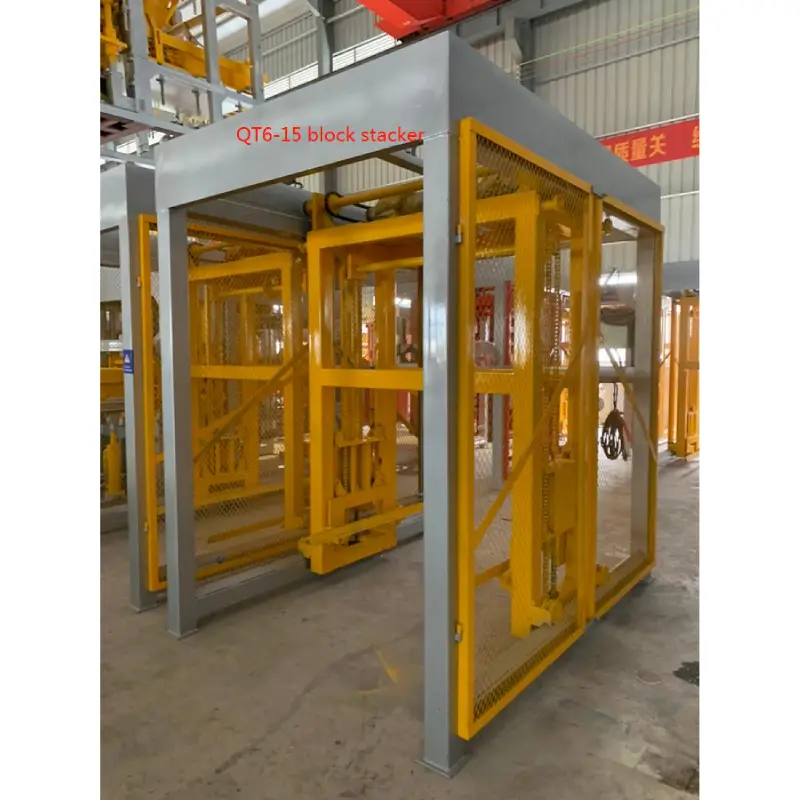
Let's begin by defining our terms. A fully automatic brick manufacturing machine, often designated by models like QT6-15, QT8-15, or QT10-15, represents a complete production system. The "QT" often refers to the Chinese word "Quánzìdòng T," meaning fully automatic. In these systems, every step from batching and mixing the raw materials to molding, palletizing the fresh blocks, and even curing can be automated and controlled by a Programmable Logic Controller (PLC). Human intervention is minimal, typically relegated to supervision, maintenance, and quality control checks. These machines use a combination of high-frequency vibration and hydraulic pressure to form the blocks. The production is continuous, with cycle times often as low as 15-25 seconds.
A machine de pressage de blocs hydrauliques statiques, on the other hand, relies primarily on immense hydraulic force to compact the material. Vibration may be used, but it is often secondary to the pressing action. These machines are typically semi-automatic. While the pressing cycle itself is automated, the loading of material into the mold and the removal of the finished blocks often require manual labor. They are "static" because the machine itself does not move; blocks are produced on pallets which are then manually or semi-automatically transported to a curing area.
The following table provides a high-level comparison to guide your thinking.
| Fonctionnalité | Fully Automatic (e.g., QT Series) | Static Hydraulic Press (Semi-Automatic) |
|---|---|---|
| Primary Force | High-Frequency Vibration + Hydraulic Pressure | High Hydraulic Pressure |
| Niveau d'automatisation | High (PLC controlled) | Low to Medium |
| Besoins en main-d'œuvre | Low (3-5 workers for supervision) | High (8-12 workers for material handling) |
| Investissement initial | Haut | Low to Medium |
| Production Production | Very High (e.g., 10,000+ blocks/8hr) | Medium (e.g., 3,000-5,000 blocks/8hr) |
| Cohérence des produits | Excellent | Good, but operator-dependent |
| Durée du cycle | Fast (15-25 seconds) | Slower (25-40 seconds) |
| Maintenance | Requires skilled technicians (electrical, hydraulic) | Simpler mechanical and hydraulic systems |
Calculating Your Required Output: A Market-Driven Approach
Before you are dazzled by specifications of "blocks per hour," you must do your homework. Analyze your target market. Are you supplying large-scale infrastructure projects in Dubai that require a consistent supply of hundreds of thousands of blocks? Or are you catering to small-scale residential builders in a rural province of the Philippines?
A simple calculation can provide a starting point:
- Estimate Daily Demand: Talk to potential customers, study construction tenders, and analyze market growth reports. Let's say you identify a reliable demand for 8,000 standard hollow blocks (e.g., 400x200x200mm) per day.
- Factor in Operational Efficiency: No plant runs at 100% capacity, 100% of the time. You must account for shift changes, maintenance, and unforeseen downtime. A conservative efficiency rate of 80% is a good starting point.
- Calculate Required Machine Capacity:
- Target Output = 8,000 blocks/day
- Required Theoretical Output = Target Output / Efficiency Rate = 8,000 / 0.80 = 10,000 blocks/day.
- Match to Machine Specifications: Now you can look at manufacturer specifications. A machine like the QT8-15 might be advertised with a capacity of around 12,000 blocks per 8-hour shift. This would comfortably meet your required theoretical output, giving you a buffer for growth or for producing different, more time-consuming block types. A smaller machine, like a QT4-25 with a capacity of around 4,000 blocks/shift, would require you to run two shifts or purchase two machines, which has its own set of logistical and cost implications.
Choosing a machine with too little capacity means leaving money on the table and potentially losing contracts. Choosing one with excessive capacity means your large capital investment sits idle, depreciating without generating revenue. The choice must be a deliberate balance between ambition and market reality.
The Labor Equation in Southeast Asia and the Middle East
The cost and availability of labor vary immensely between and within these two regions. In some countries, labor is abundant and relatively inexpensive, which might make a semi-automatic static hydraulic press seem attractive due to its lower initial cost. However, this is a potentially short-sighted view.
First, "unskilled" labor is a misnomer. Even in a manual operation, workers need to be trained, reliable, and physically capable. High employee turnover, a common issue in strenuous jobs, can cripple production consistency. An operation dependent on 10 manual laborers is ten times more vulnerable to absenteeism than one supervised by three technicians.
Second, quality is directly linked to the operator. With a manual system, the consistency of material loading and the rhythm of the work directly impact the density and strength of the blocks. One tired worker can produce a batch of weak blocks that could lead to a failed quality test and reputational damage. A fully automatic brick manufacturing machine eliminates this human variability. The PLC does not get tired. It doses the same amount of material, vibrates for the same duration, and applies the same pressure, cycle after cycle. This results in a level of product consistency that is nearly impossible to achieve manually.
Third, rising labor costs are a global trend. A business model built on cheap labor today may become unprofitable in five to ten years. Investing in automation is a way of future-proofing your operation against wage inflation. In many parts of the Middle East, where labor is often sourced from expatriate workers and subject to complex regulations, reducing the number of employees through automation can significantly simplify human resource management and reduce associated costs (visas, housing, etc.).
The decision is not just about comparing the initial purchase price to a few years of salary. It is about risk management, quality control, and building a resilient, long-term business. The higher initial investment in an automated system can be viewed as purchasing insurance against labor volatility and quality inconsistency.
The Art of Versatility: Maximizing Your Product Portfolio
In the dynamic construction markets of Southeast Asia and the Middle East, being a one-trick pony is a risky business strategy. The ability to produce a diverse range of high-quality masonry products is not a luxury; it is a competitive necessity. A single large-scale project might require standard hollow blocks for walls, dense solid blocks for foundations, decorative paving bricks for walkways, and specially shaped curb-stones for roads. If you can supply all these products from a single production facility, you become an invaluable partner to contractors, simplifying their procurement and ensuring consistent quality across all elements of the build. This is where the versatility of your chosen brick manufacturing machine comes to the forefront.
The heart of a machine's versatility lies in its mold. The mold is the precisely engineered steel box that gives the block its final shape and dimensions. The ability to quickly and easily change these molds is what transforms a simple block maker into a multi-product manufacturing hub. Think of the mold as a baking tin. With a single oven (your machine), you can bake a rectangular loaf, a round cake, or a tray of individual muffins simply by swapping out the tins. The more "tins" you have and the easier they are to change, the more responsive you can be to the market's appetite.
From Hollow Blocks to Interlocking Pavers: The Power of Molds
Let's explore the spectrum of products a modern brick manufacturing machine can create:
- Hollow Blocks: These are the workhorses of the construction industry, used for the vast majority of internal and external walls. Their hollow cores reduce weight, save on material, and provide excellent thermal and acoustic insulation. They come in various sizes (e.g., 4, 6, or 8 inches wide) and core configurations.
- Solid Blocks: Denser and heavier than their hollow counterparts, these are used where greater load-bearing capacity or sound insulation is required, such as in foundations, partition walls between apartments, or industrial buildings.
- Paving Bricks (Pavers): Used for driveways, sidewalks, plazas, and container yards. These are designed to be interlocking and are produced to high tolerances to ensure a smooth, durable surface. They can be made in a variety of shapes (rectangular, "S" shape, "Z" shape) and colors. Producing high-quality pavers often requires a machine capable of a "face mix" system, where a base layer of standard concrete is topped with a thin layer of fine aggregates and pigments for a decorative, hard-wearing finish.
- Curb-stones (Kerbstones): These form the edge of roads and sidewalks. They require high strength and durability to withstand traffic and weather. Their shapes are often complex, requiring robust and precisely machined molds.
- Specialty Products: This category includes grass pavers (grids that allow grass to grow through, used for "green" parking areas), retaining wall blocks (for landscaping and erosion control), and chimney blocks.
The ability to produce this wide range is contingent on two factors related to your brick manufacturing machine: the mechanical design for mold changing and the technological capability to produce different block types.
Fully automatic lines, like the QT series, are often designed for rapid mold changes. In some advanced systems, a mold change can be accomplished in as little as 15-20 minutes. This agility allows a manufacturer to switch production from hollow blocks in the morning to pavers in the afternoon, responding almost in real-time to a customer's urgent order. Static hydraulic presses can also have interchangeable molds, but the process may be more manual and time-consuming.
Technical Capabilities: Vibration vs. High Pressure for Different Products
The type of product you want to make also influences the type of machine technology you need. For products that require high density and compressive strength, such as heavy-duty pavers or solid blocks, the combination of intense vibration and high hydraulic pressure is ideal. The vibration ensures the material particles are densely packed, eliminating voids, while the hydraulic press provides the final, powerful squeeze to create a block of superior strength. A machine that relies solely on pressure may struggle to achieve the same level of compaction and density.
For standard hollow blocks, the balance of vibration and pressure is still important, but the parameters might be different. The goal is to create a strong web and shell structure without causing the block to deform under pressure. Advanced PLC systems on automatic machines allow operators to save "recipes" for each block type. These recipes define the exact vibration time, frequency, and hydraulic pressure for that specific product. When a mold is changed, the operator simply loads the corresponding recipe, ensuring optimal and consistent production for that block type.
The production of colored, multi-layer pavers requires even more sophistication. A dedicated face-mix unit is needed. This is essentially a secondary, smaller hopper and feeding system that deposits a thin layer of colored concrete on top of the base mix just before pressing. This process must be perfectly timed and controlled to create a distinct, durable color layer without it bleeding into the base. This capability is typically found on higher-end, fully automatic concrete block making machine models.
Meeting Regional Architectural Trends
The architectural styles and construction methods in Southeast Asia and the Middle East also dictate product demand. In many Middle Eastern countries, there is a strong emphasis on robust, thermally massive construction to combat the extreme heat. This drives demand for high-quality, thick hollow blocks and insulated block systems. Aesthetic considerations are also paramount, with a growing market for decorative blocks and high-end pavers for villas, resorts, and public spaces.
In Southeast Asia, particularly in urban areas, rapid high-rise construction is common. This creates demand for lightweight blocks that reduce the dead load on the building's structural frame. There is also a significant market for interlocking pavers for infrastructure projects aimed at managing traffic and improving urban environments. In coastal and typhoon-prone areas, there is a need for high-strength blocks that can withstand extreme weather conditions.
A versatile brick manufacturing machine allows a business to cater to these varied and evolving needs. Before investing, a manufacturer should not only consider their current market but also anticipate future trends. Will green building standards drive demand for insulated or permeable pavers? Will a shift towards modular construction require new types of blocks? Choosing a machine with the flexibility to adapt is choosing to be resilient in a market that is in constant flux.
Financial Prudence: Calculating True Cost and Long-Term Returns
An investment in a brick manufacturing machine is one of the most significant capital expenditures a construction materials business will make. The temptation can be strong to focus on the initial number on the price tag. However, a truly prudent financial analysis looks far beyond this figure to embrace the concept of Total Cost of Ownership (TCO). TCO is a more holistic and realistic measure of the financial impact of an asset over its entire lifecycle. It encompasses not just the purchase price but also all direct and indirect costs associated with its operation, maintenance, and eventual replacement.
Thinking in terms of TCO is like choosing a car. One car might have a lower sticker price, but it might also have poor fuel economy, require expensive imported spare parts, and have a reputation for frequent breakdowns. A second car, while more expensive upfront, might be highly fuel-efficient, have readily available and affordable parts, and be known for its reliability. Over a five-year period, the "cheaper" car could easily end up costing you more. The exact same logic applies to industrial machinery, where the stakes are much higher. For a business in the competitive markets of the Middle East or Southeast Asia, mastering the TCO calculation is fundamental to ensuring long-term profitability and a healthy Return on Investment (ROI).
Beyond the Sticker Price: Unpacking Total Cost of Ownership (TCO)
Let's break down the key components that constitute the TCO of a brick manufacturing machine:
-
Acquisition Cost: This is the most obvious component—the price of the machine itself, including the main press, mixer, batching plant, PLC system, and initial set of molds. It also includes shipping, insurance, and import duties, which can be significant when sourcing from a country like China to the Middle East or Southeast Asia.
-
Installation and Commissioning Costs: The machine does not simply arrive and start working. It requires a prepared foundation, assembly, electrical and hydraulic connections, and calibration. Reputable manufacturers often send their own technicians to supervise this process. While this may add to the initial cost, it is an invaluable investment to ensure the machine is set up correctly from day one. A faulty installation can lead to chronic performance issues and premature wear.
-
Operational Costs: These are the ongoing, daily costs of running the machine.
- Consommation d'énergie : This is a major factor. A large, fully automatic line has numerous motors—for the mixer, conveyor belts, hydraulic pump, and vibrators. The total power rating (often measured in kilowatts, kW) will be listed in the machine's specifications. A machine with more efficient motors (e.g., from reputable brands like Siemens, as noted in many supplier catalogs) and a well-designed hydraulic system can save a substantial amount on electricity bills over its lifetime.
- Coûts de main-d'œuvre : As discussed previously, this is a direct trade-off with the level of automation. The annual cost of salaries, benefits, and associated administrative overhead for all plant operators must be included.
- Raw Material Costs: While not a cost of the machine itself, the machine's efficiency impacts material usage. A machine that produces a high percentage of rejected, out-of-spec blocks is wasting expensive cement and aggregates every day.
-
Maintenance and Spare Parts Costs: This is a critical and often underestimated component of TCO.
- Molds: Molds are wear parts. The constant abrasion from aggregates will eventually wear them down, affecting the dimensions and quality of the blocks. High-quality molds, often made from manganese steel and subjected to heat treatment and carburizing processes, will have a much longer life but a higher initial cost. Budgeting for mold replacement is essential.
- Consommables : These include hydraulic oil, filters, and lubricants. Following the manufacturer's recommended service intervals is crucial for machine longevity.
- Spare Parts: Hydraulic pumps, hoses, PLC components, sensors, and vibrator motors will eventually fail. A key question for your supplier is the availability and cost of these parts. Do they use components from internationally recognized brands (e.g., Siemens, Schneider, Yuken) that can be sourced locally in your country? Or will you have to wait weeks for a proprietary part to be shipped from the factory, during which time your entire operation is shut down? The cost of downtime often far exceeds the cost of the spare part itself.
Calculating Return on Investment (ROI): When Does Your Machine Pay for Itself?
ROI is the metric that tells you how profitable your investment is. In its simplest form, the calculation is:
ROI (%) = (Net Profit / Total Investment) x 100
To perform a meaningful ROI projection, you need to build a simple financial model. Let's walk through a hypothetical example for a medium-sized automatic brick manufacturing machine.
Assumptions:
- Total Investment (TCO for Year 1): $150,000 (includes machine, shipping, installation, and initial setup)
- Product: Standard hollow block (400x200x200mm)
- Production: 8,000 blocks/day, 25 days/month, 12 months/year = 2,400,000 blocks/year
- Selling Price per Block: $0.35
- Cost of Goods Sold (COGS) per Block: $0.20 (includes raw materials, energy, labor, and maintenance allocation)
Calculation:
- Annual Revenue: 2,400,000 blocks * $0.35/block = $840,000
- Annual COGS: 2,400,000 blocks * $0.20/block = $480,000
- Annual Gross Profit: $840,000 – $480,000 = $360,000
- Simple Payback Period: Total Investment / Annual Gross Profit = $150,000 / $360,000 = 0.42 years, or approximately 5 months.
- Simple ROI (for Year 1): ($360,000 / $150,000) * 100 = 240%
This is a simplified model, and a real one would include taxes, depreciation, and other overheads. However, it illustrates the powerful potential of these machines. The key is to be realistic with your numbers. Overestimating the selling price or underestimating the COGS will lead to a dangerously optimistic projection. You must research your market thoroughly to get accurate figures.
When comparing two machines—a cheaper semi-automatic one and a more expensive fully automatic one—you should run this ROI calculation for both. The semi-automatic machine will have a lower "Total Investment" but a higher "COGS per Block" due to increased labor and potentially lower material efficiency. The fully automatic machine will have a higher initial investment but a lower COGS per block. You may find that the more expensive machine actually has a faster payback period and a much higher long-term ROI due to its operational efficiencies. This is the power of thinking in terms of TCO and ROI, a mindset that separates successful industrial investors from those who are merely buying equipment.
The Human Element: Support, Compliance, and Future-Proofing
In the world of heavy industrial machinery, the transaction does not end when the payment is made and the equipment is shipped. In many ways, that is just the beginning of a long-term relationship between the manufacturer and the buyer. The most technologically advanced brick manufacturing machine is of little value if it is improperly installed, if its operators are not trained to use it effectively, or if it sits idle for weeks waiting for a critical spare part. This "human element"—the network of support, training, and expertise that surrounds the physical asset—is a profoundly important factor in your investment decision. This is especially true when operating in markets like Southeast Asia and the Middle East, where geographical distance and cultural differences can complicate service and support.
Furthermore, a business does not operate in a vacuum. It exists within a complex web of national and local regulations, building codes, and evolving environmental standards. A forward-thinking investor chooses a machine not just for today's market, but for the regulatory landscape of tomorrow. This involves a commitment to compliance and a strategic effort to future-proof the operation against foreseeable changes.
The Unspoken Value of After-Sales Support
Imagine you have just taken delivery of your new, fully automatic block production line. It's a marvel of engineering, but it's also a complex system of interconnected mechanical, hydraulic, and electronic components. What happens next?
-
Installation et mise en service : A reputable supplier will offer to send their own engineers to your site. This is not just about assembling the machine. These technicians understand the nuances of their equipment. They will ensure the foundations are correct, the alignment is perfect, and every sensor and motor is calibrated for optimal performance. They will conduct the initial test runs, troubleshoot any immediate issues, and only sign off when the plant is running smoothly. Attempting to save money by having a local, inexperienced team handle the installation is a classic example of being "penny wise and pound foolish."
-
Formation des opérateurs : The PLC control panel of a modern brick manufacturing machine can look intimidating. It is the brain of the operation. Proper training is essential to empower your local staff to run the plant efficiently and safely. The supplier's technicians should provide comprehensive, hands-on training that covers:
- The day-to-day operation of the machine.
- How to load and change production "recipes" for different block types.
- Routine maintenance procedures (e.g., cleaning, lubrication, filter changes).
- Basic troubleshooting for common faults and error codes. This transfer of knowledge is invaluable. It builds self-sufficiency within your team and reduces your dependence on calling the manufacturer for every minor issue.
-
Spare Parts and Technical Support: What happens when a hydraulic hose bursts or a sensor fails six months into operation? This is the moment a supplier's quality is truly tested. A good supplier will have a dedicated after-sales support team accessible via phone or email. They should be able to quickly identify the problem and dispatch the necessary parts. As mentioned before, the use of internationally recognized components (like Siemens PLCs or Yuken hydraulic valves) is a major advantage, as it may allow you to source replacements from a local distributor instead of waiting for an international shipment. Before you buy, ask pointed questions: What is your warranty policy? What is the typical lead time for critical spare parts to my country? Do you offer remote diagnostic support?
The quality of after-sales service is a direct reflection of the manufacturer's commitment to their customers' success. A supplier who is difficult to reach or unhelpful after the sale is not a partner you want for a 10- to 20-year asset lifecycle.
Navigating the Maze of Regional Compliance
Every country has its own set of standards for building materials. These are not arbitrary rules; they are in place to ensure public safety. A block that does not meet the minimum required compressive strength could lead to a structural failure. The onus is on you, the producer, to ensure your products consistently meet or exceed these local standards.
Your brick manufacturing machine is your primary tool for ensuring this compliance. A machine that produces blocks with high consistency and density makes it far easier to meet these standards. When you can rely on your machine to produce a quality product every time, you can implement a streamlined Quality Control (QC) process. This might involve regular testing of a sample of blocks from each batch in an on-site compression testing machine. The data from these tests can be used to fine-tune your mix design and machine parameters, creating a virtuous cycle of continuous improvement.
Future-Proofing: The Rise of Green Building Standards
Beyond mandatory building codes, there is a growing global movement towards sustainable or "green" building. This is particularly relevant in the forward-looking markets of the Middle East (e.g., the UAE's Estidama program) and in the rapidly urbanizing and environmentally conscious cities of Southeast Asia. Green building rating systems like LEED (Leadership in Energy and Environmental Design) award points for using materials that are locally sourced, contain recycled content, and have a lower environmental impact.
This is where your choice of a brick manufacturing machine becomes a strategic asset.
- A machine that can effectively incorporate industrial byproducts like fly ash or slag allows you to produce blocks with significant recycled content, making them highly attractive for green building projects.
- The ability to produce specialty products like permeable pavers (which help manage stormwater runoff and reduce the urban heat island effect) or insulated blocks (which improve a building's energy efficiency) can open up new, high-margin markets.
By investing in a versatile, efficient, and technologically advanced brick manufacturing machine, you are not just buying a piece of equipment. You are acquiring the capability to meet the evolving demands of a more sustainable construction industry. You are positioning your business not just as a supplier of commodities, but as a provider of solutions for the resilient and resource-efficient cities of the future. This forward-looking perspective, combined with a strong partnership with a supportive manufacturer, is the ultimate formula for enduring success.
Foire aux questions (FAQ)
What is the average price of a brick manufacturing machine?
The price varies dramatically based on type, capacity, and automation. A small, semi-automatic static hydraulic press might start from $15,000-$25,000. A medium-sized, fully automatic production line (like a QT6-15) could range from $50,000 to $90,000. A large-scale, high-capacity plant (like a QT12-15) with full automation and curing systems can exceed $200,000. These prices are for the core machinery and do not include shipping, installation, or auxiliary equipment.
Can I use desert sand to make concrete blocks?
Yes, but with considerations. Desert sand is often very fine and rounded, which can lead to a weaker concrete mix or require more cement. To use it effectively, you need a brick manufacturing machine with a powerful combination of high-frequency vibration and hydraulic pressure. This helps to compact the fine particles into a dense, strong block. It is also advisable to blend the desert sand with some coarser, more angular sand or crushed stone if available to improve the particle grading.
How many workers are needed for a fully automatic brick plant?
A typical fully automatic plant, such as those in the QT series, requires a surprisingly small crew. Generally, 3 to 5 workers per shift are sufficient. Their roles are primarily supervisory and include one operator for the main PLC control panel, one or two for monitoring the batching and mixing, and a forklift operator for handling raw materials and cured blocks. This is a significant reduction compared to the 8 to 12 workers often needed for a semi-automatic line.
What is the difference between hydraulic pressure and vibration in block making?
Think of it as a two-part process. Vibration is like rapidly shaking a jar of sand to make all the particles settle and pack together as tightly as possible, removing air voids. Hydraulic pressure is like a giant piston then squeezing that compacted sand with immense force. Vibration ensures density and a good internal structure, while pressure provides the final, powerful compaction for high strength. The best machines use a synchronized combination of both to produce superior quality blocks.
How long do the molds last, and are they expensive?
The lifespan of a mold depends on its quality and the abrasiveness of the raw materials used. A standard mold might last for 50,000 to 80,000 cycles. A high-quality mold, made from hardened manganese steel and treated with processes like carburizing, can last for over 150,000 cycles. The cost of a single mold can range from $1,500 to $5,000 or more, depending on its complexity and quality. While expensive, investing in high-quality molds is often more cost-effective in the long run due to their longer life and the consistent quality of the blocks they produce.
What are the main raw materials needed to make concrete blocks?
The primary ingredients are an aggregate (like crushed stone or gravel), sand, a binder (most commonly Portland cement), and water. Many modern operations also incorporate supplementary cementitious materials (SCMs) like fly ash or slag to replace a portion of the cement, which reduces cost and improves the environmental profile and long-term durability of the blocks.
How much space is required for a complete block making plant?
The space requirement depends on the scale of the operation. A small, semi-automatic setup might fit in 500-800 square meters. A medium-sized fully automatic line requires more space for the batching plant, mixer, main machine, conveyor systems, and a significant area for curing the fresh blocks. A complete plant of this scale would typically require at least 2,000 to 4,000 square meters to operate efficiently, including storage for raw materials and finished products.
Conclusion
The endeavor of selecting a brick manufacturing machine in 2025 is an exercise in foresight, diligence, and a deep understanding of one's own market context. It is a decision that extends far beyond the mechanical specifications of steel and hydraulics; it touches upon geology, economics, human resource management, and environmental science. As we have explored, the path to a profitable and sustainable block production enterprise in Southeast Asia or the Middle East is not paved with assumptions, but with careful analysis. The prudent investor will begin by intimately understanding their available raw materials, recognizing that the earth beneath their feet holds the key to cost control and product quality. They will then align their production capacity with a realistic assessment of market demand, making a conscious choice between the high-capital, low-labor world of automation and the lower-entry, higher-risk path of manual operation.
The wisdom lies in embracing versatility—seeing the machine not as a maker of one thing, but as a platform for a multitude of products that can serve a dynamic construction landscape. Financial acumen demands a shift in perspective from the seductive simplicity of the sticker price to the more telling narrative of Total Cost of Ownership and long-term Return on Investment. Finally, the recognition that this is a long-term partnership—one that relies on the human network of after-sales support, training, and a shared commitment to quality and compliance—is what truly separates a mere purchase from a strategic investment. By thoughtfully weighing these interconnected factors, an entrepreneur can confidently choose a brick manufacturing machine that will not only build blocks but will serve as the very foundation of a resilient and prosperous business for years to come.
Références
Gursel, A. P., Maryman, H., & Ostertag, C. (2014). A life-cycle approach to environmental, mechanical, and durability properties of “green” concrete mixes with recycled coarse aggregates. Journal of Cleaner Production, 112, 823-836.
Siddique, R. (2008). Waste materials and by-products in concrete. Springer.
Hongfa Machine. (n.d.). Concrete block and brick making machine manufacturer. Retrieved March 15, 2025, from
Made-in-China.com. (n.d.). Fast production QT 10-15 concrete business card block making machinery wholesale hydraulic block machinery. Retrieved March 15, 2025, from
QGM Quangong Machinery Co., Ltd. (n.d.). Concrete block making machine South Africa. Retrieved March 15, 2025, from https://www.qgmblockmachine.com/block-making-machine/qt-series-automatic-block-making-machine/concrete-block-making-machine-south-africa.html
Sinohongfa. (n.d.). QT6-12 concrete block making machine. Retrieved March 15, 2025, from
HF Block Machine. (n.d.). QT4-26. Retrieved March 15, 2025, from
Qingdao HF Machinery Co., Ltd. (n.d.). QT5 full automatic block making machinery. Retrieved March 15, 2025, from
Qingdao HF Machinery Co., Ltd. (n.d.). Full automatic block machine QT 4-25 hot sale. Retrieved March 15, 2025, from