


Expert 2025 Guide: 7 Key Factors for Choosing a Bricks Making Machine in the Middle East & SEA
décembre 12, 2025
Résumé
The acquisition of a bricks making machine represents a significant capital investment for construction enterprises, particularly within the burgeoning markets of Southeast Asia and the Middle East. This document examines the multifaceted decision-making process involved in selecting an appropriate machine in 2025. It moves beyond a simple comparison of features to a holistic evaluation framework. The analysis focuses on seven pivotal factors: the level of automation, the specifications of the hydraulic and vibration systems, versatility in raw material usage, the diversity and durability of molds, effective production capacity, the total cost of ownership, and the quality of after-sales support. By exploring the interplay between technological capabilities, such as those found in the QT series of automatic machines, and economic realities, this guide provides a structured approach for entrepreneurs. The objective is to facilitate an informed choice that aligns with specific operational scales, local resource availability, and long-term strategic business goals, ensuring both profitability and the production of high-quality construction materials.
Principaux enseignements
- Evaluate automation levels to balance initial investment against long-term labor costs.
- Prioritize machines with robust hydraulic systems for high-density, durable blocks.
- Confirm the bricks making machine can process locally available raw materials effectively.
- Assess mold options to ensure your product range meets market demand.
- Calculate total cost of ownership, not just the initial purchase price.
- Select a supplier with a proven record of reliable after-sales support in your region.
- Match production capacity with your business plan and projected market growth.
Table des matières
- A Foundational Decision: Choosing Your Path in Block Manufacturing
- Factor 1: Navigating the Spectrum of Automation
- Factor 2: The Core Systems – Hydraulics and Vibration
- Factor 3: Material Compatibility – The Recipe for Success
- Factor 4: Molds – The DNA of Your Product Line
- Factor 5: Production Capacity and Operational Scale
- Factor 6: The Economic Equation – Total Cost and Return on Investment
- Factor 7: The Human Element – After-Sales Support as a Partnership
- Foire aux questions (FAQ)
- A Final Reflection on Building Your Future
- Références
A Foundational Decision: Choosing Your Path in Block Manufacturing
To embark on the path of block manufacturing in 2025 is to engage in an act of profound optimism. It is to look at a parcel of land, a set of raw materials, and a community's need for shelter and infrastructure, and to see a future you can help build. The selection of a bricks making machine is the first, most concrete step in this journey. It is far more than a simple procurement; it is the cornerstone of your enterprise. The choice you make will echo through the daily rhythms of your operation, defining your production capacity, your cost structure, your product quality, and ultimately, your reputation in the demanding construction markets of Southeast Asia and the Middle East.
This guide is conceived as a conversation with you, the entrepreneur, the engineer, the visionary. It seeks to cultivate a form of practical wisdom, moving beyond technical specifications to explore the deeper logic that should inform your decision. We will approach the machine not as a static object but as the dynamic heart of a living production system. Let us think together about how each component, each function, and each service agreement contributes to the flourishing of your business and the tangible structures it will help create.
Factor 1: Navigating the Spectrum of Automation
Your first major deliberation will likely revolve around the level of automation. This choice establishes the fundamental relationship between your capital outlay and your operational labor requirements. It is a decision that requires a thoughtful projection of your business's future, balancing the upfront cost against the long-term efficiencies and scalability you wish to achieve. There is no single "correct" answer; the optimal choice is contingent upon your specific context, including local labor costs, the skill level of the available workforce, and your production volume targets.
The Automation Continuum: Manual, Semi-Automatic, and Fully Automatic
Imagine a spectrum of mechanization. At one end, you have manual machines, which rely heavily on human labor for mixing, feeding, pressing, and transporting blocks. They represent the lowest initial investment but come with the highest variable costs in labor and often yield lower, less consistent output.
In the middle lies the semi-automatic bricks making machine. Here, key processes like block molding and pressing are automated, but tasks such as material feeding and pallet transport still require manual intervention. A model like the QT4-26 is a popular entry into this category, offering a significant step up in efficiency from manual methods without the full cost of a completely automated line ().
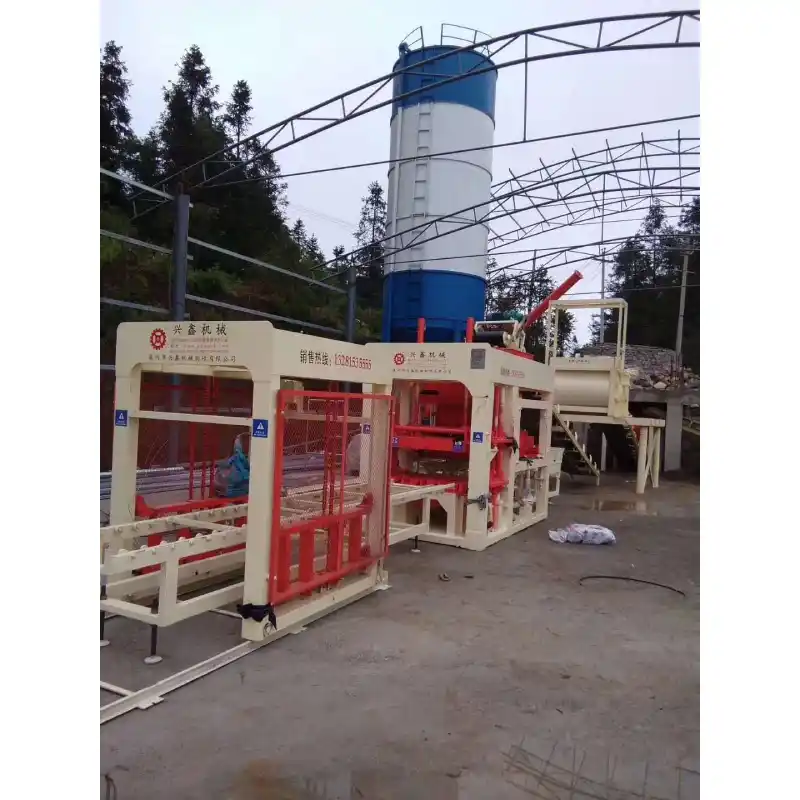
At the far end of the spectrum, we find the fully automatic block production line. These systems, often exemplified by the advanced QT series, integrate every step from batching and mixing to molding, curing, and stacking. A Programmable Logic Controller (PLC), frequently from reputable brands like Siemens, orchestrates the entire process with minimal human oversight. This represents the highest capital investment but delivers unparalleled consistency, speed, and output, drastically reducing per-unit labor costs.
A Deeper Look at the QT Series
The QT series has become synonymous with high-performance, fully automatic concrete block production. Models are typically designated by numbers that correlate with their capacity and features. For instance, a QT5-15 can produce around five standard hollow blocks per mold, with a cycle time of 15-25 seconds (). As you move up to a QT10-15 or QT12-15, the number of blocks per mold and the overall output increase substantially. A QT12-15F, for example, might produce 20,000 standard 8-inch hollow blocks in a single 8-hour shift (). These machines are designed for serious, industrial-scale production where volume and consistency are paramount.
Automation Level vs. Operational Cost: A Comparative Table
To make this abstract trade-off more concrete, let us consider a simplified comparison. The figures are illustrative and should be adapted to your local economic conditions.
| Fonctionnalité | Manual Machine | Semi-Automatic Machine (e.g., QT4-25) | Fully Automatic Machine (e.g., QT10-15) |
|---|---|---|---|
| Investissement initial | Faible | Moyen | Haut |
| Required Labor | 8-10 workers | 4-6 workers | 2-3 workers |
| Output (8-hr shift) | ~1,500 blocks | ~4,000 blocks | ~15,000 blocks |
| Block Quality Consistency | Low to Medium | Medium to High | Très élevé |
| Per-Block Labor Cost | Haut | Moyen | Faible |
| Technical Skill Required | Faible | Moyen | High (for maintenance) |
| Flexibility for Small Batches | Haut | Moyen | Faible |
This table illuminates the core dilemma. Do you invest more capital now to save on labor for years to come? Or do you opt for a lower entry cost, accepting higher operational expenses and potentially lower output? For many growing businesses in Southeast Asia and the Middle East, a semi-automatic or a smaller fully automatic machine presents a balanced and strategic starting point.
Factor 2: The Core Systems – Hydraulics and Vibration
If automation defines the brain of your operation, the hydraulic and vibration systems constitute its heart and muscle. The quality of the final block—its density, strength, and durability—is born from the immense forces generated by these two systems working in perfect harmony. A superficial assessment of a machine's power is insufficient; a discerning buyer must inquire into the nature and quality of these core components.
The Indispensable Role of Hydraulic Pressure
Think of the raw materials for a concrete block: a mix of cement, aggregate, and water. This mixture contains voids and air pockets. The primary function of the hydraulic system is to exert immense pressure on this mix within the mold, compacting it with tremendous force. This process does two things: it forces the particles into a dense, interlocking matrix and squeezes out excess water. The result is a "green" block that is significantly stronger, has lower porosity, and will cure to a higher compressive strength.
Machines like the QT10-15 operate at rated pressures of 21 MPa or more (). This level of pressure is what distinguishes a high-quality block from an inferior one. When evaluating a bricks making machine, look for specifications on the hydraulic system. Does the manufacturer use high-quality hydraulic valves and pumps? Brands like Japan's Yuken or other internationally recognized names are often cited by premium manufacturers as a mark of quality and reliability (). The hydraulic power unit, which comprises the motor, pump, and reservoir, is the engine driving this force. Reliable units ensure consistent pressure cycle after cycle, which is fundamental for uniform production (Hydreco, 2016).
The Symphony of Synchronized Vibration
Pressure alone is not enough. To achieve optimal compaction and a smooth finish, the pressure must be combined with high-frequency vibration. This vibration acts like a fluidizing agent, helping the particles of sand and aggregate settle into their most compact arrangement, eliminating voids and ensuring the cement paste is evenly distributed.
Superior machines employ a dual-vibration system.
- Platform Vibration: The entire mold pallet is vibrated from below. This helps settle the bulk of the material.
- Mold Vibration (or Tamper Head Vibration): The tamper head, which presses down on the material from above, also vibrates. This ensures the top surface of the block is perfectly compacted and smooth.
The key is synchronization. The frequency and amplitude of these vibrations must be precisely controlled and coordinated with the hydraulic pressing cycle. Look for machines with powerful vibration motors—often, manufacturers will highlight the use of multiple motors (e.g., four Siemens vibration motors on a QT10-15) to ensure this force is applied evenly across the entire mold area. A vibrating frequency in the range of 2800-4500 rolls per minute is a common benchmark for high-performance machines ().
The Assurance of Quality Components
It might seem like a minor detail, but the brand of the electrical and control components matters immensely. A bricks making machine is a complex assembly of motors, sensors, switches, and controllers. A failure in a single small component can bring your entire production line to a halt. When manufacturers specify the use of components from Siemens, Schneider Electric, or Omron, they are signaling a commitment to reliability and longevity (). These are globally recognized brands with a reputation for durability, and their parts are often more readily available in international markets, which simplifies maintenance and repairs down the line.
Factor 3: Material Compatibility – The Recipe for Success
A bricks making machine is only as good as the materials it processes. A machine that performs flawlessly with one type of sand might struggle with another. The regions of Southeast Asia and the Middle East offer a diverse and sometimes challenging palette of raw materials. Your choice of machine must be informed by a deep understanding of what resources are locally available, abundant, and cost-effective.
The Universal Ingredients and Their Ratios
At its core, a concrete block is a simple recipe: a binder (usually Portland cement), aggregates (sand and crushed stone), and water. The magic, however, is in the proportions. The ratio of these components determines the block's strength, weight, thermal properties, and cost. A typical mix might be 1 part cement, 3 parts sand, and 4 parts crushed stone, but this is highly variable. Your machine supplier should be able to provide guidance on optimal mix designs, but local testing is always necessary. The machine's material feeder and batching system must be able to handle your chosen recipe accurately and consistently.
The Sustainable Advantage of Industrial Byproducts
One of the most significant opportunities for modern block manufacturers lies in the use of industrial waste materials as partial substitutes for cement or sand. This practice is not only environmentally responsible but can also be highly profitable.
- Cendres volantes : A byproduct of coal-fired power plants, fly ash is abundant in many parts of Southeast Asia. When used in concrete, it improves workability, reduces water demand, and increases long-term strength through a pozzolanic reaction. Your machine must be able to properly mix and compact a blend containing this very fine powder.
- Slag (GGBFS): Ground-granulated blast-furnace slag, a byproduct of steel manufacturing, is another excellent cementitious material. It enhances the durability and chemical resistance of blocks, which is a valuable trait in the coastal and saline environments of the Middle East and SEA.
- Cinder, Gangue, and Crushed Stone Dust: These waste products from mining and quarrying can often be used as fine or coarse aggregates, reducing reliance on virgin sand and gravel.
The ability to utilize these materials, which are often available at a very low cost, can give you a significant competitive edge. When discussing options with a supplier, explicitly ask about their machine's experience and performance with the specific byproducts available in your area. The unique dose charging devices and strong material-distributing structures mentioned for machines like the QT4-25 are designed precisely to handle such varied materials ().
The Necessity of Pre-Purchase Material Analysis
I cannot overstate this: before you finalize your purchase, you must test your local raw materials. Many reputable suppliers offer this service. You can ship them a sample of your sand, your fly ash, your crushed stone. They will analyze the materials and, ideally, produce sample blocks using a machine similar to the one you intend to buy. This process achieves several goals:
- It confirms the compatibility of your materials with the machine.
- It allows the supplier to recommend the ideal mix design for achieving your desired block strength.
- It provides you with physical proof of the quality of the product you will be able to manufacture.
Ignoring this step is a gamble. You might find that your local sand is too fine, too angular, or contains contaminants that inhibit proper curing, forcing you into the costly position of having to transport suitable materials from afar.
Factor 4: Molds – The DNA of Your Product Line
The bricks making machine is the engine, but the mold is what gives your product its specific form and identity. The versatility and quality of the molds you invest in will directly define your product catalog and your ability to respond to the diverse needs of the construction market. A single machine can become a factory for a wide array of products simply by changing the mold.
One Machine, A Multitude of Products
The true power of a modern block machine lies in its multifunctionality. By swapping out the mold, the same machine that produces standard hollow blocks for walls can be configured to manufacture:
- Solid Blocks: For load-bearing walls and foundations.
- Paving Stones (Pavers): In various shapes (rectangular, I-shape, S-shape) and colors for driveways, plazas, and pedestrian areas.
- Curbstones (Kerbstones): For roadways and landscaping.
- Porous or Grass Blocks: For permeable paving solutions that allow water drainage.
- Interlocking Blocks: For retaining walls and specialized construction.
This versatility is your key to diversifying your revenue streams and serving multiple market segments, from residential housing to commercial developments and public infrastructure projects.
Mold Productivity and Specification Table
The choice of mold directly impacts your daily output. A mold for smaller solid bricks will have many more cavities than a mold for large hollow blocks, affecting the number of units produced per cycle. Let's look at a sample productivity table, adapted from specifications for a mid-range automatic machine like the QT4-25 ().
| Type de produit | Typical Size (LWH, mm) | Pcs / Mold | Cycle Time (s) | Output / 8-hr Shift |
|---|---|---|---|---|
| Bloc creux | 400 x 200 x 200 | 4 | 25-35 | 3,600 – 4,800 |
| Bloc creux | 400 x 150 x 200 | 5 | 25-35 | 4,800 – 6,000 |
| Brique pleine | 240 x 110 x 70 | 26 | 25-35 | 29,952 – 37,440 |
| Holland Paver | 200 x 100 x 60 | 14 | 25-35 | 12,800 – 16,000 |
| Pierre de bordure | Variable | Variable | 25-35 | Variable |
This data reveals how a single machine's output can vary dramatically based on the product being made. When planning your business, you must forecast the demand for each product type to create a realistic production schedule.
The Unseen Qualities: Steel and Heat Treatment
A mold is subjected to incredible abuse: high pressure, intense vibration, and abrasion from sand and stone. A poorly made mold will wear out quickly, losing its dimensional accuracy and producing substandard blocks. The quality of a mold comes down to two main factors:
- Material: High-quality molds are made from specific steel alloys, like manganese steel, which offer excellent wear resistance.
- Heat Treatment: This is a crucial manufacturing step where the steel is heated and cooled under controlled conditions. Processes like carburizing and quenching harden the surfaces of the mold that are in direct contact with the concrete mix, dramatically increasing their lifespan.
When you inquire about molds, ask about the type of steel used and the heat treatment processes applied. A cheaper, untreated mold is a false economy, as its frequent replacement will lead to downtime and higher long-term costs. A good mold should last for many tens of thousands of cycles.
Factor 5: Production Capacity and Operational Scale
Choosing the right production capacity is a delicate balancing act. You need a machine that can meet current demand without being so large that it sits idle, yet it must also offer room for your business to grow. Understanding the metrics of capacity and the ecosystem of equipment that surrounds the main machine is fundamental to designing an efficient and scalable operation.
Reading Between the Lines of Production Specs
Manufacturers provide production figures in "pieces per hour" or "pieces per 8-hour shift." As we saw in the mold table, these numbers are product-specific. To get a true sense of a machine's capacity, you must look at the specifications for the primary product you intend to sell.
The other key metric is cycle time. This is the time it takes for the machine to complete one full sequence: filling the mold, pressing and vibrating, demolding the blocks, and resetting for the next cycle. For automatic machines, this typically ranges from 15 to 35 seconds (). A shorter cycle time means higher potential output. However, the actual daily output will always be less than the theoretical maximum due to factors like mold changes, routine cleaning, and operator breaks. A realistic efficiency rate to assume for planning is around 80-85% of the theoretical maximum.
The Supporting Cast: The Full Production Line
The bricks making machine, while central, does not operate in a vacuum. For a semi-automatic or fully automatic setup, you must plan for an entire ecosystem of ancillary equipment.
- Batching Plant: This system accurately weighs the cement, sand, and aggregates according to your mix design before they are sent to the mixer.
- Concrete Mixer: A compulsory mixer (typically a twin-shaft model) is required to ensure the raw materials, especially those with fine particles like fly ash, are blended into a homogenous mixture.
- Conveyor Belts: To transport the mixed material from the mixer to the block machine's hopper.
- Block Conveyor/Stacker: In an automatic line, this device takes the freshly made blocks on their pallets and arranges them in stacks, ready to be moved to the curing area.
- Pallets: You will need a large number of high-quality pallets (often made of wood, bamboo, or PVC) to transport and cure the blocks. The pallet size is specific to the machine model (e.g., 1150x900mm for a QT10-15).
Failing to budget for and properly integrate this supporting equipment is a common pitfall that can bottleneck your entire operation, no matter how powerful your main machine is.
Designing Your Workspace for Flow
The physical layout of your production site has a significant impact on efficiency. A logical workflow prevents delays and minimizes unnecessary movement of materials and personnel. A well-designed layout should consider:
- Raw Material Storage: Covered bays to keep cement, sand, and aggregates dry and organized.
- Production Area: A solid, level concrete foundation for the block machine and mixer.
- Curing Area: A large, sheltered space where the fresh blocks can sit undisturbed for at least 24-48 hours before being depalletized. The warm climates of the Middle East and Southeast Asia are excellent for curing, but blocks should be protected from direct sun and wind to prevent overly rapid drying, which can cause cracking.
- Stockyard: An area for storing the cured blocks, organized by type and date of manufacture.
- Access Roads: For trucks delivering raw materials and shipping out finished products.
Factor 6: The Economic Equation – Total Cost and Return on Investment
The purchase price of a bricks making machine is only the beginning of the story. A wise investment is one based on a comprehensive understanding of the total cost of ownership (TCO) and a realistic projection of the return on investment (ROI). This requires a shift in perspective from that of a buyer to that of a long-term business owner.
Looking Beyond the Initial Price Tag
The quote you receive from a supplier is just one piece of the economic puzzle. To understand the true upfront cost, you must account for several other expenses:
- Shipping and Freight: These machines are large and heavy. Shipping from China to a port in Southeast Asia or the Middle East, plus inland transportation to your site, is a significant cost.
- Droits et taxes à l'importation : Every country has its own tariff structure. You must research and budget for these governmental charges.
- Installation et mise en service : For automatic lines, the supplier will typically send technicians to supervise installation and get the machine running. This service is invaluable but often comes at an additional cost (travel, accommodation, and fees).
- Initial Spare Parts: It is prudent to purchase a starter kit of essential wear parts (like hydraulic seals, sensors, and mold components) along with the machine to avoid downtime while waiting for a shipment.
- Site Preparation: The cost of building the foundations, storage bays, and curing areas.
The Ongoing Costs of Operation
Once the machine is running, it will incur daily operational costs. A careful accounting of these is essential for setting your block prices and managing your cash flow.
- Matières premières : This will be your largest variable cost.
- Electricity: The powerful motors for the hydraulic pump and vibrators consume a considerable amount of energy. The total power rating for a machine like the QT10-15 can be over 60kW ().
- Travail : The salaries of your operators, mechanics, and yard workers.
- Maintenance and Repairs: Regular lubrication, hydraulic fluid changes, and the eventual replacement of wear parts.
- Pallet Replacement: Pallets will degrade over time and need to be replaced periodically.
A Simple Framework for ROI Calculation
Calculating your ROI helps you determine how long it will take for your investment to pay for itself. While a full financial model is complex, you can start with a basic framework:
- Calculate Total Investment (A): Sum of the machine price, shipping, taxes, installation, and site preparation.
- Calculate Annual Gross Profit (B):
- Estimate your annual production volume (blocks per year).
- Determine your selling price per block.
- Calculate your cost per block (raw materials + electricity + labor + maintenance).
- Gross Profit per Block = Selling Price – Cost per Block.
- Annual Gross Profit = Gross Profit per Block * Annual Production Volume.
- Calculate Payback Period: Payback Period (in years) = Total Investment (A) / Annual Gross Profit (B).
This calculation provides a vital benchmark. A shorter payback period indicates a more financially attractive investment. The goal is to find a profitable machine de fabrication de blocs de béton that balances production capability with a manageable investment level, leading to a healthy and sustainable business.
Factor 7: The Human Element – After-Sales Support as a Partnership
You are not just buying a piece of steel; you are entering into a long-term relationship with the company that manufactured it. In regions geographically distant from the manufacturer, the quality of after-sales service is not a luxury—it is a lifeline. A machine is useless if you cannot get the support you need to keep it running.
The Tangible Value of Warranty and Spares
A standard warranty, typically one year, covers defects in manufacturing. It is a basic assurance of quality. However, what is more important is the supplier's ability to provide spare parts quickly and efficiently after the warranty period expires. Before you buy, ask critical questions:
- Do they maintain a stock of common spare parts?
- What is their typical lead time for shipping parts to your country?
- Can they provide clear part diagrams and numbers to make ordering easy?
A supplier who has an established logistics network and experience shipping to your region (e.g., the Philippines, Oman, Ghana, as mentioned in project examples) is likely to provide better service ().
The Necessity of On-Site Training
For a semi-automatic or fully automatic bricks making machine, proper operator training is not optional. The supplier should provide a technician who not only installs the machine but also trains your local staff on:
- Daily Operation: Starting the machine, running production cycles, and shutting it down safely.
- Routine Maintenance: Daily and weekly checks, lubrication schedules, and cleaning procedures.
- Basic Troubleshooting: Identifying and resolving common faults, such as sensor errors or minor hydraulic leaks.
This transfer of knowledge empowers your team to be self-sufficient and minimizes your reliance on calling the technician for every minor issue. This service is a hallmark of a responsible manufacturer ().
How to Vet Your Supplier
In the digital age, it is easy to create a professional-looking website. You must look deeper to verify the credibility and reliability of a potential supplier.
- History and Experience: How long have they been in business? A company like Hongfa, established in 1990, has decades of experience to draw upon ().
- Proven Track Record: Ask for case studies or references from customers in your country or a neighboring one. Can they show you photos and videos of their machines operating in real-world conditions similar to yours?
- Communication: Are their sales and technical staff responsive, knowledgeable, and fluent in English? Do they take the time to understand your specific needs, or do they just push a standard model?
- Transparency: Are they open about the components they use? Do they provide detailed technical specifications?
Choosing a reliable block manufacturing equipment supplier is about finding a partner who is invested in your success. Their expertise becomes your asset, helping you navigate the challenges of launching and growing your manufacturing operation.
Foire aux questions (FAQ)
What is the main difference between a QT series and a QTY series machine?
Generally, "QT" refers to stationary, fully automatic block making machines that produce blocks on pallets. "QTY" often denotes mobile or egg-laying block machines, which deposit the blocks directly onto a concrete floor and move forward, eliminating the need for pallets. QT series machines are typically higher capacity and produce more consistent blocks, making them suitable for industrial-scale production.
Can I use desert sand from the Middle East to make blocks?
Using desert sand can be challenging. It is often very fine and rounded (aeolian sand), which can lead to weaker blocks that require a higher cement content. Successful block making usually requires a mix of sand particle sizes (a good "grading"). It is essential to have your local desert sand analyzed and tested, possibly blending it with coarser, manufactured sand or crushed stone dust to achieve a suitable mix design.
How much physical space do I need for a full production line?
This depends heavily on the machine's size and automation level. For a medium-sized fully automatic line (e.g., QT10-15), you should plan for a significant area. A rough estimate would be at least 2,000-3,000 square meters. This includes space for raw material storage, the batching plant and mixer, the main machine, a large covered curing area for thousands of blocks, and a stockyard for finished inventory.
What is the typical lifespan of a set of molds?
The lifespan of a high-quality mold, made from heat-treated manganese steel, can be anywhere from 80,000 to 150,000 cycles. The exact lifespan depends on the abrasiveness of your raw materials and the diligence of your maintenance routines. A cheaper, lower-quality mold might fail after only 20,000-30,000 cycles, making it much more expensive in the long run due to replacement costs and production downtime.
How does high humidity in Southeast Asia affect the block-making process?
High humidity primarily affects the curing process. While the warm temperatures are beneficial, high ambient humidity can slow the rate at which water evaporates from the "green" blocks. This is generally not a problem and can even be beneficial, promoting a slower, more complete hydration of the cement, which leads to higher ultimate strength. The main concern is protecting fresh blocks from rain, which can wash away the cement paste from the surface. A covered curing area is therefore essential.
A Final Reflection on Building Your Future
The journey we have taken through these seven factors reveals a simple truth: selecting a bricks making machine is an exercise in foresight. It compels you to think deeply about your market, your resources, your people, and your ambitions. The machine you choose will be a silent partner in your enterprise for years to come, its daily rhythm the heartbeat of your production. Let your choice be guided not by price alone, but by a holistic appreciation for quality, efficiency, and the enduring value of a strong partnership. By investing wisely in the right technology and the right supplier, you are not just building a business; you are laying the very foundation for the homes, schools, and infrastructure of tomorrow. You are, in the most literal sense, helping to build the future.
Références
Hongfa Machine. (2025). Concrete block and brick making machine manufacturer. Retrieved January 29, 2025, from
Hydreco. (2016). Power units. Retrieved July 5, 2016, from
Qingdao HF Machinery Co., Ltd. (2025). Block machine full automatic block maker Qt 5-15 hot sale. Made-in-China.com. Retrieved April 28, 2025, from
Qingdao HF Machinery Co., Ltd. (2024). QT series block making machine. HF Block Machine. Retrieved October 18, 2024, from
Qingdao HF Machinery Co., Ltd. (2022). QT10-15. HF Block Machine. Retrieved April 20, 2022, from
Qingdao HF Machinery Co., Ltd. (2021). QT4-25. HF Block Machine. Retrieved December 10, 2021, from