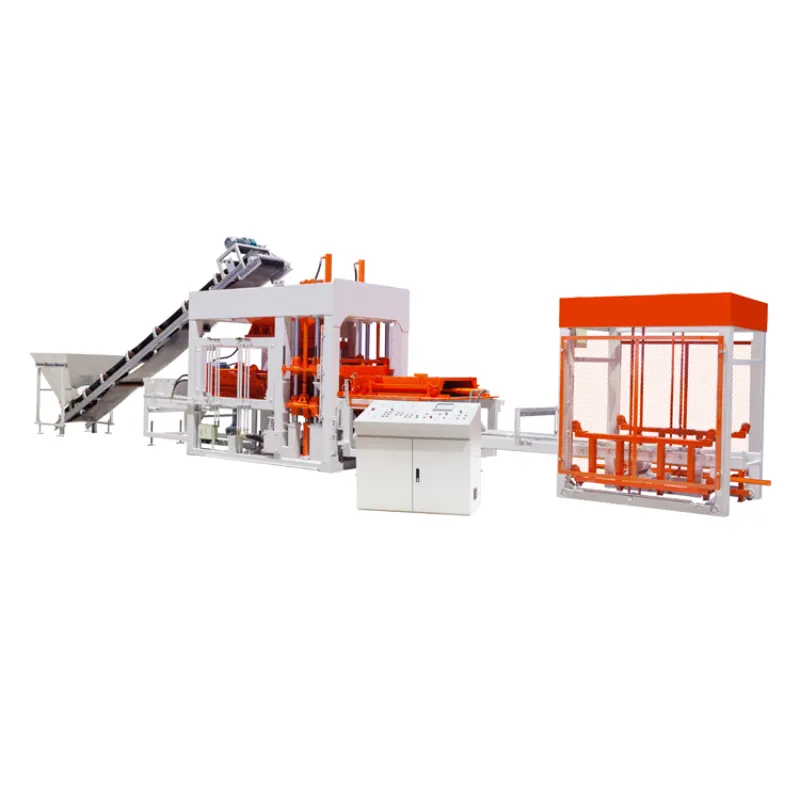
A Practical 2025 Buyer’s Guide: 7 Factors for Choosing Your Machine for Concrete Blocks

12月 11, 2025

要旨

The selection of an appropriate machine for concrete blocks represents a pivotal capital investment for ventures in the construction materials sector, particularly within the burgeoning markets of Southeast Asia and the Middle East in 2025. This analysis examines the multifaceted decision-making process, moving beyond mere equipment pricing to a holistic evaluation of operational efficacy. It investigates the primary typologies of block-making technology, namely the fully automated QT series and static hydraulic pressing machines, contrasting their mechanisms, output capacities, and labor requirements. The study considers the profound influence of local raw material availability, such as fly ash and regional aggregates, on machine suitability and final product quality. Furthermore, it explores the economic implications of mold versatility, total cost of ownership, and the indispensable role of manufacturer after-sales support. The objective is to equip prospective buyers with a structured framework for making an informed, strategic choice that aligns with their specific production goals, budgetary constraints, and long-term business trajectory.

要点

  • Assess your production needs by calculating required daily output against machine cycle times and capacity.
  • Analyze local raw material availability to ensure compatibility with your chosen machine for concrete blocks.
  • Evaluate the trade-offs between high-automation QT series machines and labor-intensive static models.
  • Consider mold versatility to diversify your product offerings and capture wider market segments.
  • Budget for the total cost of ownership, including energy, maintenance, and spare parts, not just the initial price.
  • Partner with a reputable supplier offering robust technical support and readily available spare parts.
  • Plan your factory layout and infrastructure to meet the machine's space, power, and water requirements.

目次

The Foundational Choice: Understanding Block Machine Technologies

Embarking on the path of concrete block production begins with a fundamental inquiry into the heart of the operation: the machine itself. The choice is not merely about selecting a piece of equipment; it reflects a deeper philosophical commitment to a particular mode of production. The landscape of available technology is dominated by two principal approaches: the dynamic, high-frequency vibration method characteristic of the QT series, and the immense, focused force of static hydraulic pressing machines. Understanding the inner workings and underlying principles of each is the first step toward aligning your operational ambitions with the right mechanical partner. Imagine one as a rapid, rhythmic artisan, shaping materials with speed and precision, while the other is a deliberate, powerful sculptor, applying immense pressure to forge blocks of exceptional density. Each has its place, its virtues, and its specific applications.

The Philosophy of Automation: QT Series vs. Static Hydraulic Presses

The distinction between a QT series fully auto concrete block making machine and a static hydraulic press is a tale of two different manufacturing philosophies. The QT series, a name now synonymous with high-volume production, is built around the principle of vibration and hydraulic compaction working in concert. Think of it as a finely tuned orchestra. A precisely measured mixture of aggregates, cement, and water is fed into a mold. Then, a powerful, high-frequency vibration is applied from below (platform vibration) and sometimes from above (mould vibration), causing the particles to settle and interlock in their most compact arrangement. Simultaneously, a hydraulic press applies downward pressure, squeezing out excess water and air, consolidating the mixture into a dense, uniform block. This process is rapid, with cycle times often as short as 15 seconds hfblockmachine.com. The "QT" designation itself often signifies this automated, multi-action process, designed for efficiency and consistency across thousands of units per day.

In contrast, a static hydraulic block pressing machine operates on a more singular, yet immensely powerful, principle: pure force. These machines typically eschew the complex vibration systems in favor of massive hydraulic cylinders that exert extreme pressure on the concrete mixture within the mold. The focus here is less on the rapid settling of particles and more on brute-force compaction. This method can produce blocks of incredibly high density and compressive strength, often favored for specialized applications like high-load-bearing walls or specific paving elements. The trade-off is often a slower cycle time and potentially a different surface texture compared to vibrated blocks. The choice between these two systems hinges on your primary goal: is it the relentless pursuit of high-volume output for general construction, or is it the creation of exceptionally dense, specialized products where speed is a secondary concern?

Vibration and Compaction: The Heartbeat of Block Quality

To truly grasp the essence of modern block production, one must appreciate the nuanced interplay of vibration and compaction. This is the core mechanism that transforms a loose pile of raw materials into a durable, precisely shaped building unit. In a typical machine for concrete blocks, particularly the QT models, the vibration is not a monolithic force. It is engineered with specific frequencies and amplitudes. The vibration frequency, often in the range of 2800 to 4500 rolls per minute, is designed to fluidize the semi-dry concrete mix . This temporary fluidization allows the aggregate particles to overcome internal friction and rearrange themselves into the tightest possible configuration, minimizing voids.

The hydraulic compaction phase follows this particle rearrangement. It is the decisive action that locks the structure in place. The rated pressure, which can be 16 MPa or higher, is a measure of this force . It serves two purposes: first, to expel any trapped air and excess water, which are enemies of strength and durability. Second, it ensures that the cement paste is forced into intimate contact with every surface of the aggregate, creating a powerful bond as the block cures. The quality of the final block—its strength, its dimensional accuracy, its surface finish, and its water absorption rate—is a direct testament to how well the machine has mastered this dance between vibration and compaction. A superior machine synchronizes these two actions perfectly, ensuring that compaction occurs at the precise moment of maximum particle density.

A Comparative Analysis: Key Differences at a Glance

To distill these concepts into a practical framework for decision-making, a direct comparison is invaluable. The following table outlines the principal characteristics of the two main types of machines, providing a clear reference for evaluating which technology aligns best with your business model.

特徴 QTシリーズ(振動+油圧) Static Hydraulic Press Machine
主要メカニズム High-frequency vibration combined with hydraulic pressure. High-tonnage static hydraulic pressure with minimal or no vibration.
Typical Products Hollow blocks, solid blocks, pavers, kerbstones, interlocking bricks. High-density solid blocks, specialized pavers, large-format slabs.
生産スピード High. Cycle times typically range from 15 to 35 seconds. Moderate to Low. Cycle times are generally longer due to the focus on pressure.
ブロック密度 High and uniform, suitable for most construction standards. Very High. Can achieve exceptional compressive strength.
オートメーション・レベル Ranges from semi-automatic to fully automatic production lines. Often semi-automatic but can be integrated into automated systems.
エネルギー消費 Moderate, with power consumed by both vibration motors and hydraulic pumps. Potentially higher peak consumption due to large hydraulic systems.
Ideal For High-volume, diversified production for residential and commercial building. Niche applications requiring superior strength and density.
Example Model Hongfa QT6-15, QT10-15 Specialized high-tonnage presses for specific industrial uses.

Factor 1: Defining Your Production Scale and Capacity Needs

Before you can fall in love with the specifications of any particular machine, you must first engage in a rigorous self-examination of your own operational needs. The most technologically advanced machine is a poor investment if it produces ten times what your market demands or, conversely, if it leaves you unable to fulfill crucial orders. Capacity is not just a number on a spec sheet; it is the lifeblood of your production facility. It dictates your revenue potential, your market share, and your ability to compete. This evaluation must be grounded in a realistic assessment of your target market, whether it's the rapidly growing urban centers of Southeast Asia or the large-scale infrastructure projects in the Middle East.

Calculating Your Daily Output: A Practical Approach

The process begins with a simple question: How many blocks do you need to produce per day to be profitable and competitive? This is not a number to be guessed. It requires market research. Talk to local contractors, developers, and building material suppliers. What is the average daily demand for a standard 400x200x200 mm hollow block in your area? Are you aiming to capture 5%, 10%, or 20% of that market?

Once you have a target daily output, you can work backward to determine the required machine specifications. Let's walk through an example. Suppose your research indicates a viable target of 8,000 standard hollow blocks per 8-hour workday. Now, you can examine the productivity charts provided by manufacturers. A machine like the QT6-15, for instance, has a stated output of 8,640 to 11,520 hollow blocks per 8 hours, with a cycle time of 15-20 seconds and producing 6 blocks per mold . This machine comfortably meets and exceeds your target. On the other hand, a smaller model like the QT4-25, with an output of 3,600-4,800 blocks per 8 hours, would fall short, potentially limiting your growth (American Concrete Institute, 2019). It is vital to perform this calculation for all the primary products you intend to manufacture, as the number of blocks per mold and cycle times can vary significantly.

Projecting Growth: Choosing a Machine That Scales with Your Business

A common pitfall for new entrepreneurs is to purchase a machine that only meets their immediate, day-one needs. This is a short-sighted strategy. Your business plan should not be static; it should envision growth over a three to five-year horizon. The machine you buy in 2025 should still be a valuable asset in 2030. This means you should invest in a machine with a capacity that is perhaps 25-50% higher than your initial daily target.

Why? This excess capacity serves several strategic purposes. It allows you to aggressively pursue larger contracts without fearing production bottlenecks. It provides a buffer during periods of peak demand, ensuring you never have to turn away a customer. It also accommodates for downtime, whether for scheduled maintenance or unexpected repairs, without crippling your overall output. For example, if your starting goal is 8,000 blocks/day, selecting a machine with a comfortable capacity of 12,000 blocks/day, like the QT8-15D , gives you a significant runway for expansion. The incremental cost of purchasing the slightly larger machine at the outset is almost always lower than the cost of having to replace an underpowered machine or purchase a second one just a few years down the line.

The Impact of Cycle Time on Overall Productivity

Cycle time is the single most important variable in the productivity equation. It is the total time taken for the machine to complete one full sequence of actions: filling the mold, vibrating and pressing, demolding the finished blocks, and resetting for the next batch. A difference of just a few seconds can have a colossal impact on your annual output.

Let's consider two hypothetical machines. Machine A has a cycle time of 20 seconds. Machine B has a cycle time of 25 seconds. Both produce 6 blocks per mold.

  • Machine A (20s cycle): 3 cycles per minute * 6 blocks/cycle = 18 blocks per minute.
  • Machine B (25s cycle): 2.4 cycles per minute * 6 blocks/cycle = 14.4 blocks per minute.

Over an 8-hour shift (480 minutes), assuming 90% operational efficiency:

  • Machine A: 18 blocks/min * 480 min * 0.90 = 7,776 blocks.
  • Machine B: 14.4 blocks/min * 480 min * 0.90 = 6,221 blocks.

That 5-second difference in cycle time results in a production deficit of over 1,500 blocks every single day. Annually, this gap widens to nearly 400,000 blocks. When evaluating a machine for concrete blocks, scrutinize the stated cycle time. Understand what factors influence it. Is it dependent on the skill of the operator in a semi-automatic setup? Is it consistently achievable in a fully automatic line? A faster cycle time, provided it does not compromise block quality, directly translates to higher revenue and a faster return on your investment.

Factor 2: Raw Material Availability and Mix Design

A block making machine, no matter how sophisticated, is ultimately at the mercy of the materials it is fed. The quality, consistency, and cost of your raw materials are foundational pillars of your business. The ideal machine is not just one that works well in a laboratory setting but one that excels with the specific sand, gravel, cement, and supplementary materials that are economically and logistically accessible in your region. For businesses in Southeast Asia and the Middle East, this means considering a wide array of potential inputs, from desert sand and crushed limestone to industrial byproducts like fly ash and slag. A deep understanding of material science is not a luxury; it is a necessity for producing high-quality, cost-effective blocks (Neville, 2011).

Sourcing in Southeast Asia and the Middle East: Common Materials

The geological and industrial landscapes of Southeast Asia and the Middle East present both opportunities and challenges for raw material sourcing. In many parts of the Middle East, for example, high-quality crushed limestone or gabbro is abundant, providing excellent coarse aggregate. However, the local sand may be very fine and rounded (aeolian sand), which can require adjustments to the mix design, such as blending with coarser manufactured sand, to achieve optimal particle packing and strength.

In Southeast Asia, river sand and gravel are more common, but their quality can be variable. It is also a region with significant industrial activity, leading to the availability of valuable supplementary cementitious materials (SCMs). Fly ash, a byproduct of coal-fired power plants, and ground granulated blast-furnace slag (GGBS) from the steel industry are excellent examples. These SCMs are not waste products; they are valuable resources that can be used to replace a portion of the more expensive Portland cement in the mix. Doing so not only reduces cost but can also improve the long-term durability and chemical resistance of the concrete blocks. The key is to select a machine for concrete blocks whose feeding and mixing systems can accurately batch and homogenize these diverse materials.

The Machine's Role in Material Compatibility

The design of the machine plays a direct role in how well it can handle different raw materials. The material feeding system is the first point of contact. A well-designed machine will have a robust and precise dosing or batching system. This is particularly important when working with multiple components, such as cement, sand, gravel, and fly ash. The machine must be able to consistently measure the correct proportions for every single batch. Inconsistent batching is a primary cause of variable block strength and color. Look for machines that feature strong material-distributing structures to ensure the mold is filled evenly, preventing weak spots in the final product .

The mixer is another critical component. A standard pan mixer might be adequate for simple sand-and-cement mixes, but for more complex designs involving SCMs or pigments, a planetary or twin-shaft mixer is far superior. These mixers provide a more intense and homogenous mixing action, ensuring that every particle of aggregate is coated with cement paste and that additives are evenly dispersed. The ability of the machine's vibration system to compact mixes with different workabilities is also a factor. A mix with a high percentage of fly ash, for instance, might behave differently under vibration than a standard concrete mix. A machine with an adjustable vibration frequency allows the operator to fine-tune the compaction process for the specific mix design being used.

Optimizing Your Mix for Strength and Cost-Effectiveness

The goal of mix design is to achieve the required performance (compressive strength, durability, appearance) at the lowest possible cost. This is a continuous process of optimization, not a one-time task. It begins with understanding the properties of your local materials. You should have your primary aggregates tested by a laboratory to determine their particle size distribution (gradation), specific gravity, and absorption.

With this data, you can begin to design your mix. The principle of particle packing is central here. The idea is to create a blend of different-sized aggregates where the smaller particles fill the voids between the larger ones. This minimizes the volume of empty space that needs to be filled with the expensive cement paste. A well-graded aggregate blend requires less cement to achieve the same strength, directly reducing your material cost.

Experiment with incorporating SCMs like fly ash. Replacing 15-25% of your cement with fly ash can lead to significant savings without compromising, and in many cases, even enhancing, the long-term strength and durability of the blocks. Run trial batches. Produce small quantities of blocks with different mix designs and test them for compressive strength after 7, 14, and 28 days of curing. Keep meticulous records of your mixes and their corresponding test results. This empirical data will be your most valuable asset in perfecting a mix that gives you a competitive edge in your market. Your machine supplier should be a partner in this process, offering guidance on how their equipment can be adjusted to accommodate your optimized mix designs.

Factor 3: Automation Level and Labor Considerations

The choice of automation level is a strategic decision that reverberates through every aspect of your operation, from capital expenditure and labor costs to production consistency and workplace safety. There is no universally "correct" level of automation. The optimal choice is deeply contextual, depending on the cost and availability of skilled labor in your market, your production volume targets, and your appetite for technological complexity. In regions like the UAE or Singapore where labor costs are high, full automation is often a foregone conclusion. In other markets within Southeast Asia, a semi-automatic approach might offer a more pragmatic balance between investment and operational control.

Fully Automatic (QT Series): The Pursuit of Efficiency

A fully automatic production line, typified by the higher-end QT series machines, represents the pinnacle of block-making efficiency. In such a system, the human operator's role shifts from direct physical labor to that of a supervisor and quality controller. The entire process, from batching and mixing of raw materials to the stacking (cubing) of the cured blocks, is handled by machinery. A Programmable Logic Controller (PLC), often from reputable brands like Siemens, acts as the brain of the operation, orchestrating every step with digital precision .

The advantages are compelling. Production is continuous and highly consistent. The PLC ensures that every cycle time, every vibration duration, and every compaction pressure is identical, leading to a uniformity in product quality that is difficult to achieve manually. Production speeds are maximized, as the machine never tires or takes a break. Labor requirements are drastically reduced; a large, fully automatic line might be managed by just a handful of technicians. Furthermore, safety is enhanced as workers are removed from the most hazardous parts of the process. The trade-off, of course, is a significantly higher initial investment and a need for more highly skilled technicians to maintain and troubleshoot the sophisticated electronic and hydraulic systems.

Semi-Automatic and Manual: Balancing Investment with Operational Control

Semi-automatic machines occupy a popular middle ground. In this configuration, core processes like molding, vibration, and pressing are automated, but ancillary tasks require manual intervention. For example, an operator might be responsible for moving the finished blocks from the machine to the curing area using a specialized cart. The batching and mixing might also be initiated manually rather than by an automated system. Models like the QT4-26 are often described as semi-automatic, offering a bridge between manual labor and full automation .

The primary appeal of this approach is a lower initial capital outlay, making it more accessible for small to medium-sized enterprises (SMEs) or startups. These machines are also often mechanically simpler, which can be an advantage in areas where access to specialized electronic technicians is limited. They offer a degree of operational flexibility and give the owner a more hands-on feel for the production process. The downside is a greater reliance on labor, which introduces variability in output and quality. Production speed is ultimately limited by the efficiency of the manual tasks in the chain.

Manual, or "egg-laying," machines represent the entry point into block production. These are mobile units that deposit blocks directly onto a concrete floor, moving along after each cycle. They are simple, robust, and have the lowest initial cost. However, they are entirely dependent on strenuous physical labor, production is slow, and the quality of the blocks can be highly variable. While they can be a viable starting point for very small-scale or community-based projects, they generally lack the capacity and consistency required for a competitive commercial operation in 2025.

Labor Skill Requirements and Training in Developing Markets

The level of automation you choose directly dictates the type of workforce you will need to hire and train. A fully automatic line requires fewer people, but those individuals must have a higher level of technical proficiency. You will need at least one or two people with a solid understanding of mechanical, hydraulic, and electrical systems to oversee the line and perform routine maintenance. Training for a PLC-controlled system is more complex and may require specialized instruction from the machine supplier.

A semi-automatic operation, by contrast, relies on a larger team of semi-skilled or unskilled laborers to handle the material transport and block handling. The training for these roles is simpler and faster. However, it requires a greater emphasis on management and supervision to ensure efficiency and safety. You will need a good floor manager to coordinate the team and maintain a smooth workflow.

When selecting a supplier, inquire deeply about their training programs. A reputable manufacturer will not simply ship you a crate of parts. They will offer comprehensive installation and training services, either on-site at your factory or at their own facility . This training is a critical part of your investment. A well-trained team will operate the machine more efficiently, produce higher quality blocks, and be able to perform preventative maintenance that extends the life of your equipment and minimizes costly downtime.

Factor 4: Mold Versatility and Product Diversification

In the competitive landscape of building materials, flexibility is a powerful strategic advantage. Relying on a single product, such as the standard hollow block, can leave your business vulnerable to market fluctuations and price competition. A forward-thinking entrepreneur sees a block making machine not as a tool for making one thing, but as a platform for producing a diverse portfolio of concrete products. The key to unlocking this potential lies in the machine's mold system. The ability to quickly and easily change molds to produce different types of blocks is what transforms a simple production line into a versatile manufacturing hub capable of serving multiple market segments.

Beyond Standard Blocks: Pavers, Kerbstones, and Interlocking Bricks

The demand for concrete products extends far beyond the walls of a building. Landscaping, civil infrastructure, and decorative applications represent vast and often more profitable markets. A versatile machine for concrete blocks can be your gateway to these opportunities. By simply swapping out the mold, the same machine that produces thousands of hollow blocks in the morning can be configured to produce high-strength paving stones for a new plaza in the afternoon.

Consider the possibilities:

  • 舗装ブロック(ペイバー): Available in various shapes (rectangular, "I" shape, "S" shape), colors, and thicknesses, these are in high demand for driveways, walkways, public squares, and container yards. Some machines even offer a secondary feeding system for creating a colored face mix on the paver, adding significant aesthetic and monetary value.
  • Kerbstones (Curbs): Essential for road construction and landscaping, these define the edges of roads and walkways. A block machine can produce these with high precision and strength.
  • インターロッキングブロック: These are used for retaining walls, slope protection, and erosion control. Their unique shapes allow them to be laid without mortar, making them a popular choice for many civil engineering projects.
  • Grass Blocks (Grid Pavers): These hollow-celled pavers allow grass to grow through them, creating a permeable, green surface suitable for overflow parking and access roads.

The ability to produce this wide range of products, as shown in the application photos from manufacturers like , allows you to submit bids for a wider variety of projects and build relationships with a more diverse customer base, including municipalities, landscape architects, and civil contractors.

The Economics of Mold Customization and Changeover

The mold is a high-precision, high-wear component. It must be manufactured from extremely hard and durable steel, often undergoing special heat treatment processes to withstand the intense pressure and abrasion of concrete production. A high-quality mold can last for the production of hundreds of thousands of blocks, but it represents a significant investment in itself.

When evaluating a machine, consider two economic factors related to molds. First, the cost of additional molds. Ask potential suppliers for a price list for standard molds (hollow block, paver, etc.). Also, inquire about the cost and lead time for custom molds. If you identify a unique market opportunity for a specific block shape, the ability to have a custom mold made can be a game-changer.

Second, the efficiency of the mold changeover process. How long does it take to switch from producing one type of block to another? In a well-designed machine, this process should be as streamlined as possible, ideally taking no more than an hour or two. A machine that requires extensive disassembly or complex recalibration for every mold change will discourage you from diversifying your production, as the downtime will eat into your profits. Look for machines with user-friendly mold clamping systems and clear procedures for changeovers.

Future-Proofing Your Investment with a Versatile Machine

Investing in a machine with high mold versatility is a form of future-proofing. The construction market is not static. Architectural trends change, building codes evolve, and new types of projects emerge. A business that is locked into producing a single type of block may find its market shrinking over time. A business that has the capability to adapt and produce what the market demands is far more resilient.

When you purchase your machine, you may only plan to produce two or three types of blocks. But by choosing a machine that is compatible with a wide range of molds, you are giving your future self options. Five years from now, a massive new infrastructure project in your region might create a sudden, huge demand for a specific type of interlocking paver. If you have a versatile machine, you can simply order the new mold and position your company to win that lucrative contract. If you have a limited machine, you can only watch as your competitors seize the opportunity. Therefore, view the machine's capacity for diversification not as an optional extra, but as a core component of its long-term value proposition.

Factor 5: Site Requirements, Power, and Infrastructure

A concrete block machine does not exist in a vacuum. It is the centerpiece of a larger industrial ecosystem, and its performance is intrinsically linked to the quality of the surrounding infrastructure. Too often, entrepreneurs focus exclusively on the machine itself, only to face costly delays and operational headaches because they neglected to properly plan their site. A thorough assessment of your factory space, power supply, and water management systems is just as critical as analyzing the machine's technical specifications. This is the practical, on-the-ground work that ensures your significant investment can operate at its full potential from day one.

Assessing Your Factory Layout and Space

Before you even finalize a machine purchase, you need a detailed plan for your factory layout. Start by obtaining the exact dimensions of the machine you are considering. For example, a model like the QT6-15 requires a footprint of approximately 7.1m x 1.5m, with a height of 3m . But this is just the machine itself. A complete production line is much larger.

Your layout must account for several key zones:

  1. Raw Material Storage: You need a designated, covered area for storing cement to protect it from moisture. You also need large, separated bays for your sand and aggregates. The total storage area should be large enough to hold at least a week's worth of production materials to buffer against supply chain disruptions.
  2. Batching and Mixing Area: This is where the mixer and batching plant will be located, typically adjacent to the raw material storage for easy loading.
  3. Machine Area: The block machine needs not only its own footprint but also ample space around it for operator access, maintenance, and mold changes.
  4. Curing Area: This is one of the most space-intensive parts of the operation. Freshly molded blocks are weak and must be left to cure undisturbed for at least 24-48 hours before they can be handled. You need a large, flat, and preferably covered concrete slab where you can store several days' worth of production.
  5. Finished Product Storage: Once cured, the blocks are typically stacked into cubes and moved to a yard where they await sale and transportation.

Draw a to-scale map of your proposed site, plotting out each of these zones. Ensure there is a logical flow, minimizing the distance that materials and products need to travel. A well-planned layout reduces operational inefficiencies, lowers fuel costs for loaders, and improves overall safety.

Power Grid Stability and Machine Specifications

The electrical system is the central nervous system of your plant. A concrete block machine has a significant power demand. The total power for a QT5-15, for instance, is listed as 26.5 kW . This power is consumed by multiple motors for the hydraulic pump, the vibration system, and the conveyor belts.

It is absolutely vital to verify that your local power grid can supply this demand reliably. In many developing regions, power grids can be unstable, subject to brownouts (voltage drops) or blackouts. Voltage fluctuations can damage the sensitive electronic components of your machine, such as the PLC and frequency converters. Before purchasing, consult with a qualified electrician and your local power utility. You may need to install a dedicated transformer for your factory. It is also highly advisable to invest in high-quality voltage stabilizers and surge protectors. For many operations, a backup diesel generator of sufficient capacity is not a luxury but a necessity to ensure production can continue during power outages.

Water and Curing Facilities: The Supporting Cast

Water is a fundamental ingredient in concrete, but its role extends beyond the mix. You will need a reliable source of clean water for two primary purposes: mixing and curing. The water used in the concrete mix should be free from impurities like oils, acids, and excessive salts, as these can interfere with the cement's hydration process and compromise the final strength of the blocks (ASTM C1602/C1602M-18, 2018).

Curing is the process of maintaining adequate moisture and temperature in the concrete for a period of time so that the cement can achieve its full potential strength. After the blocks are demolded, they must be protected from drying out too quickly, especially in the hot, arid climates common in the Middle East or the hot, windy conditions of Southeast Asia. The simplest method is to cover the stacks of fresh blocks with plastic sheeting or tarps and periodically mist them with water. A more advanced setup might involve a dedicated curing chamber where temperature and humidity can be controlled. Proper curing is not an optional step; it is a cheap and easy way to significantly increase the quality and strength of your final product. Ensure your site plan includes an efficient system for water distribution to both the mixer and the curing area.

Factor 6: Budgeting Beyond the Sticker Price: Total Cost of Ownership

A wise investor understands that the purchase price of a piece of industrial equipment is merely the down payment. The true cost of your machine for concrete blocks will unfold over its entire operational lifespan. This concept, known as the Total Cost of Ownership (TCO), provides a far more accurate financial picture than the initial quote from the supplier. TCO encompasses not only the upfront capital expenditure but also all the recurring costs associated with running and maintaining the machine. By analyzing these long-term expenses, you can make a much more intelligent decision, potentially choosing a machine with a higher initial price but lower operational costs that proves to be more profitable in the long run.

Initial Investment vs. Long-Term Operational Costs

The initial investment is the most visible cost. It includes the price of the machine itself, the shipping and insurance to get it to your port, import duties and taxes, and the cost of any ancillary equipment like a mixer, batching plant, or forklift. It is tempting to minimize this initial outlay by opting for the cheapest available machine. However, this can be a classic case of being "penny wise and pound foolish."

Long-term operational costs are the expenses you will incur every single day you are in business. These include:

  • 労働だ: The wages of the operators, mechanics, and laborers who run the plant. A fully automatic machine may cost more upfront but can save you tens of thousands of dollars in annual labor costs compared to a semi-automatic model.
  • エネルギーだ: The cost of the electricity or diesel needed to power the machine.
  • Maintenance & Spare Parts: The cost of routine maintenance (lubricants, filters) and the inevitable replacement of wear-and-tear parts (molds, vibration pads, hydraulic seals).
  • 原材料: While this is a direct production cost, a more efficient machine that produces fewer rejected or low-quality blocks will reduce material wastage.

When comparing two machines, create a simple TCO projection over a five-year period. You may find that a slightly more expensive machine with higher energy efficiency and greater reliability quickly pays for itself through lower operational spending.

Maintenance, Spare Parts, and Supplier Support

Downtime is the enemy of profitability. Every hour your machine is not running is an hour of lost revenue. A robust maintenance plan and ready access to spare parts are your primary defenses against downtime. Before you buy, have a frank discussion with the supplier about their spare parts policy. Do they provide a list of recommended critical spare parts to purchase with the machine? What is the lead time for ordering parts from their factory in China? Do they have a local or regional agent who stocks common parts? A supplier with a well-organized after-sales and spare parts department is an invaluable partner .

Your own maintenance schedule is equally important. Create a daily, weekly, and monthly checklist for your operators and maintenance staff. Daily tasks might include cleaning the machine and checking hydraulic oil levels. Weekly tasks could involve greasing moving parts and inspecting conveyor belts. Monthly tasks might include changing hydraulic filters and inspecting the mold for wear. Proactive, preventative maintenance is always cheaper than reactive, breakdown repairs.

Energy Consumption: A Hidden but Significant Expense

In an era of rising energy prices, the power consumption of your machine is a major operational expense that deserves careful consideration. Manufacturers provide a total power rating for their machines, but it's helpful to understand how that power is used. The largest consumers are typically the hydraulic pump motor and the vibration motors.

The following table provides a hypothetical comparison of the estimated annual energy costs for two different machine types, highlighting how efficiency can impact your bottom line.

特徴 Machine A (Standard Efficiency) Machine B (High Efficiency)
Total Power Rating 30 kW 25 kW
Assumed Operating Hours/Day 8 hours 8 hours
Assumed Operating Days/Year 250 days 250 days
Average Load Factor 70% 70%
Daily Energy Consumption 30 kW * 8h * 70% = 168 kWh 25 kW * 8h * 70% = 140 kWh
Annual Energy Consumption 168 kWh/day * 250 days = 42,000 kWh 140 kWh/day * 250 days = 35,000 kWh
Assumed Electricity Cost $0.15 / kWh $0.15 / kWh
Estimated Annual Energy Cost $6,300 $5,250
Five-Year Energy Cost $31,500 $26,250

As the table illustrates, the high-efficiency machine, despite potentially having a higher purchase price, could save over $5,000 in electricity costs over five years. When evaluating a machine, look for features that indicate energy efficiency. Does it use high-efficiency motors from reputable brands like Siemens? Does it have an intelligent hydraulic system that only draws maximum power when needed, rather than running at full pressure continuously? These technical details translate directly into long-term savings.

Factor 7: Selecting a Reliable Supplier and After-Sales Support

The purchase of a concrete block machine is not a simple transaction; it is the beginning of a long-term relationship with the manufacturer. The quality of this relationship, defined by the supplier's reliability, expertise, and commitment to after-sales support, can be just as impactful on your success as the quality of the machine itself. A great supplier is a partner who invests in your success, while a poor one can leave you stranded with a non-functional piece of equipment and no recourse. This final factor is about due diligence—thoroughly vetting potential suppliers to find one you can trust for the life of your machine.

Evaluating Manufacturer Reputation and Experience

In the age of the internet, it is easier than ever to research a company's background. Do not take a supplier's claims at face value. Look for tangible evidence of their experience and reputation. How long have they been in business? A company like Hongfa Group, which states it has been operating since 1990, has a long track record that suggests stability and experience in the industry .

Look for evidence of their global reach. Have they exported to your region or country before? A supplier with experience in the Middle East or Southeast Asia will be more familiar with the logistical challenges, import procedures, and specific market needs of your area. Look for case studies, project photos, or customer testimonials from your region . A supplier who is proud of their work will showcase it. Certifications, such as CE or ISO, can also be an indicator of a commitment to international quality standards . While not a guarantee of quality, they show that the company has subjected its processes to third-party scrutiny.

The Importance of Technical Support and Installation Services

The period immediately after your machine arrives is the most critical. This is when the machine is installed, commissioned, and your team is trained. The quality of the support you receive during this phase sets the stage for your entire operation. A reputable supplier will offer to send their own technicians to your factory to supervise the installation and provide hands-on training.

This service is invaluable. The supplier's technicians have assembled and commissioned hundreds of these machines. They can complete the job far more quickly and correctly than a local team with no prior experience. They will ensure the machine is properly leveled, all electrical and hydraulic connections are correct, and the machine is calibrated for optimal performance. Most importantly, they will train your operators on the correct procedures for running the machine, performing daily maintenance, and troubleshooting common problems. This transfer of knowledge is perhaps the most valuable part of the entire transaction. Before you sign a contract, get a clear, written commitment from the supplier detailing the scope and cost of their installation and training services. Exploring comprehensive block making solutions from established providers can offer insight into what a complete support package should look like.

A warranty is your insurance policy against manufacturing defects. Carefully review the warranty terms offered by the supplier. What is the duration of the warranty period (typically one year)? What parts are covered? It's common for wear-and-tear parts like molds and rubber pads to be excluded, but major components like the main frame, hydraulic pump, and PLC should be covered. What is the process for making a warranty claim? A clear and fair warranty policy is a sign of a supplier who stands behind their product.

As discussed previously, the availability of spare parts is crucial. A good supplier will provide you with a detailed list of recommended spare parts to keep in stock. This list is based on their extensive experience of which components are most likely to require replacement over time. Investing in this initial spare parts package is a wise decision that can save you from weeks of costly downtime while you wait for a small part to be shipped from overseas. A long-term partnership with a reliable supplier ensures that even years down the line, you will still have access to the parts and technical expertise needed to keep your machine running and your business thriving.

よくある質問(FAQ)

What is the typical price range for a machine for concrete blocks in 2025?

The price varies enormously based on size, automation, and brand. Small, manual "egg-layer" machines can start from a few thousand dollars. Semi-automatic machines, like a QT4-25, might range from $15,000 to $30,000 for the main unit. A medium-sized, fully automatic line like a QT6-15 or QT10-15, including a mixer and stacker, can cost anywhere from $50,000 to over $150,000. It is vital to request a detailed quotation that specifies all included components.

What are the most common raw materials used?

The basic ingredients are cement, water, and aggregates. The aggregates are a mix of fine aggregate (sand) and coarse aggregate (crushed stone, gravel). Many modern operations also use industrial byproducts like fly ash (from power plants) or ground granulated blast-furnace slag (GGBS) to replace a portion of the cement, which reduces cost and can improve block properties.

How much space do I need to set up a block production plant?

This depends on the scale of your operation. A small, semi-automatic setup might fit in 1,000-1,500 square meters. A medium to large-scale fully automatic plant requires a much larger area, often 4,000 square meters or more, to accommodate raw material storage, the production line, a large curing area for fresh blocks, and a yard for storing finished products.

How many people are needed to operate a concrete block machine?

For a fully automatic production line, the labor requirement is low, often just 3-5 people per shift to supervise the line, manage quality control, and operate the forklift/loader. A semi-automatic line requires more manual labor, typically 6-10 people, for tasks like transferring blocks to the curing area and handling pallets.

How long does it take for the blocks to be ready for use?

After being molded, the blocks are in a "green" state and must be cured. They typically need to cure undisturbed for 24-48 hours before they can be safely handled and stacked. They continue to gain strength over time. Most concrete blocks reach their specified design strength after 28 days of curing, though they can often be used in non-structural applications much sooner.

結論

The journey to acquiring the right machine for concrete blocks in 2025 is a complex but manageable one. It demands a shift in perspective from that of a simple buyer to that of a strategic planner. The decision cannot be based on a single metric, be it price, speed, or power. Instead, it must emerge from a holistic and empathetic understanding of your unique business context. By carefully considering the seven critical factors—your required production scale, the realities of your local raw material supply, the appropriate level of automation for your labor market, the potential for product diversification, the practicalities of your site infrastructure, the total long-term cost of ownership, and the reliability of your chosen supplier—you can navigate the process with confidence. This methodical approach transforms a daunting investment into a well-reasoned strategic decision, laying a robust and durable foundation for a profitable and resilient block manufacturing enterprise.

参考文献

American Concrete Institute. (2019). ACI 318-19: Building code requirements for structural concrete and commentary. ACI.

ASTM International. (2018). ASTM C1602/C1602M-18, Standard specification for mixing water used in the production of hydraulic cement concrete. ASTM International. https://doi.org/10.1520/C1602_C1602M-18

Hongfa Brick Machine. (2025). Concrete block and brick making machine manufacturer. Hfbrickmachine.com.

Hongfa Block Machine. (2022). QT6-15. Hfblockmachine.com.

Hongfa Block Machine. (2021). QT4-25. Hfblockmachine.com.

Hongfa Block Machine. (2024). QT series block making machine. Hfblockmachine.com.

Hongfa Machinery. (2021). Block machine. Hongfamach.com.

Made-in-China.com. (2025). Block machine full automatic block maker Qt 5-15 hot sale. Qingdao HF Machinery Co., Ltd.

Neville, A. M. (2011).Properties of concrete (5th ed.).Pearson.

メッセージを残す

×

メッセージを残す