


How to Make a Brick Making Machine Profitable: An Expert 7-Step Guide for 2025
12月 3, 2025
要旨
This analysis provides a comprehensive framework for entrepreneurs and construction professionals aiming to establish a profitable brick production enterprise in 2025, with a specific focus on the burgeoning markets of Southeast Asia and the Middle East. It moves beyond the rudimentary mechanics of machine operation to a holistic business methodology. The discourse systematically examines the critical stages of this venture, beginning with a nuanced market analysis and the formulation of a robust business plan. It proceeds to an in-depth evaluation of machinery, contrasting manual, semi-automatic, and fully automatic systems like the QT series. A significant portion is dedicated to the material science of raw mixture composition, operational setup, and stringent quality control protocols. The exploration extends to strategic marketing, sales, and distribution, culminating in a detailed guide to calculating return on investment and scaling the operation. The objective is to equip the reader with the strategic foresight and practical knowledge necessary for transforming a brick making machine into a sustainable and successful business.
要点
- Conduct thorough market research to understand local construction demands before investing.
- Select a machine (manual, semi-auto, or full-auto) that aligns with your capital and production goals.
- Mastering the raw material mix is fundamental to producing high-quality, durable blocks.
- Develop a clear business plan to understand how to make a brick making machine profitable.
- Implement rigorous quality control and routine maintenance to ensure long-term operational success.
- Establish strong sales and distribution channels to connect with contractors and builders.
- Regularly calculate your return on investment to guide strategic decisions for scaling.
目次
- Step 1: Foundational Market Analysis and Business Planning
- Step 2: Selecting the Right Brick Making Machine
- Step 3: Mastering the Raw Material Mix
- Step 4: Setting Up Your Production Site and Workflow
- Step 5: Operational Excellence and Quality Control
- Step 6: Navigating Sales, Marketing, and Distribution
- Step 7: Calculating ROI and Scaling Your Operation
- よくある質問(FAQ)
- 結論
- 参考文献
Step 1: Foundational Market Analysis and Business Planning
Embarking on the journey of establishing a brick production facility requires more than just capital and machinery; it demands a profound understanding of the economic and social fabric you intend to serve. The question is not merely how one operates the equipment, but how one situates that operation within a dynamic market. A venture's success is predicated on this initial phase of deep inquiry and strategic planning. Without it, even the most advanced machine becomes an expensive and idle monument to poor foresight. This preparatory step is about laying an intellectual foundation as solid as the concrete blocks you intend to produce. It involves looking outward at the world and inward at your financial and operational capacities, ensuring they are in alignment.
Understanding Local Demand in Southeast Asia and the Middle East
The construction landscapes of Southeast Asia and the Middle East, while both characterized by rapid growth, are driven by different forces and exhibit distinct needs. To simply group them as "developing markets" is a critical oversimplification. Consider the Middle East, particularly the Gulf Cooperation Council (GCC) nations. Here, construction is often dominated by large-scale, government-funded megaprojects: new cities, extensive public transport networks, and iconic commercial towers. The demand is frequently for vast quantities of standardized, high-strength blocks and pavers that meet stringent engineering specifications. Developers in this region prioritize suppliers who can guarantee consistency and volume. A business plan here must account for the ability to bid for large contracts and meet rigorous certification standards (Saber, 2022).
In contrast, the growth in many Southeast Asian nations, like the Philippines, Vietnam, or Indonesia, is often more granular. It is a tapestry woven from governmental infrastructure projects, burgeoning private commercial developments, and a massive, ongoing wave of residential housing construction. Here, the market may be more diverse. A single contractor might need hollow blocks for a multi-story apartment building, while a family building their own home requires a smaller batch of solid bricks, and a municipality needs interlocking pavers for a new public park. The demand is less monolithic, creating opportunities for smaller, more agile producers who can cater to a variety of needs. Your market research must therefore be intensely local. What types of buildings are being constructed in your target city or region? Are they high-rise condominiums or single-family dwellings? Are new roads being paved? Answering these questions will guide your decision on what kind of blocks to produce and, consequently, what kind of machine to acquire.
Identifying Your Niche: Hollow Blocks, Pavers, or Interlocking Bricks?
Once you have a sense of the broader market trends, the next task is to define your specific niche. A versatile concrete block machine can produce a wide array of products simply by changing the mold, but attempting to be everything to everyone from the outset can stretch your resources thin. Specialization can be a powerful strategy.
Hollow blocks are the workhorses of the construction industry, used for walls in virtually every type of building. They are lightweight, offer good thermal insulation, and are relatively inexpensive to produce. This is often a high-volume, low-margin market. Success depends on production efficiency and scale.
Solid blocks, on the other hand, are denser and offer superior strength and sound insulation. They are often specified for load-bearing walls, foundations, or in applications where durability is paramount. The production cycle can be slower, and the material cost per block is higher, but they can command a better price.
Paving stones, or pavers, open up an entirely different market segment. These are used for driveways, sidewalks, plazas, and industrial yards. This niche allows for more creativity in terms of color, shape, and texture. The customer base shifts from building contractors to landscape architects, municipalities, and homeowners. Aesthetic quality becomes as important as structural integrity.
Interlocking bricks represent a specialized, high-value niche. Their unique shapes allow them to be laid without mortar, reducing construction time and cost. They are particularly popular in road construction and for projects requiring high-strength, durable surfaces.
Your choice of niche should be a direct response to your market research. If a new government initiative is focused on paving rural roads, focusing on interlocking pavers could be incredibly lucrative. If a new suburb is being developed, a steady supply of hollow blocks will be essential. This decision directly influences the type of machine and molds you will need to purchase.
Crafting a Comprehensive Business Plan: A Financial Roadmap
A business plan is not a mere formality for securing a loan; it is your personal navigational chart. It translates your market research and strategic decisions into a concrete financial and operational model. A well-crafted plan forces you to confront the difficult questions and quantify the answers.
Your plan must begin with a clear executive summary, articulating your mission and vision. The core of the document, however, is the financial projections. You must meticulously calculate your startup costs. These include not only the price of the brick making machine itself but also shipping, installation, the cost of molds, a concrete mixer, pallet trolleys, and the construction of a simple shed or workshop.
Next, you must project your operating costs. These are the recurring expenses of running your business. They include:
- 原材料: The cost of cement, sand, gravel, and any other aggregates.
- 労働だ: The salaries for your machine operators, mixers, and general hands.
- Utilities: The cost of electricity to power the machine and water for the concrete mix.
- Maintenance: A budget for spare parts and routine servicing.
- Rent or Land Cost: The expense of your production site.
- Distribution: The cost of a truck or the expense of hiring delivery services.
With costs clearly defined, you can then project your revenue. Based on your machine's production capacity and your anticipated selling price per block, how much revenue can you generate per day, per month, and per year? This allows you to calculate your break-even point—the point at which your revenue equals your costs. More importantly, it allows you to project your profitability over time. This financial modeling is the ultimate test of your venture's viability and is central to understanding how to make a brick making machine a profitable enterprise.
Step 2: Selecting the Right Brick Making Machine
The heart of your production line, the brick making machine itself, represents your single largest capital investment. The choice you make here will define your production capacity, labor requirements, block quality, and long-term operational costs. It is a decision that demands careful deliberation, weighing the allure of high-tech automation against the practicality of your budget and the realities of your local labor market. Navigating the vast landscape of available machinery can feel daunting, with models ranging from simple, manually operated devices to sophisticated, computer-controlled production lines. Let us break down the categories to bring clarity to this critical choice. Think of this process not as shopping, but as selecting the right tool for a very specific job you have already defined in your business plan.
Manual vs. Semi-Automatic vs. Fully Automatic: A Comparative Analysis
The spectrum of block making machinery can be broadly divided into three categories: manual, semi-automatic, and fully automatic. Each occupies a different point on the scale of investment, output, and labor intensity. Understanding their fundamental differences is the first step toward making an informed decision.
A manual machine is the most basic entry point. It typically requires operators to manually load the material mix into the mold, compress it using a lever or a simple mechanical press, and then manually eject the finished brick. These machines are the least expensive to purchase and maintain, and their simple mechanics mean they can often be repaired with locally available parts and expertise. However, their output is low, and the quality of the blocks can be inconsistent, depending heavily on the skill and effort of the operator. They are best suited for very small-scale projects or community-based initiatives where capital is extremely limited.
A semi-automatic machine introduces hydraulic power and electrical motors to automate key parts of the process. For example, the material feeding and the compression cycle might be automated, but the transfer of pallets and the stacking of finished blocks still require manual labor. These machines, such as the smaller QT series models like the QT4-26, offer a significant increase in production capacity and consistency over manual versions. They represent a balanced compromise, providing a good return on a moderate investment and are a popular choice for small to medium-sized enterprises (SMEs) in emerging markets .
A fully automatic machine, like the larger QT10-15 or QT12-15 models, represents the pinnacle of block production technology. In these systems, the entire process—from the automatic dosing of raw materials and mixing to the molding, palletizing, and stacking of cured blocks—is controlled by a Programmable Logic Controller (PLC). These machines require minimal human intervention, primarily for supervision and maintenance. They offer the highest production capacity, unparalleled consistency in block quality, and the lowest labor cost per block. The initial investment is substantial, and they require a stable power supply and skilled technicians for maintenance and troubleshooting. They are the preferred choice for large-scale commercial operations aiming to supply major construction projects.
| 特徴 | Manual Machine | Semi-Automatic Machine | Fully Automatic Machine |
|---|---|---|---|
| 初期投資 | Low | Medium | 高い |
| Production Capacity | Low (e.g., 1,000-2,000 blocks/day) | Medium (e.g., 4,000-8,000 blocks/day) | High (e.g., 15,000+ blocks/day) |
| 労働条件 | High (4-6 workers) | Medium (3-4 workers) | Low (1-2 supervisors) |
| Block Quality & Consistency | Variable, operator-dependent | Good, consistent | Excellent, highly uniform |
| Technology | Mechanical levers, manual pressing | Hydraulic pressure, electric motors | PLC control, full hydraulic system |
| こんな方に最適 | Small personal projects, startups | Small to Medium Enterprises (SMEs) | Large-scale commercial production |
Deep Dive into QT Series Fully Auto Concrete Block Making Machines
The "QT" series has become a benchmark in the industry, particularly for machines sourced from China. These models are known for their robust construction, reliance on high-quality components, and versatility. When you see a model designation like "QT5-15," the numbers often carry specific meaning. The "5" might indicate the number of standard 400x200x200mm hollow blocks it can produce per mold cycle, while the "15" refers to the cycle time in seconds. Therefore, a QT5-15 machine can theoretically produce 5 blocks every 15 seconds.
What makes these machines so effective is their integration of two key technologies: a powerful hydraulic system and a high-frequency vibration system. The hydraulic system, often using components from reputable international brands like Siemens or Schneider, provides the immense pressure needed to compact the concrete mix into a dense, strong block . This pressure is what ensures the final product has high compressive strength and low water absorption.
Simultaneously, the vibration system—which can involve both mold vibration and platform vibration—agitates the concrete mix. This action helps the particles settle into the most compact arrangement possible, eliminating voids or "honeycombing" within the block. The combination of high pressure and intense vibration results in a block that is not only strong but also has a smooth finish and uniform density. The advanced PLC control systems on these machines allow operators to precisely tune the vibration frequency and hydraulic pressure to suit different raw material mixes and block types, ensuring optimal results every time.
Evaluating Single/Double Static Hydraulic Block Pressing Machines
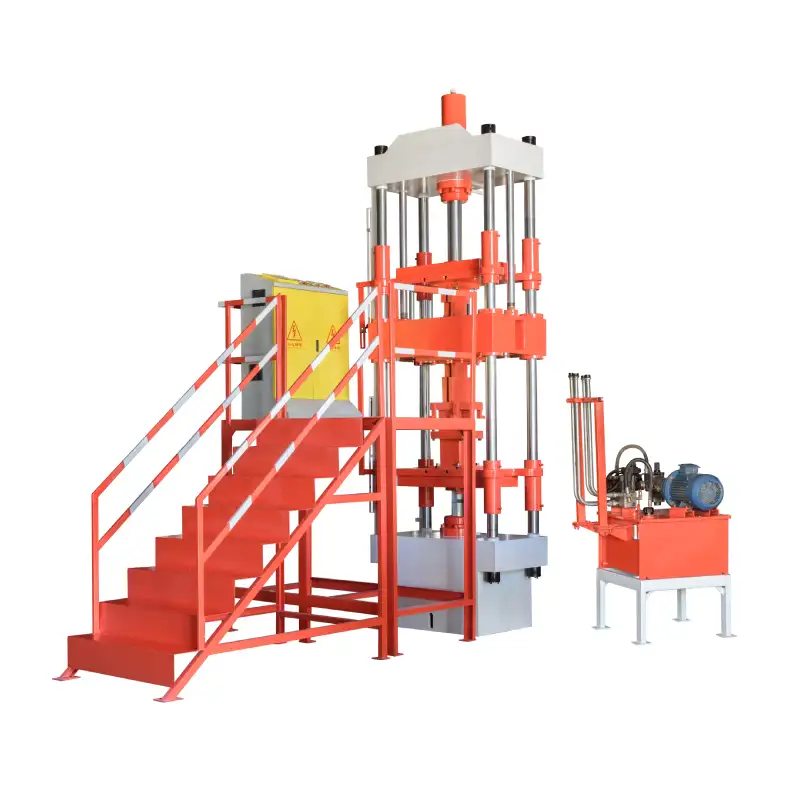
While the QT series often refers to machines that use a combination of vibration and pressure, another important category is the static hydraulic press. These machines rely primarily on extremely high hydraulic pressure to form blocks, with less emphasis on vibration. A "single" press has one hydraulic cylinder, while a "double" press has two, allowing for greater force and potentially larger block production.
Static hydraulic presses are particularly well-suited for producing high-density products like solid blocks, paving stones, and curbstones. The immense pressure creates an exceptionally durable and wear-resistant surface, which is ideal for pavers that will be subjected to vehicle traffic. They are also excellent for producing blocks with very sharp, well-defined edges and corners.
The choice between a vibration-dominant machine (like many QT models) and a pressure-dominant static hydraulic press comes back to your intended product niche. If your primary product will be hollow blocks for walling, the vibration is crucial for ensuring the mix fills the complex mold shape evenly. If your focus is on high-strength, high-density pavers, a static hydraulic press might be the more suitable tool. Many modern machines, however, are hybrids, employing both technologies to offer greater versatility.
Key Specifications to Consider: Production Capacity, Power, and Pallet Size
When comparing specific models, you must look beyond the marketing brochures and analyze the technical specification sheet. Several key numbers will tell you the real story of a machine's capabilities.
- Production Capacity: This is often listed as "pcs/hour" or "pcs/shift (8 hours)" for a specific block size (usually the 400x200x200mm hollow block). Be realistic with these numbers. The "theoretical" capacity assumes perfect conditions. A more practical estimate might be 80-90% of the listed value.
- Total Power (kW): This figure tells you the total electricity consumption of the machine. It is a critical factor for calculating your operational costs and ensuring your production site has an adequate power supply. A machine with a total power of 30kW will have significantly different utility costs than one rated at 15kW.
- Pallet Size (mm): The machine forms blocks on top of a pallet (often made of wood, bamboo, or composite GMT material). The pallet size determines how many blocks can be made in a single cycle. A larger pallet size generally corresponds to a higher output machine. It also dictates the size of your curing area, as you will need space to store thousands of these pallets while the blocks cure.
- Molding Cycle (s): This is the time it takes for the machine to complete one cycle of filling, pressing, and ejecting. A shorter cycle time means higher output. A typical range is 15-25 seconds.
- Vibration Force (KN): Measured in kilonewtons, this indicates the power of the vibration system. A higher force generally leads to better compaction and stronger blocks.
By carefully analyzing these specifications in the context of your business plan, you can move from a general understanding of machine types to a specific, data-driven choice of the model that will become the cornerstone of your production line.
Step 3: Mastering the Raw Material Mix
The finest brick making machine in the world is useless if the ingredients fed into it are of poor quality or improperly proportioned. The creation of a strong, durable concrete block is a science, a form of applied chemistry and physics that happens within the confines of your mixer and mold. Understanding the role of each component—the aggregates, the cement, the water—is not an optional detail; it is fundamental to the integrity of your final product and the reputation of your business. A block that crumbles, cracks, or fails to meet strength requirements is a direct reflection of a flawed recipe. Mastering the raw material mix is how you ensure that every block that leaves your yard is a testament to quality.
The Science of Aggregates: Sand, Crushed Stone, and Fly Ash
Aggregates are the skeleton of your concrete block, providing the bulk and structural framework. They typically constitute 70-80% of the block's volume. The choice and quality of aggregates are paramount.
Sand (Fine Aggregate): Sand fills the small voids between the larger aggregate particles. The ideal sand is "sharp" or angular, not rounded like beach sand. This angularity helps the particles interlock, creating a stronger matrix. It must also be clean, free from clay, silt, and organic impurities. These contaminants can interfere with the chemical reaction of the cement and weaken the block. A simple field test involves shaking a sample of sand in a clear jar with water; if a thick layer of silt settles on top, the sand may need to be washed before use.
Crushed Stone or Gravel (Coarse Aggregate): This is the primary load-bearing component. Like sand, it should be angular and clean. The size of the coarse aggregate is critical. For a standard hollow block, the maximum aggregate size should not exceed one-third of the thinnest wall section of the block. Using aggregate that is too large can lead to blockages in the machine's feeding system and create voids in the final product. A well-graded aggregate, meaning a mix of different sizes, is ideal as it allows for maximum particle packing and density (Neville, 2011).
Fly Ash and Other Industrial Wastes: In many regions, industrial byproducts can be used as a partial replacement for cement or fine aggregates. Fly ash, a byproduct of coal-fired power plants, is a pozzolanic material. This means that while it is not cementitious on its own, it reacts with the byproducts of cement hydration to form additional cement-like compounds. Using fly ash can not only reduce costs but also improve the long-term strength and durability of the blocks, making them less permeable to water (Mehta & Monteiro, 2014). Other materials like slag from steel production or crushed quarry dust can also be used, but each requires careful testing to determine its effect on the mix and the final product. Their use turns a potential environmental liability into a valuable resource.
The Role of Cement and Water: Achieving Optimal Ratios
If aggregates are the skeleton, cement is the muscle and sinew that binds everything together. Water is the catalyst that brings the cement to life. The relationship between these three components is delicate and precise.
Cement (Binder): The most common type used is Ordinary Portland Cement (OPC). When mixed with water, cement undergoes a chemical reaction called hydration. This reaction forms crystals that grow and interlock, binding the aggregate particles into a solid, stone-like mass. The amount of cement in the mix directly influences the strength of the block. Too little cement results in a weak, friable block. Too much cement can make the block brittle and prone to cracking, not to mention drastically increasing your material cost.
水だ: Water is essential for hydration, but it is also the most common source of problems. The water-to-cement ratio (w/c ratio) is the single most important factor determining the strength of the concrete. A lower w/c ratio leads to higher strength and durability. However, the mix must have enough water to be workable—that is, fluid enough to be properly mixed and molded by the machine. A mix that is too dry will not compact properly, resulting in a porous and weak block. A mix that is too wet will lead to a high w/c ratio, resulting in a low-strength block that may slump or deform after being ejected from the mold. The goal is to achieve a "zero-slump" or "earth-moist" consistency. The mix should be just wet enough to be formed into a ball in your hand without crumbling and without excess water squeezing out.
Sourcing and Cost Management for Raw Materials
Your ability to consistently source high-quality, affordable raw materials is a cornerstone of your business's profitability. You need to identify reliable local suppliers for sand, gravel, and cement. Building strong relationships with quarry operators and cement distributors can lead to better pricing and priority service.
When evaluating suppliers, do not just consider the price per ton. Consider the cost of transportation to your site. A cheaper supplier located far away may end up being more expensive once logistics are factored in. Always request samples and perform your own quality checks before committing to a large order.
For materials like fly ash, you may be able to acquire them at a very low cost or even for free from local power plants, who might otherwise have to pay to dispose of it. This can provide a significant competitive advantage. Keep meticulous records of your material costs. As prices for commodities like cement fluctuate, you will need to adjust your block pricing accordingly to protect your profit margins.
Raw Material Mix Ratios for Different Block Types
The ideal mix ratio will vary depending on the quality of your specific raw materials, the type of block you are producing, and the strength requirements. The following table provides starting-point ratios by volume. You must conduct trials and test the resulting blocks to fine-tune these ratios for your unique situation. Assume a standard "part" could be a bucket, a wheelbarrow, or a loader scoop, as long as it is used consistently.
| Block Type | Cement | Sand (Fine Aggregate) | Crushed Stone (Coarse Aggregate) | Water |
|---|---|---|---|---|
| Standard Hollow Block (General Use) | 1 | 3 | 4 | Adjust for zero-slump consistency |
| High-Strength Load-Bearing Block | 1 | 2 | 3 | Adjust for zero-slump consistency |
| Paving Stone (Paver) | 1 | 2 | 2 | Adjust for zero-slump consistency |
| Lightweight Block (with Fly Ash) | 0.8 | 3 | 4 | Adjust for zero-slump consistency |
Note: When using fly ash as a partial cement replacement, you can start by replacing 20% of the cement volume with fly ash. Extensive testing is required to go beyond this percentage.
Remember, these are guidelines, not rigid rules. The true art of block making lies in observing your mix, feeling its consistency, and seeing how it behaves in the machine. You must become a scientist in your own yard, constantly testing, adjusting, and perfecting your recipe to create the best possible product from the resources available to you.
Step 4: Setting Up Your Production Site and Workflow
The physical environment where you produce your bricks is as crucial to your success as the machine itself. An ill-conceived site layout can create bottlenecks, compromise safety, and inflate labor costs, eroding the efficiency gained from even the most advanced machinery. Conversely, a thoughtfully designed production site fosters a smooth, logical flow of materials and people, maximizing output and minimizing wasted effort. This step involves transforming an empty plot of land into a functional, efficient, and safe industrial workspace. It is the practical application of the strategic decisions made in the preceding steps, bringing your business from paper into the physical world.
Site Selection: Space, Utilities, and Logistics
The first decision is where to locate your operation. Several factors must be carefully weighed.
Space: You need significantly more space than just the footprint of the machine. Your site must accommodate several distinct zones:
- 原材料の保管 You need separate, accessible piles for sand, crushed stone, and any other aggregates. These should be on a hard, clean surface to prevent contamination from mud and organic matter. You also need a dry, covered area for storing bags of cement to protect them from moisture, which would cause them to harden prematurely.
- Mixing Area: This is where your concrete mixer will be located, ideally positioned between the raw material storage and the block machine to minimize travel distance.
- Production Area: This houses the block machine itself. It should be on a perfectly level concrete slab to ensure the machine operates correctly and is stable. A simple roof over this area is highly recommended to protect the machinery and operators from sun and rain.
- 養生エリア: This is the largest and most critical area. After blocks are molded, they are left on their pallets to cure (harden) for several days. You need a vast, flat area where thousands of pallets can be laid out without being disturbed. The required space is a direct function of your machine's daily output and the required curing time. For a machine producing 6,000 blocks per day with a 3-day initial curing period, you would need space for at least 18,000 blocks at any given time.
- Stockyard: After curing, the blocks are taken off the pallets and stacked in a stockyard, ready for sale and dispatch.
- Access: The site must be easily accessible by heavy trucks for delivering raw materials and dispatching finished products.
Utilities: A reliable and adequate supply of electricity and water is non-negotiable. Check the total power requirement (in kW) of your chosen block machine and mixer, and ensure the local grid can support that load. A three-phase power supply is almost always required for industrial machinery. Similarly, you need a consistent source of clean water for the concrete mix.
Logistics and Location: Consider the proximity of your site to both your raw material suppliers and your target market. A site located midway between the main quarry and the city's construction zones can significantly reduce transportation costs, which are a major operational expense. Also, be aware of local zoning regulations. Industrial activities are often restricted to specific zones, so ensure your chosen site is properly zoned for manufacturing.
Designing an Efficient Plant Layout
The layout of your site should be designed around a logical, one-way flow of materials to prevent congestion and unnecessary movement. Imagine the journey of your materials from start to finish:
- Raw materials are delivered and stored at one end of the site.
- A front-end loader or laborers move the aggregates and cement to the コンクリートミキサー.
- The mixed concrete is then transported (often via a small conveyor belt on automated lines, or by wheelbarrow in simpler setups) a short distance to the hopper of the ブロック製造機.
- The machine produces blocks on pallets. These fresh, "green" blocks are immediately moved by a pallet cart or forklift to the adjacent curing area.
- The blocks follow a path through the curing area over several days.
- Once cured, the blocks are moved to the stockyard at the opposite end of the site, where they are stacked and await customer pickup or delivery.
This linear flow—from raw material to finished product—is the foundation of an efficient operation. It minimizes the distance everything has to travel, reduces the chance of collisions between workers or equipment, and makes the entire process intuitive and easy to manage.
The Production Cycle: From Mixing to Curing and Stacking
Understanding the full production cycle is key to managing your daily operations. It is a continuous loop that begins each morning.
ミキシング: The first step is to prepare the concrete mix. Using your predetermined ratios, the aggregates and cement are loaded into the mixer. Water is added gradually until the desired earth-moist consistency is achieved. The mixing time is crucial; too little time results in a non-uniform mix, while too much time can begin the hydration process prematurely. A typical mixing time is 3-5 minutes.
成形: The fresh mix is fed into the hopper of the block machine. The machine then automatically or semi-automatically performs its molding cycle: the feed box fills the mold, the hydraulic press and vibration system compact the material, and the mold is lifted, leaving the finished green blocks on the pallet below.
Transporting and Initial Curing: The pallet with the fresh blocks is immediately moved to the curing area. These blocks are extremely fragile and must be handled with care. They should be laid on level ground and protected from direct sun, strong wind, and rain for the first 24 hours, as these can cause rapid moisture loss and lead to surface cracking. Many producers cover the fresh blocks with plastic sheeting to maintain a humid environment.
Curing: This is the most patient part of the process. Curing is the chemical process of hydration, during which the concrete gains its strength. It is not simply "drying." In fact, the presence of moisture is essential for curing. For the first 7 days, the blocks should be kept moist. This is often done by lightly spraying them with water once or twice a day (after the initial 24-hour setting period). Concrete continues to gain strength for years, but it typically reaches about 70% of its final design strength after 7 days and over 90% after 28 days (Mindess et al., 2003). For most non-structural applications, blocks can be sold after 7-14 days of proper curing.
Stacking and Storage: Once the blocks have sufficiently cured, they can be manually or automatically de-palletized and stacked in the stockyard. Proper stacking is important to prevent chipping and to ensure stability. The empty pallets are then returned to the block machine to begin the cycle anew.
By meticulously planning your site and internalizing the rhythm of this production cycle, you create an environment where your machine can perform at its peak capacity, turning raw earth and powder into the solid building blocks of your community.
Step 5: Operational Excellence and Quality Control
Acquiring the right machine and setting up an efficient site are foundational achievements, but they do not guarantee long-term success. The sustained profitability of your brick making operation hinges on a commitment to operational excellence. This is a continuous, daily practice, not a one-time setup. It is about instilling a culture of precision, care, and vigilance in every aspect of your production. A failure in quality control can damage your reputation, while neglecting maintenance can lead to catastrophic equipment failure. This step focuses on the systems and habits that transform a functional plant into a high-performing, reliable, and respected enterprise. It is the human element that ensures the mechanical process yields a consistently superior product.
Implementing a Rigorous Quality Control Process
Quality control (QC) is not something you do at the end of the line; it is a series of checks and balances integrated into every stage of production. Your goal is to identify and correct deviations before they result in a defective product.
1. Raw Material Inspection: Your QC process begins the moment a truck of raw materials arrives.
- Visual Check: Is the sand clean? Is the gravel free of dirt and organic matter? Are the cement bags dry and unbroken?
- Sieve Analysis: Periodically, you should perform a sieve analysis on your aggregates. This involves passing a sample through a set of screens with different mesh sizes to ensure the particle size distribution is consistent and meets your specifications. A sudden change in aggregate size can dramatically affect your mix design and block quality.
2. Mix Consistency Monitoring: The operator of the concrete mixer is your first line of defense.
- Visual and Tactile Check: Every single batch of concrete should be visually inspected. Does it have the same color and texture as the previous batch? The operator should perform the "hand-ball" test to check for the correct moisture content.
- Record Keeping: A simple logbook noting the time of each mix and any adjustments made can be invaluable for troubleshooting issues later.
3. "Green" Block Inspection: As the blocks are ejected from the machine, they should be inspected.
- Dimensions: Are the blocks of the correct height? A simple measuring tool can quickly spot issues with the machine's settings or wear in the mold.
- Appearance: Are the edges sharp? Is the surface free from major cracks or honeycombing? Minor surface imperfections are normal, but significant flaws indicate a problem with the mix or the machine's vibration/pressure settings.
4. Cured Block Testing: This is the ultimate proof of your quality.
- Compressive Strength Testing: You must periodically have your blocks tested for compressive strength. This usually involves sending samples from a production batch to a certified materials testing laboratory. The lab will use a machine to apply a crushing force to the block until it fails. The result, typically measured in Megapascals (MPa) or pounds per square inch (PSI), tells you the block's strength. This is not just for your own information; these test certificates are often required by engineers and contractors to prove your product meets project specifications.
- Water Absorption Test: This test measures how much water a block absorbs when submerged for 24 hours. Lower absorption indicates a denser, more durable block.
By implementing these checks, you create a feedback loop. A failed strength test, for instance, should trigger a review of the entire process: Was the cement-to-aggregate ratio correct? Was the w/c ratio too high? Was the curing process followed properly? This systematic approach is how you guarantee a quality product.
Routine Maintenance: Extending the Life of Your Machine
Your brick making machine is a complex piece of equipment with many moving parts operating under immense stress. Neglecting its maintenance is not a cost-saving measure; it is an invitation for a costly and production-halting breakdown. A proactive maintenance schedule is essential. You should work with your machine supplier, like , to develop a specific plan, which will typically include daily, weekly, and monthly tasks.
Daily Checklist (before starting operation):
- Check hydraulic oil levels and look for any leaks in hoses or fittings.
- Inspect the main moving parts (mold, tamper head) for any loose bolts or visible damage.
- Clean any concrete residue from the mold and tamper head from the previous day's production.
- Check conveyor belts for proper tension and alignment.
- Ensure all safety guards are in place.
Weekly Checklist:
- Grease all lubrication points (bearings, sliding surfaces) as specified in the machine's manual.
- Thoroughly clean the entire machine, removing accumulated dust and concrete.
- Inspect the mold for wear and tear. The precision of the mold directly affects the dimensions of your block.
- Check the electrical cabinet for loose connections and ensure cooling fans are working.
Monthly Checklist:
- Change the hydraulic oil and filters at the recommended intervals. Contaminated oil is a leading cause of hydraulic system failure.
- Inspect the condition of vibration motor bearings.
- Perform a detailed inspection of the machine's frame for any stress cracks.
- Check the tightness of all major structural bolts.
Maintaining a logbook of all maintenance activities is crucial. It provides a history of the machine's health and ensures that tasks are not overlooked. A well-maintained machine not only lasts longer but also produces higher-quality blocks more consistently.
Training Your Team: The Human Element in Production
Even a fully automatic production line requires skilled human oversight. Your team is your most valuable asset, and investing in their training is investing in the quality and efficiency of your operation.
Machine Operators: The operator needs to be trained to do more than just press the "start" button. They should understand the meaning of each setting on the control panel. They should be able to recognize the signs of a poor mix or a machine malfunction by the sound of the machine and the look of the blocks. They are your frontline for quality control and preventative maintenance.
Mixer Operators: This person must be trained to be incredibly consistent. They need to understand the importance of precise measurements and the visual cues of a perfect mix.
Maintenance Staff: Whether you have a dedicated technician or train one of your operators, someone on-site must have a deep mechanical understanding of the machine. They should be able to perform all routine maintenance tasks and diagnose common problems. Many machine suppliers, such as , offer training for customer technicians either on-site during installation or at their own facilities.
Safety Training: A production site with heavy machinery, moving vehicles, and stacks of heavy materials has inherent risks. All staff must be trained on safety procedures, such as wearing appropriate personal protective equipment (PPE) like steel-toed boots, gloves, and safety glasses. They must know the location of emergency stop buttons and be trained in safe lifting techniques.
By fostering a team that is skilled, vigilant, and safety-conscious, you build a resilient operation capable of consistently producing high-quality products day in and day out.
Step 6: Navigating Sales, Marketing, and Distribution
You can produce the strongest, most perfectly formed blocks in the region, but if no one knows they exist or if they cannot be delivered to a job site efficiently, your stockyard will quickly become a boneyard of unsold inventory. The final stages of the production process—sales, marketing, and distribution—are where your operational efforts are converted into revenue. This is the art of connecting your product with the people who need it. In the competitive construction materials market, simply having a good product is not enough. You must build a reputation, establish trust, and create a seamless path from your factory gate to the builder's hand. This step is about building the commercial bridge that allows your business to thrive.
Building a Strong Brand in the Construction Materials Sector
In the construction world, a brand is not built on flashy advertisements. It is built on a foundation of trust and reliability. Your brand is your promise to your customers. It is the assurance that when they order 10,000 blocks, all 10,000 will be of consistent quality and strength, and they will arrive on the date promised.
1. Quality as Your Cornerstone: The most powerful marketing tool you have is the product itself. Encourage potential customers, especially contractors and engineers, to visit your production site. Let them see your clean, organized operation. Show them your quality control procedures. Give them a copy of your latest compressive strength test report from an independent lab. This transparency builds immense confidence.
2. Develop a Professional Identity: Even for a business dealing in a product as earthy as concrete blocks, a professional identity matters.
- Company Name and Logo: Choose a name that is easy to remember and suggests strength and reliability. A simple, strong logo can be printed on your delivery truck, on invoices, and even subtly imprinted on the blocks themselves.
- Basic Marketing Materials: A simple brochure or flyer detailing your product range (hollow blocks, pavers, etc.), their specifications (size, strength), and your contact information is essential. A professional website, even a simple one, serves as a digital storefront and adds a layer of credibility.
3. Build Relationships: The construction industry is relationship-driven.
- Target Key Influencers: Identify the key decision-makers in your local market. These are not just the owners of large construction companies, but also site foremen, project managers, and local architects and engineers. Visit them, introduce yourself, and leave your product information.
- Network within the Industry: Join local builder associations or trade groups. Attend industry events. Become a known and trusted face in the local construction community. Your reputation will be your most valuable asset.
Pricing Strategy: Balancing Cost, Quality, and Market Rates
Setting the right price for your blocks is a delicate balancing act. Price too high, and you risk being uncompetitive. Price too low, and you leave money on the table or, worse, operate at a loss. Your pricing strategy must be informed by three key factors.
1. Cost-Plus Pricing: This is your starting point. You must know your exact cost to produce one block. This includes the proportional cost of raw materials, labor, electricity, water, and maintenance. Add a desired profit margin (e.g., 20%) to this cost to arrive at your baseline selling price. This ensures you are always profitable on every unit sold.
2. Competitor Analysis: You do not operate in a vacuum. What are other local producers charging for similar blocks? You need to be aware of the prevailing market rate. If your cost-plus price is significantly higher than the market rate, you need to re-examine your operational efficiency or material costs. If it is significantly lower, you may have an opportunity to either increase your price and profit margin or use your lower price as an aggressive marketing tool to gain market share.
3. Value-Based Pricing: If you can demonstrably prove that your blocks are of a higher quality than competitors' (e.g., higher strength, better finish, more consistent dimensions), you may be able to command a premium price. This is where your investment in quality control and lab testing pays dividends. You can justify a higher price by showing a customer that your superior block will result in a stronger, more durable final structure. You might also offer different price tiers, for example, for standard-strength blocks versus high-strength, certified blocks. Volume discounts for large orders are also a standard practice in the industry.
Establishing Effective Distribution Channels
Distribution is the physical act of getting your product into the hands of your customers. An inefficient or unreliable distribution system can lead to broken promises and lost business.
1. Own Your Own Delivery: The most common approach for small to medium producers is to own at least one flatbed truck. This gives you complete control over your delivery schedule and customer service. A truck with a small crane (like a Hiab) is a significant advantage, as it allows you to unload pallets of blocks directly at the job site, a service that contractors greatly value. The cost of the truck, fuel, maintenance, and a driver must be factored into your business plan and pricing.
2. Customer Pickup: Many customers, especially smaller builders or individuals, may prefer to pick up blocks themselves with their own vehicles. You need to ensure your stockyard is organized and accessible for them to do so safely and efficiently. Offering a slightly lower price for customer pickup can be an effective incentive.
3. Partnering with Material Suppliers: Another channel is to sell your blocks wholesale to larger building material suppliers or hardware stores. These stores already have an established customer base and their own delivery logistics. This can provide you with a steady volume of sales, although your profit margin per block will be lower than if you sold directly to the end-user.
4. Order Management: Whether an order comes via a phone call, a website inquiry, or a site visit, you need a simple system to manage it. A basic order book or a simple spreadsheet should track the customer's name, contact information, the type and quantity of blocks ordered, the agreed price, and the requested delivery date. This organization is key to ensuring that you can fulfill your promises and manage your production schedule effectively.
By thoughtfully developing your brand, setting a strategic price, and building a reliable distribution network, you complete the chain that links your production efforts to the marketplace, ensuring a steady flow of orders and revenue.
Step 7: Calculating ROI and Scaling Your Operation
The ultimate measure of your venture's success is its ability to generate a return on the capital you have invested. Simply being busy and selling blocks does not automatically mean you are profitable. A disciplined approach to financial tracking and analysis is what separates a sustainable business from a high-effort, low-reward job. Calculating your Return on Investment (ROI) provides a clear, quantitative verdict on your performance. It is the compass that guides your future decisions, telling you when to optimize, when to expand, and how to strategically scale your operation from a single production line into a larger, more impactful enterprise.
A Framework for Calculating Return on Investment (ROI)
Return on Investment is a simple yet powerful formula that measures the profitability of an investment relative to its cost.
ROI (%) = (Net Profit / Total Investment) x 100
To use this formula, you first need to clearly define its components.
1. Total Investment: This is the total amount of capital you have injected into the business to get it started and keep it running. It includes:
- Capital Expenditures (CapEx): The one-time costs of acquiring your major assets. This is the price of the high-quality concrete block making machine, the concrete mixer, molds, the delivery truck, and the cost of site preparation (e.g., pouring the concrete slab).
- Working Capital: The funds needed to cover your initial operational costs before you start generating steady revenue. This includes the cost of your first major purchase of raw materials, initial payroll, and utility deposits.
Let's assume your Total Investment is $50,000 ($40,000 in CapEx and $10,000 in Working Capital).
2. Net Profit: This is what is left from your revenue after you have paid all your operating expenses. It is typically calculated over a specific period, such as one year.
- Annual Revenue: The total amount of money you generated from selling blocks in a year. If you sell an average of 4,000 blocks per day at $0.50 each for 250 working days a year, your annual revenue is 4,000 x $0.50 x 250 = $500,000.
- Annual Operating Costs (Cost of Goods Sold + Expenses): The total cost of running the business for a year. This includes all raw materials, labor, utilities, fuel, maintenance, insurance, and any land rent. Let's say your total annual operating costs are $420,000.
- Net Profit = Annual Revenue – Annual Operating Costs. In this example, $500,000 – $420,000 = $80,000.
Now, you can calculate your ROI:
ROI = ($80,000 / $50,000) x 100 = 160%
An ROI of 160% per year is exceptionally high and illustrates the potential profitability of this business model. This calculation also tells you the payback period—the time it takes to earn back your initial investment. In this case, you would earn back your $50,000 investment in well under a year. Regularly performing this calculation (e.g., quarterly or annually) allows you to track your financial health and make data-driven decisions.
Identifying Key Performance Indicators (KPIs)
While ROI gives you a high-level view of profitability, Key Performance Indicators (KPIs) are the specific, measurable metrics that help you manage and improve your day-to-day operations. Tracking these KPIs can give you early warnings of problems and highlight areas for improvement.
- Cost Per Block: This is your most critical operational KPI. Continuously track the cost of raw materials, labor, and utilities required to produce a single block. A sudden increase in this KPI signals a rise in material costs or a drop in operational efficiency.
- Production Output per Shift: Are you consistently meeting your target production numbers? If not, why? Is it due to machine downtime, slow material feeding, or labor inefficiency?
- Machine Downtime: Track the number of hours your machine is not running during a scheduled shift. High downtime is a major killer of profitability and often points to maintenance issues or problems with raw material supply.
- Block Rejection Rate: What percentage of your blocks fail to meet quality standards and have to be discarded? A high rejection rate indicates problems with your mix, machine settings, or curing process.
- On-Time Delivery Rate: What percentage of your orders are delivered on the date promised to the customer? A high rate is crucial for customer satisfaction and building a reliable brand.
By monitoring these KPIs on a dashboard or a simple spreadsheet, you can manage your business proactively, making small adjustments to keep your operation lean, efficient, and profitable.
Strategies for Scaling: From a Single Machine to a Full Production Line
Once your initial operation is consistently profitable and you have a firm grasp on your market, you can begin to think about scaling. Scaling is not just about getting bigger; it is about growing strategically.
1. Increase Production Hours: The simplest way to increase output is to add a second shift. If your machine is running for 8 hours a day, adding a second 8-hour shift can nearly double your production and revenue with minimal additional capital investment (your main new cost would be labor and utilities).
2. Diversify Your Product Line: If you started by specializing in hollow blocks, you could scale by investing in new molds to produce pavers, curbstones, or other products that your market research indicates are in demand. This allows you to capture a larger share of the construction materials market.
3. Invest in a Second Machine: When you are consistently selling everything you can produce and demand is still strong, it may be time to invest in a second block making machine. This is a major capital decision. You could add a second machine identical to your first to double down on your core product, or you could add a different type of machine (e.g., a dedicated paver machine) to expand into a new niche.
4. Upgrade to a Fully Automatic Line: If you started with a semi-automatic machine, the ultimate scaling step is to upgrade to a fully automatic production line. This would involve adding automated batching plants, conveyor systems, and a cubing machine that automatically stacks the cured blocks onto pallets for shipping. This move dramatically increases production capacity and reduces labor costs, positioning you to compete for the largest contracts in your region. Suppliers of these comprehensive systems, such as those found on , can provide a full turnkey solution.
Each scaling decision should be modeled in your business plan. You must project the costs, the potential increase in revenue, and the impact on your ROI. By combining a deep understanding of your finances with a clear-eyed view of your market, you can guide your business on a path of sustainable, profitable growth.
よくある質問(FAQ)
What is the initial investment for starting a brick-making business? The initial investment varies significantly based on the scale of the operation. A small-scale setup with a semi-automatic machine (like a QT4-25) might require an investment of $15,000 to $30,000 USD, covering the machine, a mixer, basic molds, and initial working capital. A large-scale, fully automatic production line (like a QT10-15 or larger) can easily exceed $100,000 USD once all auxiliary equipment, site preparation, and logistics are included.
How many people are needed to operate a brick-making machine? This depends entirely on the level of automation. A manual machine may require 4 to 6 people for mixing, molding, and transport. A semi-automatic line typically runs efficiently with 3 to 4 workers. A fully automatic line requires only 1 or 2 people to act as supervisors, overseeing the PLC control system and monitoring the process, as most of the labor is handled by the machinery.
Can I use industrial waste as a raw material? Yes, and it is often encouraged. Materials like fly ash (from power plants), ground granulated blast-furnace slag (from steel mills), and quarry dust can be used as partial replacements for cement or sand. This practice not only reduces your material costs but also produces a more environmentally friendly "green" block. However, any new material must be thoroughly tested to determine the correct mix proportion and its effect on the block's strength and durability.
What is the typical lifespan of a Chinese-made block machine? With proper and consistent maintenance, a well-built Chinese block machine from a reputable manufacturer can have a very long service life. The main frame and structure can last for decades. Key components like the hydraulic system, motors, and molds will require periodic replacement or refurbishment. Molds, being subject to high abrasion, might need to be replaced after producing a certain number of blocks (e.g., 80,000-100,000 cycles). A realistic expectation, with diligent upkeep, is a lifespan of 10 to 15 years or more of productive service.
How do hydraulic and vibration systems affect block quality? They are the two most critical factors for quality. The vibration system agitates the concrete mix, helping the particles settle densely and eliminating air pockets or voids. The hydraulic system then applies immense pressure to compact the mix. The combination of high-frequency vibration and high-pressure compaction is what creates a block that is uniformly dense, has high compressive strength, low water absorption, and a smooth surface finish.
What is the recommended curing time for concrete blocks before they can be sold? While concrete continues to gain strength for months, a minimum curing period is essential before blocks are used in construction. For most non-load-bearing applications, a 7-day curing period, during which the blocks are kept moist, is considered the absolute minimum. A more conservative and safer practice is to cure blocks for at least 14 days. For high-strength, structural applications, a full 28-day cure is often specified by engineers to ensure the blocks have reached their designed compressive strength.
結論
The path to creating a successful brick manufacturing business is not forged in a single moment of purchase but is constructed through a series of deliberate, informed, and interconnected decisions. It begins with a deep, empathetic understanding of the community you wish to serve, analyzing its needs and the rhythm of its growth. It proceeds through the careful selection of machinery, not just as a piece of equipment, but as the central tool in a larger, well-designed system. The process demands a respect for the material science of concrete, recognizing that quality is born from a precise and consistent recipe. It requires the thoughtful design of a physical workspace that promotes efficiency and safety, and the cultivation of a team that is skilled and vigilant. Finally, it culminates in a disciplined approach to finance and strategy, where passion is guided by the clear logic of numbers. The question of how to make a brick making machine profitable finds its answer not in a simple manual, but in this holistic and strategic framework. By embracing this comprehensive approach, an entrepreneur in Southeast Asia, the Middle East, or anywhere the world is building, can transform a humble mixture of sand, stone, and cement into the foundation of a durable and prosperous enterprise.
参考文献
Mehta, P. K., & Monteiro, P. J. M. (2014). Concrete: Microstructure, properties, and materials (4th ed.). McGraw-Hill Education.
Mindess, S., Young, J. F., & Darwin, D. (2003). Concrete (2nd ed.). Prentice Hall.
Neville, A. M. (2011).Properties of concrete (5th ed.).Pearson.
Saber, H. (2022). The role of quality control and standardization in the development of the Saudi construction sector. Journal of Engineering Research, 10(3B).