

Brick Machine for Sale: An Expert’s 2025 Guide to 5 Critical Investment Factors
12월 18, 2025
초록
The acquisition of a brick making machine represents a significant capital investment with far-reaching implications for a construction or manufacturing enterprise. This analysis examines the multifaceted considerations inherent in selecting an appropriate brick machine for sale, with a specific focus on the burgeoning markets of Southeast Asia and the Middle East in 2025. It delineates the fundamental technological distinctions between QT series vibration-based machines and static hydraulic presses, evaluating their respective applications in relation to production volume, product diversity, and end-product specifications. The inquiry extends to the critical role of automation levels, from semi-automatic to fully integrated production lines, and their correlation with labor costs, operational efficiency, and quality consistency. A detailed deconstruction of technical specifications and component quality is undertaken to illuminate how factors such as hydraulic systems, motor provenance, and steel grade directly influence machine longevity and performance. The discourse culminates in a comprehensive framework for assessing the total cost of ownership and calculating return on investment, providing a robust model for financial forecasting and strategic decision-making.
주요 내용
- Align machine choice with market needs; QT series for volume, hydraulic press for density.
- Evaluate automation levels to balance initial investment against long-term labor costs.
- Scrutinize component quality; premium parts from brands like Siemens reduce costly downtime.
- Calculate the Total Cost of Ownership, not just the initial price of the brick machine for sale.
- Assess supplier after-sales support for installation, training, and spare parts availability.
- The versatility of interchangeable molds is a key factor for adapting to market changes.
- Understand that raw material availability in your region directly impacts production costs.
목차
- Foundational Knowledge: Understanding the Core Technologies
- Factor 1: Aligning Machine Type with Production Goals and Market Demand
- Factor 2: Assessing Automation Levels for Operational Efficiency
- Factor 3: Scrutinizing Technical Specifications and Component Quality
- Factor 4: Calculating Total Cost of Ownership and Return on Investment (ROI)
- Factor 5: Evaluating Supplier Reliability and After-Sales Support
- 자주 묻는 질문(FAQ)
- A Final Contemplation on Building Your Foundation
- 참조
Foundational Knowledge: Understanding the Core Technologies
Embarking on the path of block production requires more than just capital; it demands a foundational comprehension of the very technologies that will shape your enterprise. The decision to pursue a brick machine for sale is not merely a purchase but an entry into a world of material science, mechanical engineering, and market dynamics. Before we can intelligently weigh the factors of investment, we must first sit with the machines themselves, understand their language of pressure and vibration, and appreciate how they transform humble raw materials into the very skeleton of our built environment. This is not about memorizing specifications; it is about grasping the philosophy behind each design choice.
The Mechanics of Compaction: Vibration vs. Hydraulic Pressing
At the heart of every concrete block's integrity lies the process of compaction. The goal is simple in principle yet complex in execution: to minimize the voids between the aggregate particles (like sand and crushed stone) and the cement paste, thereby creating a dense, strong, and durable unit. The two primary philosophies for achieving this are through high-frequency vibration and immense hydraulic pressure.
Imagine you have a jar filled with a mix of large pebbles and fine sand. If you simply pour it in, there will be many empty spaces. If you shake the jar vigorously, the smaller sand particles will work their way into the gaps between the pebbles, making the total volume more compact. This is the essence of vibration technology. A vibration-based machine, such as the common QT series, uses powerful, high-frequency vibrations to agitate the concrete mixture within the mold. This agitation causes the particles to settle into their most compact arrangement, a process known as particle rearrangement. The force of the vibration is a critical parameter, measured in kilonewtons (kN), as it must be sufficient to overcome the internal friction of the mixture.
Now, consider a different approach. Instead of shaking the jar, you use a powerful piston to press down on the contents with immense force. This is the principle of hydraulic pressing. A static hydraulic press machine doesn't rely primarily on vibration. Instead, it uses a hydraulic system—a system that uses fluid pressure to generate immense mechanical force—to squeeze the material in the mold. This method is less about rearranging particles and more about forcing them together, expelling trapped air and excess water. The pressure, measured in megapascals (MPa), is the defining characteristic here. This technique is often favored for producing blocks that require exceptionally high density and a very smooth surface finish, such as high-grade pavers or specialized curb-stones.
Neither method is inherently superior; they are simply different tools for different tasks. The choice between them is a choice about the desired final properties of your product and the nature of your production goals. Vibration is excellent for creating a well-graded internal structure in standard blocks at high speed, while hydraulic pressing excels at creating ultra-dense units where surface perfection and compressive strength are paramount.
A Tale of Two Machines: The QT Series and the Static Hydraulic Press
With this understanding of the core mechanics, we can now properly introduce the two protagonists of our story: the QT series concrete block making machine and the static hydraulic block pressing machine.
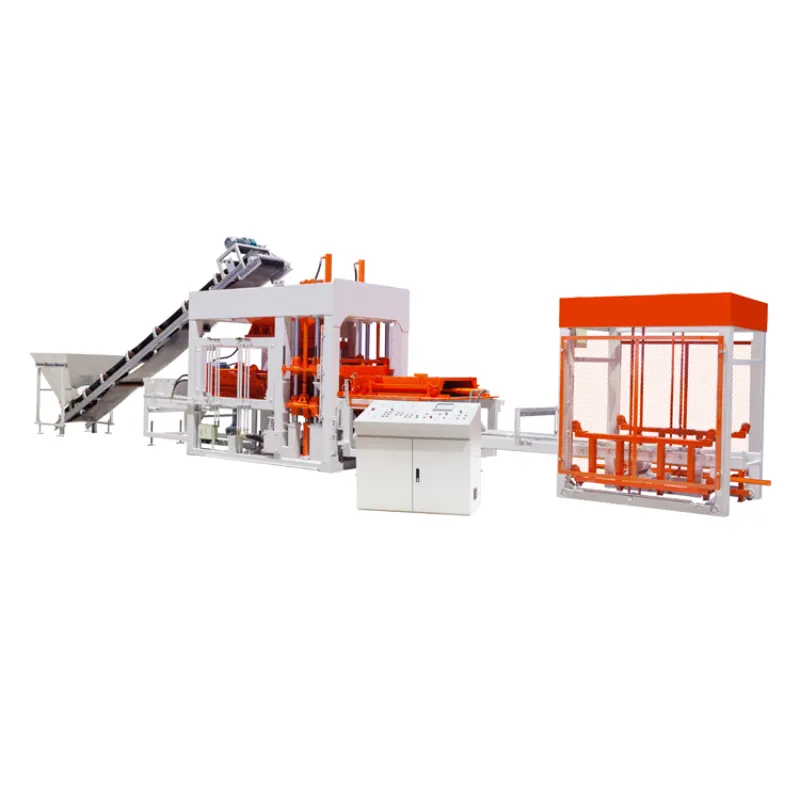
The QT series, as seen in models like the QT5-15 and , is the workhorse of the modern block production industry. These are typically stationary, fully automatic machines that integrate vibration with a degree of hydraulic pressure. The "QT" designation often refers to the Chinese pinyin for "Qing Tou," meaning a light head or pallet type machine, reflecting its operational design. The process is a symphony of automated actions: the machine feeds a precise batch of concrete mix into the mold, a vibration box beneath the platform and sometimes a top vibrator activate to compact the material, and a hydraulic cylinder presses the tamper head down to form the final shape and height. The newly formed blocks are then demolded onto a pallet and transported away for curing. The key advantage of the QT series is its speed and versatility. With cycle times often between 15 to 25 seconds, it can produce a high volume of various products, from hollow blocks for walls to solid bricks and interlocking pavers, simply by changing the mold (). This makes it an ideal choice for businesses looking to serve a broad construction market.
The static hydraulic press, on the other hand, is a more specialized instrument. It often operates at a slower cycle time but exerts a much higher, more uniform pressure across the entire surface of the block. This results in blocks with superior density, lower water absorption, and higher compressive strength. These machines are the preferred choice for producing architectural-grade products where aesthetics and performance justify a higher production cost per unit. Think of the finely finished pavers in a high-end public square or the robust, precisely shaped curb-stones lining a major highway. While a QT series machine can produce pavers, a static hydraulic press produces pavers of a different caliber.
To better contextualize this choice, let us consider a direct comparison.
| 기능 | QT Series Concrete Block Machine (e.g., QT5-15) | Static Hydraulic Block Pressing Machine |
|---|---|---|
| Primary Technology | High-frequency vibration combined with hydraulic pressure | High-tonnage static hydraulic pressure with minimal vibration |
| 주기 시간 | 빠름(일반적으로 15-25초) | Slower (can be 25 seconds or more) |
| Product Volume | High output, suitable for mass production | Lower output, focused on quality over quantity |
| Typical Products | Hollow blocks, solid bricks, standard pavers, some curbstones | High-density pavers, terrazzo tiles, specialized curb-stones |
| 제품 밀도 | Good to Very Good | Excellent to Superior |
| Surface Finish | Standard, can have a slightly rougher texture | Very smooth and precise |
| 초기 투자 | Generally lower for comparable capacity | Generally higher due to the robust hydraulic system |
| 최상의 대상 | General construction, residential housing, high-volume needs | Architectural projects, high-specification infrastructure |
Raw Materials: The Building Blocks of Your Business
A brick machine, no matter how advanced, is ultimately a tool for transformation. The quality of what you put in directly dictates the quality of what you get out. Understanding the palette of raw materials is therefore non-negotiable. The beauty of a modern 콘크리트 블록 제조 기계 is its ability to utilize a wide array of inputs, which is particularly advantageous in regions looking to leverage industrial byproducts for sustainable development.
The primary ingredients are straightforward:
- Aggregate: This is the skeleton of the block and typically consists of crushed stone, gravel, and sand. The size, shape, and grading of the aggregate are immensely important. A well-graded mix, containing a range of particle sizes, will compact more efficiently and result in a stronger block. The source and cost of quality aggregate will be a major factor in your operational expenses.
- Cement: This is the binder that holds everything together. Portland cement is the most common type. When mixed with water, it undergoes a chemical reaction called hydration, forming a paste that coats the aggregate and hardens to bind the particles into a solid mass. The ratio of cement to aggregate is a key determinant of the block's strength and cost.
- Water: The role of water is twofold. It is necessary for the chemical hydration of the cement, and it provides workability to the concrete mix, allowing it to be properly molded. However, too much water can increase porosity and decrease the final strength of the block. The water-cement ratio is one of the most critical parameters in concrete technology.
Beyond these basics, many operations, especially in developing economies in Southeast Asia and the Middle East, are turning to industrial wastes as partial substitutes for raw materials. This practice, supported by research (e.g., Siddique, 2008), not only reduces production costs but also provides a sustainable solution for waste management. Common supplementary materials include:
- Fly Ash: A fine powder that is a byproduct of burning pulverized coal in electric generation power plants. It can replace a portion of the Portland cement, improving the workability of the fresh concrete and the long-term strength and durability of the hardened block.
- Slag: A byproduct of steel and iron production, ground granulated blast-furnace slag (GGBFS) also has cementitious properties and can be used to replace cement, enhancing resistance to chemical attacks.
- Cinder and Dust: Collected from various industrial processes, these can be used as fine aggregates, reducing the need for virgin sand.
When you are investigating a brick machine for sale, it is vital to discuss with the supplier the machine's capability to handle these alternative materials. The design of the feeding system and the force of the compaction system must be adequate to process mixes that may have different flow characteristics than a standard sand-and-cement mix. A machine that can adeptly use locally available, low-cost byproducts can provide a significant competitive advantage.
Factor 1: Aligning Machine Type with Production Goals and Market Demand
The act of choosing a brick machine is an exercise in foresight. It is an attempt to perfectly align a piece of industrial hardware with the intangible demands of a future market. An investor who purchases a machine without a deep, nuanced understanding of their specific market is akin to a ship captain setting sail without a map or a destination. The machinery itself is but a vessel; the market is the ocean it must navigate. This is particularly true in the diverse and rapidly evolving construction landscapes of Southeast Asia and the Middle East.
Decoding Market Needs in Southeast Asia and the Middle East
The construction sectors in regions like the ASEAN bloc and the GCC countries are not monolithic. They are a complex tapestry of high-rise commercial developments, sprawling residential suburbs, and massive public infrastructure projects. Each of these sub-sectors has a different appetite for building materials.
Consider the context of rapid urbanization in cities like Manila, Jakarta, or Ho Chi Minh City. The demand is often for vast quantities of standard hollow blocks for multi-story residential and commercial buildings. In this scenario, production volume is king. A business plan centered here would naturally gravitate towards a high-speed, high-output machine like a fully automatic QT series line (e.g., a QT12-15F). The ability to produce thousands of hollow blocks per hour, as detailed in productivity charts (), directly translates into the ability to secure large-scale supply contracts. The primary concern is meeting a consistent, high-volume demand for a standardized product.
Now, shift your perspective to the infrastructure and beautification projects in the Middle East, for instance in Dubai, Doha, or Riyadh. Here, alongside volume, there is an immense emphasis on quality, durability, and aesthetics. Projects often call for high-density interlocking pavers that can withstand heavy traffic and extreme temperatures, or precisely engineered curb-stones for new road networks. While a QT machine can produce pavers, the market may demand the superior finish and compressive strength offered by a static hydraulic press. An investor here might find a greater competitive advantage in producing a premium product that commands a higher price, even if the production volume is lower. The focus shifts from pure quantity to specialized quality.
A thoughtful investor must therefore engage in a form of commercial ethnography. What is being built around you? Are they residential towers or public parks? Is the government investing in new highways or affordable housing? Walk through new construction sites. Speak with contractors and developers. The answers to these questions will tell you whether your market needs the high-volume efficiency of a QT series machine or the high-density precision of a hydraulic press. Do not look for a brick machine for sale; look for a solution to your local market's specific construction material problem.
High Volume vs. High Strength: Choosing Your Champion
This market analysis leads directly to a strategic choice between two production philosophies: high-volume manufacturing and high-strength, specialized production.
The high-volume path, best served by a fully automatic QT series production line, is a game of efficiency and scale. The profit margin on each individual block may be modest, but the total profit is generated by producing and selling an enormous number of units. Success in this domain depends on:
- Operational Efficiency: Minimizing cycle time and downtime is paramount. A few seconds saved per cycle can amount to thousands of extra blocks per day. This is why reliable components and a well-designed automation system are not luxuries but necessities.
- Supply Chain Management: Securing a consistent and low-cost supply of raw materials is vital. A small increase in the cost of cement or aggregate can erode profits when multiplied across millions of blocks.
- Logistics: The ability to store and transport large quantities of finished products to various construction sites efficiently is a key operational challenge.
The high-strength path, often requiring a static hydraulic press, is a game of quality and value-added production. The profit per block is significantly higher, compensating for the lower production volume. Success here is contingent upon:
- Technical Mastery: Consistently producing blocks that meet stringent specifications for density, compressive strength (measured in MPa), and water absorption is the core competency. This requires precise control over the mix design and the pressing process.
- Marketing and Branding: You are not selling a commodity; you are selling a premium building material. Your marketing must communicate the superior performance, longevity, and aesthetic qualities of your product.
- Targeted Sales: Your customers are not every contractor, but rather architects, civil engineers, and developers of high-end projects who are willing to pay a premium for quality. Building relationships within this niche is essential.
This choice is not merely technical; it is a fundamental business strategy decision. Are you aiming to be the mass-market provider, or the specialized artisan? Your answer will determine which type of brick machine for sale is the right one for your venture.
Versatility as a Strategic Asset: The Power of Interchangeable Molds
In the dynamic markets of 2025, rigidity is a liability. The ability to adapt to shifting market demands is a powerful strategic asset. This is where the concept of interchangeable molds becomes profoundly important. Most modern block machines, particularly within the QT series, are not single-purpose tools. They are versatile platforms that can produce a wide array of products simply by swapping out the mold ().
One day, your primary contract might be for 400x200x200mm hollow blocks for a housing project. The next month, a new municipal project might create a sudden demand for "S" shaped interlocking pavers for a new pedestrian walkway. An operation with a single-product machine would be unable to pivot. An operation with a versatile machine and a collection of molds can seize this new opportunity.
When evaluating a brick machine for sale, the inquiry should extend beyond the machine itself to the ecosystem of molds it supports.
- Range of Molds: What is the full catalog of molds available from the manufacturer? Does it include various sizes of hollow blocks, solid bricks, interlocking pavers of different shapes, curb-stones, and perhaps even specialized products like grass blocks or slope protection blocks?
- Mold Quality: Molds are wear parts. They must be constructed from high-quality, heat-treated steel to withstand the immense pressures and abrasive nature of concrete. A cheap mold will wear out quickly, leading to blocks that are out of specification and requiring costly replacement.
- Ease and Speed of Mold Change: In a dynamic production environment, how long does it take to switch from producing one type of block to another? A machine designed for quick mold changes minimizes downtime and maximizes the operational flexibility of your plant.
Investing in a range of high-quality molds alongside your primary machine is not an ancillary expense; it is an investment in the future adaptability and resilience of your business. It transforms your machine from a simple production line into a responsive manufacturing solution, capable of meeting the market wherever it may lead.
Factor 2: Assessing Automation Levels for Operational Efficiency
The modern factory is a complex interplay between human labor and machine automation. The decision of where to position your operation on this spectrum is one of the most consequential choices an investor will make. It is a decision that touches upon economics, sociology, and technology. When you look at a brick machine for sale, you are not just seeing steel and hydraulics; you are seeing a particular vision of how human beings and machines ought to collaborate to create value. The level of automation you select will profoundly shape your daily operations, your cost structure, and your capacity for consistent quality.
The Spectrum of Automation: From Semi-Automatic to Fully-Automatic Lines
Automation in block production is not a binary switch but a continuum. Understanding the different points along this spectrum is essential for making an informed choice that aligns with your capital, labor market, and production targets.
-
반자동 기계: At the lower end of the automation spectrum, you find semi-automatic machines, such as the QT4-26 model mentioned by some suppliers (). In this setup, the core processes of material feeding, vibrating, and pressing are often automated. However, crucial steps like moving the pallets of fresh blocks to the curing area and, later, stacking the cured blocks are performed manually. These machines require a larger labor force and are more dependent on the skill and diligence of the operators. They represent a lower initial capital investment, making them an attractive entry point for small-scale entrepreneurs or for operations in regions with very low labor costs.
-
Automatic Machines: An automatic machine, like a standard QT4-25 or QT5-15, takes automation a step further. These systems typically include an automatic stacker. After the blocks are formed and demolded onto a pallet, a stacker machine automatically lifts the pallet and stacks it in a layered rack. A forklift operator then moves these racks to the curing yard. This reduces the heavy manual lifting required in a semi-automatic setup, improving efficiency and workplace safety. The number of required operators is reduced, and the process becomes more rhythmic and less prone to human-induced bottlenecks.
-
Fully-Automatic Production Lines: This represents the highest level of automation. A fully-automatic line is a completely integrated system. It includes not just the block machine and stacker but also an automated pallet return system and a "cuber." After the blocks have cured (typically for 24 hours), they are moved to a cuber machine, which automatically destacks the pallets, pushes the cured blocks off, and arranges them into neat cubes ready for transport. The empty pallets are then automatically cleaned, oiled, and returned to the block machine to begin the cycle anew. Models like the QT10-15 or QT12-15 are often found at the heart of such lines (). This setup minimizes labor to a few supervisors and forklift operators, maximizes production speed, and ensures a highly consistent and predictable output. The initial investment is substantial, but the long-term operational cost per block is the lowest.
The choice is a strategic trade-off, which can be visualized as follows:
| Automation Level | Initial Capital Investment | Required Labor Force | Output Volume | Cost Per Block (Long-term) | Operational Complexity |
|---|---|---|---|---|---|
| Semi-Automatic | 낮음 | High (5-8 workers) | 보통 | Moderate to High | 낮음 |
| Automatic | 보통 | Moderate (3-5 workers) | 높음 | 보통 | 보통 |
| Fully-Automatic | 높음 | Low (2-3 supervisors) | 매우 높음 | 낮음 | 높음 |
Labor Dynamics in 2025: Cost, Skill, and Availability
The decision on automation cannot be made in a vacuum. It must be deeply rooted in the socio-economic realities of your specific location in 2025. The cost, availability, and skill level of labor are powerful variables in this equation.
In some parts of Southeast Asia, a large pool of manual labor may still be available at a relatively low cost. In such a context, a semi-automatic or automatic line might appear to be the most economically rational choice, as the lower initial capital outlay is a significant advantage. However, this is a decision that requires careful, forward-looking thought. Labor costs across the region are on an upward trend. A business model that is profitable with today's wages may become unsustainable in five or ten years. Furthermore, reliance on manual labor introduces variables of reliability, training, and turnover, which can disrupt production.
In contrast, in many parts of the Middle East, such as the UAE or Qatar, labor, particularly skilled labor, can be expensive and subject to complex visa regulations. In these markets, the higher initial investment for a fully-automatic line can be quickly justified by the massive savings in long-term labor costs and the reduction in administrative overhead associated with managing a large workforce. A fully-automatic line offers predictability in a way that a labor-intensive operation cannot. The production does not stop because workers are on holiday or because of unexpected staff shortages.
Beyond cost, there is the question of skill. Operating even a semi-automatic machine requires a degree of training and diligence. Operating and maintaining a fully-automatic line with its complex PLC systems, sensors, and hydraulic components requires a higher level of technical skill. Therefore, when you consider a brick machine for sale, you must also consider the human infrastructure required to support it. Can you find and retain operators with the necessary skills in your local market? Does the machine supplier offer comprehensive training programs to upskill your local team? A sophisticated machine without a skilled team to run it is a recipe for frustration and failure.
The Role of PLC Systems: Brands like Siemens and Schneider in Modern Machinery
As we move up the automation spectrum, the "brain" of the machine becomes increasingly important. This brain is the Programmable Logic Controller, or PLC. The PLC is a ruggedized industrial computer that controls and automates the entire production sequence. It receives input from various sensors (e.g., proximity sensors that detect the pallet is in place, pressure sensors in the hydraulic system) and sends output commands to motors, hydraulic valves, and other actuators.
The quality and reliability of the PLC system are not minor details; they are fundamental to the machine's performance. A glitchy or unreliable PLC can lead to inconsistent block quality, operational errors, and costly downtime. This is why reputable machine manufacturers often emphasize their use of internationally recognized brands for their control systems. When a supplier's specification sheet mentions "SIEMENS PLC" or "Schneider electrical equipment" (), it is not mere brand-dropping. It is a signal of quality and reliability for several reasons:
- Proven Reliability: Brands like Siemens, Schneider, and Omron have spent decades building a reputation for producing components that can withstand the harsh conditions of an industrial environment (vibration, dust, temperature fluctuations).
- Global Availability of Spares: If a component in a Siemens PLC system fails, a replacement can be sourced relatively easily in major hubs across Southeast Asia and the Middle East. If the system uses a generic, obscure brand, finding a replacement part could take weeks, during which your entire production line is idle.
- Technical Support and Expertise: There is a global ecosystem of technicians and engineers who are trained and experienced in programming and troubleshooting Siemens or Schneider PLC systems. This makes it easier to find local technical support when you need it.
The touch screen interface (HMI – Human Machine Interface) is the portal through which your operator communicates with the PLC. A well-designed HMI, often with multilingual capabilities (e.g., English and Chinese), makes the machine easier to operate, monitor, and troubleshoot. It provides real-time feedback on the production process and allows for easy adjustment of parameters like vibration time and pressure settings. The investment in a machine with a top-tier PLC and HMI system is an investment in operational stability, ease of use, and long-term peace of mind.
Factor 3: Scrutinizing Technical Specifications and Component Quality
A brick machine is more than the sum of its parts, but its ultimate performance and longevity are inescapably dependent on the quality of each individual component. A discerning investor must learn to read a technical specification sheet not as a list of features, but as a statement of engineering philosophy and quality commitment. One must cultivate an engineer's eye, looking past the marketing language to the core metrics and materials that define the machine's capability and durability. This scrutiny is what separates a wise, long-term investment from a purchase that will be regretted.
The Heart of the Machine: Vibration and Hydraulic Systems Explained
As we have established, the processes of vibration and hydraulic pressure are central to block formation. The systems that generate these forces are the true heart of the machine.
The Vibration System: The goal is to produce a strong, uniform vibration across the entire mold. A key component here is the vibrating box. Some manufacturers highlight an "ENLARGE THE VIBRATING BOX" as an advantage (), and this is not a trivial point. A larger, more robustly designed box, often housing eccentric shafts driven by powerful motors, can generate a more powerful and evenly distributed vibration. The specification to look for is the "Exciting Force" or "Vibration Force," measured in kilonewtons (kN). A higher force generally allows for better compaction, especially with drier mixes. Another crucial metric is the "Vibration Frequency," measured in revolutions per minute (r/min) or Hertz (Hz). Frequencies in the range of 4500-5100 r/min are common and are effective at fluidizing the concrete mix for optimal particle settlement. The motors driving this system are also critical. The mention of a "SIEMENS MOTOR" is a significant indicator of quality, promising not just strong power but also a long service life and resistance to overheating under continuous operation.
The Hydraulic System: This system powers the pressing of the tamper head, the movement of the mold box, and the operation of the material feeder. Its performance dictates the final height and density of the blocks. The key specification is the "Rated Pressure," measured in Megapascals (MPa). A typical rating like 16 MPa indicates the system's capacity to generate significant force. However, the quality lies in the components that control this force. The mention of "JAPAN YUKEN HYDRAULIC VALVE / PROPORTIONAL VALVE" is a mark of a high-end machine. Yuken is a world-renowned manufacturer of hydraulic components. A proportional valve, unlike a simple on/off valve, allows for precise control over the speed and force of the hydraulic cylinders. This translates to a smoother, more controlled pressing action, which reduces shock to the machine frame and results in more consistent block height and density. It is the difference between a hammer blow and a firm, controlled press.
Material Integrity: The Importance of Steel Quality and Frame Construction
A block machine endures immense and repetitive forces with every cycle. Its structural integrity is non-negotiable. The frame is the skeleton of the machine, and its quality determines the machine's ability to operate accurately for years without deformation.
Manufacturers may specify the type of steel used, for example, "235 steel for machine frame" (). While this provides some information, a more discerning inquiry would involve the thickness of the steel and the quality of the welding and heat treatment. A robust frame, often made from high-strength rectangular steel tubes, is essential to maintain the precise alignment of the mold and the tamper head over millions of cycles. Any flexing or deformation in the frame will lead to inconsistent block dimensions and premature wear on moving parts.
Similarly, key moving components must be built to last. For instance, the guide shafts or columns that the tamper head moves along must be perfectly straight and resistant to wear. A specification like "40Cr chrome-plated layer" on the guide shafts is a positive sign. 40Cr is a quality grade of steel, and hard chrome plating provides an extremely hard, low-friction, and corrosion-resistant surface. This ensures a smooth, precise movement of the press head and an exceptionally long service life, preventing the costly and difficult task of replacing worn guide columns.
Sourcing and Reliability: Why International Brand Components Matter
We have touched upon this in the context of PLCs and motors, but the principle extends throughout the machine. The use of components from globally recognized brands is a proxy for overall quality and a form of insurance against future problems. The supply chain for a modern brick machine for sale is global. The frame may be fabricated in China, but the critical components that make it run reliably are often sourced from Germany, Japan, or France.
When you see a list of cooperating partners that includes SIEMENS, SCHNEIDER, OMRON, and YUKEN, it indicates that the manufacturer has prioritized performance and reliability over minimizing initial cost.
- Schneider Electric: A French multinational company specializing in electrical equipment. Their contactors, relays, and circuit breakers are known for their durability.
- OMRON: A Japanese electronics company. Their sensors (like photoelectric or proximity sensors) are renowned for their accuracy and longevity, which are vital for the precise timing and sequencing of an automated line.
Choosing a machine built with these components means you are buying into a global standard of quality. It provides confidence that the machine is less likely to break down and that, if a part does fail, a replacement will be readily available through established global distribution networks, a factor of immense importance for operators in Southeast Asia and the Middle East.
Reading Between the Lines: Key Parameters like Cycle Time, Pressure, and Power
Finally, let us learn to interpret the key numbers on a specification sheet.
- Cycle Time (15-25s): This is the time it takes to complete one full cycle of producing a set of blocks. A lower cycle time means higher productivity. However, this number is often presented as a range. The actual cycle time will depend on the type of block being made and the settings used. A simple hollow block might be made in 15 seconds, while a complex paver requiring longer vibration might take 25 seconds.
- Pallet Size (e.g., 1100x550mm): This determines how many blocks can be made in a single cycle. A larger pallet size allows for more blocks per mold, increasing throughput. It is a critical factor in the machine's overall productivity.
- Motors Power (e.g., 26.5kw): This is the total power consumption of all the motors on the machine, primarily the hydraulic pump motor and the vibration motors. It is an indicator of the machine's capability but also relates to its running cost. A more powerful machine can generate greater forces but will consume more electricity.
- Weight (e.g., 5500kg): The overall weight of the machine is a crude but often effective indicator of its robustness. A heavier machine generally implies a more substantial frame and more heavy-duty components, suggesting greater durability.
By looking at these numbers not as isolated data points but as an interconnected system, you can build a much richer picture of the machine's capabilities. A high exciting force combined with powerful motors and a large pallet size points to a high-productivity machine. A high rated pressure combined with proportional valves and a heavy, robust frame points to a machine designed for precision and high-strength products. This analytical approach transforms you from a mere buyer into an informed investor.
Factor 4: Calculating Total Cost of Ownership and Return on Investment (ROI)
The acquisition of industrial machinery is an endeavor where the initial purchase price, while significant, is merely the opening chapter of a much longer financial story. The true measure of the investment's wisdom is revealed not on the day of purchase, but over the years of its operational life. A sophisticated analysis must therefore move beyond the "sticker price" of a brick machine for sale and embrace the more holistic concepts of Total Cost of Ownership (TCO) and Return on Investment (ROI). This requires a shift in perspective from that of a buyer to that of a long-term business owner, meticulously accounting for every cost and projecting every revenue stream.
Beyond the Sticker Price: Unpacking the Total Cost of Ownership (TCO)
The Total Cost of Ownership is a financial estimate intended to help buyers and owners determine the direct and indirect costs of a product or system. For a brick production line, the initial machine price might only be 50-70% of the total upfront capital expenditure. A failure to budget for the other necessary components can lead to project delays and financial strain.
Let's deconstruct the TCO into its primary components:
-
Initial Purchase Costs (CAPEX):
- The Main Machine: This is the price of the block making machine itself, which can range from under US$10,000 for a small semi-automatic machine to well over US$100,000 for a large, fully-automatic line.
- Ancillary Equipment: This is a critical and often underestimated category. A functional production line requires more than just the press. You must budget for a concrete mixer (e.g., a JQ500 or larger), a batching machine to accurately measure raw materials, a cement silo with a screw conveyor, a block stacker, and potentially belt conveyors to move material.
- Molds and Pallets: You will need at least one primary mold for your main product, but as discussed, investing in several molds for versatility is wise. You will also need a large number of pallets (often hundreds or even thousands) to hold the fresh blocks during the curing process. The quality of these pallets (e.g., GMT pallets, which are durable and resistant to moisture) is also an important cost and performance factor.
- Shipping and Import Duties: For buyers in Southeast Asia and the Middle East purchasing from China, the cost of shipping, insurance, and any applicable import tariffs and taxes in your country must be calculated and included.
-
Installation and Site Preparation Costs:
- Foundation: A stationary block machine requires a solid, level concrete foundation to operate correctly and safely.
- Workshop/Shed: The machinery needs to be protected from the elements. A simple roof structure or a full workshop building is required.
- Utilities: This includes the cost of bringing sufficient electrical power (three-phase) and a water supply to the site.
- Installation and Commissioning: While many suppliers include this in the price or offer it as a service, there may be associated costs like travel and accommodation for the supplier's technicians.
-
Operational Costs (OPEX):
- 원재료: The ongoing cost of cement, sand, aggregate, and water. This will be your largest variable cost.
- Labor: The salaries and benefits for your operators, supervisors, forklift drivers, and maintenance staff.
- Energy: The cost of electricity to power the motors and control systems.
- Maintenance and Spare Parts: A budget for routine maintenance (e.g., hydraulic oil changes, lubrication) and the replacement of wear parts like mold liners, rubber pads, and conveyor belts.
A prudent investor will create a detailed spreadsheet itemizing every one of these costs to arrive at a realistic figure for the total initial investment and the projected monthly operating expenses.
The ROI Equation: A Step-by-Step Guide for Aspiring Producers
Return on Investment (ROI) is the metric that ultimately determines the success of your venture. It measures the profitability of your investment relative to its cost. The basic formula is:
ROI (%) = ( (Net Profit / Total Investment Cost) * 100 )
To calculate this, you need to project both your revenues and your costs. Let's walk through a simplified, hypothetical example for a business owner in the Philippines considering a QT5-15 machine.
Step 1: Calculate Total Investment Cost (TCO)
- QT5-15 Machine + Mixer + Batcher + Stacker: US$25,000
- 500 GMT Pallets: US$5,000
- 2 Molds (Hollow Block + Paver): US$3,000
- Shipping & Import Duties to Manila: US$4,000
- Site Prep & Installation: US$3,000
- Total Investment Cost = US$40,000
Step 2: Calculate Production Capacity and Output
- The machine produces 400x200x200mm hollow blocks at a rate of 5 pieces per mold.
- The cycle time is 20 seconds. This means 3 cycles per minute.
- Production per hour = 5 blocks/cycle * 3 cycles/min * 60 min/hr = 900 blocks.
- Assuming one 8-hour shift per day and 25 working days per month:
- Monthly Production = 900 blocks/hr * 8 hr/day * 25 days/month = 180,000 blocks.
Step 3: Calculate Monthly Revenue
- Assume the market price for one hollow block in the local area is PHP 15 (approx. US$0.25).
- Total Monthly Revenue = 180,000 blocks * US$0.25/block = US$45,000.
Step 4: Calculate Monthly Operating Costs (OPEX)
- 원재료: Let's assume the cost of materials per block is US$0.10.
- Monthly Material Cost = 180,000 blocks * US$0.10/block = US$18,000.
- Labor: 4 workers at US$400/month each.
- Monthly Labor Cost = 4 * US$400 = US$1,600.
- Energy: Based on power rating (e.g., 26.5 kW) and local electricity rates, let's estimate US$1,200/month.
- Maintenance & Misc.: Budget 5% of material cost, so US$900/month.
- Total Monthly OPEX = $18,000 + $1,600 + $1,200 + $900 = US$21,700.
Step 5: Calculate Net Profit and ROI
- Monthly Net Profit = Monthly Revenue – Monthly OPEX = US$45,000 – US$21,700 = US$23,300.
- Time to Recoup Investment = Total Investment Cost / Monthly Net Profit = US$40,000 / US$23,300 = approx. 1.7 months.
This result, while hypothetical, is profoundly illustrative. It demonstrates that under the right market conditions and with efficient operation, the investment in a brick machine for sale can be highly profitable. This simple calculation allows an investor to play with the variables—what if the price per block is lower? What if labor costs are higher? This modeling is an indispensable tool for risk assessment and financial planning.
Ancillary Equipment: The Often-Overlooked Costs
As the TCO breakdown shows, focusing solely on the block press is a common pitfall. The ancillary equipment is not optional; it is the ecosystem that allows the main machine to function.
- Concrete Mixer: The quality and capacity of the mixer must match the consumption rate of the block machine. A mixer that is too small will create a bottleneck, starving the main machine and rendering its high speed useless.
- Batching Plant: For high-volume, automatic lines, a multi-bin batching plant with electronic weighing sensors is essential for ensuring a consistent mix ratio from batch to batch. This consistency is the foundation of quality control.
- Pallets: The number of pallets needed is a function of your daily production and your curing time. If you produce 7,200 blocks per day on 1,440 pallets (at 5 blocks/pallet), and your blocks need to cure on the pallet for 24 hours, you need at least 1,440 pallets just to operate for one day. A buffer is always needed.
Long-Term Profitability: Factoring in Maintenance, Spare Parts, and Downtime
The final layer of financial wisdom involves looking at the machine's entire lifecycle. A cheaper machine that breaks down frequently can be far more expensive in the long run than a more expensive but reliable one. Downtime is not just a period of no production; it is a period of negative cash flow where you are still paying for labor and fixed costs without generating any revenue.
When assessing a brick machine for sale, ask the supplier direct questions about maintenance:
- What is the recommended maintenance schedule?
- What is the list of common wear parts, and what is their cost and expected lifespan?
- How quickly can you ship spare parts to my location?
- Do you offer remote diagnostic support for the PLC system?
A supplier who provides clear, transparent answers to these questions demonstrates a commitment to the long-term success of their customers. Factoring a realistic budget for maintenance and spares into your ROI calculation will provide a much more accurate and sustainable financial projection for your business.
Factor 5: Evaluating Supplier Reliability and After-Sales Support
In the complex world of international machinery trade, the transaction does not end when the payment is made. In many ways, it is just the beginning of a long-term relationship. The supplier you choose is more than a vendor; they become a critical partner in your enterprise's success. A reliable machine from an unreliable supplier can quickly become a source of immense frustration, while a strong partnership with a supportive manufacturer can be a powerful asset. For an investor in Southeast Asia or the Middle East sourcing a machine from China, this evaluation of the supplier's character and capabilities is perhaps the most critical factor of all.
The Supplier as a Partner: Moving Beyond a Transactional Relationship
The prevailing logic of commodity purchasing is to find the lowest price for a given specification. This logic is dangerously flawed when applied to capital equipment like a brick machine. A purely transactional approach, where the relationship ends once the machine is shipped, ignores the complex realities of installation, operation, and maintenance.
A superior approach is to view the supplier as a long-term partner. This partnership is founded on the understanding that the supplier's success is tied to your success. A reputable supplier is not just selling you a machine; they are selling you a production capability. This means they have a vested interest in ensuring your machine is installed correctly, your team is trained properly, and you have the support you need to operate profitably.
This philosophical shift changes the nature of your inquiry. Instead of just asking "How much does it cost?", you begin to ask questions like:
- "Can you share case studies of clients in my region who are using this model?"
- "What is the structure of your after-sales support team?"
- "How do you handle warranty claims and technical troubleshooting for international clients?"
The quality of the answers to these questions will reveal the supplier's business philosophy. Are they focused on a quick sale, or are they invested in building a lasting, supportive relationship?
The Litmus Test: Certifications, Export History, and Customer Testimonials
How can one gauge the reliability of a supplier from thousands of miles away? There are several key indicators that can serve as a litmus test.
- 인증: Look for internationally recognized certifications like CE (Conformité Européenne, indicating compliance with European safety and quality standards) and ISO (International Organization for Standardization, indicating adherence to quality management systems). While these certifications are not an absolute guarantee, their absence is a significant red flag. Listings often mention these certifications prominently ().
- Experience and Export History: A supplier with "more than 30 years experience" and a history of exporting to "more than 116 countries" () has a proven track record of navigating the complexities of international logistics, customs, and client support. They have likely encountered and solved a wide range of problems and have established processes for dealing with international customers. Ask for specific examples of projects in your region (e.g., Philippines, Russia, Egypt, South Africa, Oman, as mentioned in some listings).
- Customer Testimonials and Project Cases: Reputable suppliers are proud of their successful installations and are often happy to share them. Look for project sections on their website that show their machines in operation in different countries (). If possible, ask for contact information for a reference client in a non-competing region. A direct conversation with a current user of the machine can provide invaluable, unfiltered insights.
- Audited Supplier Status: On B2B platforms like Made-in-China.com, look for designations like "Audited Supplier." This indicates that the company's business license and facilities have been verified by an independent third-party inspection agency, providing an extra layer of security and trust.
The Criticality of After-Sales Service: Installation, Training, and Technical Support
A brick machine is not a "plug-and-play" device. The after-sales service offered by the supplier is a critical component of the overall value proposition. A comprehensive support package should include several key elements.
- Installation and Commissioning: Many suppliers offer to "send the technicians to carry out the installation and debugging of equipment." This is a vital service. Experienced technicians can assemble the line correctly, ensure all electrical and hydraulic systems are functioning properly, and fine-tune the machine for optimal performance with your local raw materials. This service can prevent countless headaches and costly mistakes that can arise from improper installation.
- Operator Training: The most advanced machine is only as good as the people who operate it. A good supplier will "train the users to command the equipment and guide them for safe production." This training should cover not just the daily operation of the machine but also routine maintenance procedures ("explain the routine maintenance of equipment carefully") and basic troubleshooting ("remove common faults"). This empowers your local team to be self-sufficient and minimizes reliance on the supplier for minor issues.
- Warranty and Spare Parts: A clear warranty policy (e.g., "one year's warranty") is standard. A great supplier goes further by providing a set of free spare/wear parts with the initial shipment. This is a practical acknowledgment that certain parts will wear out and ensures you have replacements on hand to avoid immediate downtime. Inquire deeply about their process and speed for supplying additional parts once the initial stock is used.
- Long-Term Technical Support: What happens after the warranty period ends? A true partner will offer ongoing technical support. This might be through email, phone, or even remote access to the machine's PLC system for diagnostics. Knowing you have a lifeline to the manufacturer's engineering team provides immense long-term security.
Navigating the Global Supply Chain: Logistics and Support in Your Region
For a business in Southeast Asia or the Middle East, the physical distance from the manufacturer in China presents logistical challenges. A supplier's experience in this area is a significant asset.
- Shipping and Packaging: Does the supplier have experience with proper "nude package" loading into 20ft or 40ft containers to ensure the machine arrives safely and without damage? Do they handle the logistics to your nearest port?
- Documentation: Can they provide all the necessary shipping and customs documentation (Bill of Lading, Commercial Invoice, Packing List, Certificate of Origin) required for a smooth customs clearance process in your country?
- Regional Presence or Experience: While a local office is rare, a supplier with a significant number of existing clients in your region (e.g., "exported to more than 116 countries from the Philippines, Russia, Egypt, South Africa, Ghana, Oman…") is more likely to understand the specific challenges and market conditions you face. They may have established relationships with local shipping agents or even have a preferred local technician they can call upon for support.
When you evaluate a supplier for a brick machine for sale, you are, in essence, conducting a due diligence process for a potential long-term business partner. Their technical prowess is important, but their integrity, experience, and commitment to your success are what will ultimately determine the true value of your investment.
자주 묻는 질문(FAQ)
What are the main raw materials for a concrete brick machine?
The primary raw materials are a combination of an aggregate, a binder, and water. The aggregate typically consists of crushed stone, sand, and gravel, which forms the main body of the block. The binder is most commonly Portland cement, which reacts with water to harden and bind the aggregates together. A key advantage of modern machines is their ability to also incorporate a wide variety of industrial wastes like fly ash, slag, and cinder as partial substitutes, which can lower costs and improve sustainability.
Can one brick machine produce different types of blocks?
Yes, one of the most significant advantages of modern stationary block machines, especially the QT series, is their versatility. By changing the mold set, a single machine can be configured to produce a wide array of products. This includes various sizes of hollow blocks, solid bricks, interlocking pavers of numerous shapes, and curb-stones. This flexibility allows a business to adapt to changing market demands without needing to invest in multiple machines.
What is the difference between a mobile and a stationary brick machine?
A stationary brick machine, like the QT series, remains in a fixed position. It forms blocks on pallets, which are then moved to a curing area. These are typically higher-capacity machines integrated into a production line. A mobile or "egg-laying" block machine, such as a QMJ4-30, is different. It has wheels and moves along a flat concrete floor, "laying" the blocks directly on the ground behind it as it moves. These machines do not require pallets, which reduces investment, but they are generally lower in capacity and automation.
How much space is needed for a complete production line?
The space requirement varies significantly with the level of automation. A simple semi-automatic setup might require a minimum of 800-1000 square meters to accommodate the machine, raw material storage, and curing area. A large, fully-automatic production line with a cement silo, batching plant, automated curing system, and storage yard for finished products could easily require 3,000 to 5,000 square meters or more for efficient operation.
What is the typical lifespan of a high-quality brick machine?
The lifespan of a high-quality 자동 콘크리트 블록 기계 is heavily dependent on the quality of its construction, the components used, and the diligence of its maintenance schedule. A well-built machine using a robust steel frame and components from reputable international brands, when properly maintained, can have a service life of 10 to 15 years or even longer. Key wear parts like molds and vibration table pads will need periodic replacement during this time.
What kind of after-sales support should I expect when looking for a brick machine for sale?
Essential after-sales support should include the dispatch of qualified technicians for on-site installation, commissioning, and operator training. A good supplier should also provide a comprehensive warranty (typically one year), a free set of initial spare parts, and a clear process for ordering future parts. Long-term technical support via phone, email, or remote PLC diagnostics is also a hallmark of a reliable supplier committed to a long-term partnership.
How does the climate in Southeast Asia or the Middle East affect the brick-making process?
Climate plays a crucial role, primarily in the curing process. In the hot and arid conditions of the Middle East, freshly made blocks can lose water too quickly, which can halt the cement hydration process and result in weaker blocks. Therefore, proper curing methods, such as covering the blocks with plastic sheeting or using a misting system, are vital. In the humid, rainy seasons of Southeast Asia, blocks must be protected from rain, which can wash away surface cement and weaken the block. A covered curing area is highly recommended in these regions.
A Final Contemplation on Building Your Foundation
The journey toward acquiring a brick machine is, in its deepest sense, an act of construction that begins long before the first block is ever pressed. It is the construction of a business plan, the careful assembly of market knowledge, and the forging of a partnership with a reliable supplier. The machine you ultimately choose is the physical embodiment of these foundational decisions. It is a testament to your foresight, your diligence, and your understanding that true value is measured not by initial price, but by a lifetime of reliable, efficient, and profitable production. The right machine, chosen with wisdom and care, does more than just make bricks; it becomes the very cornerstone upon which you can build a resilient and prosperous enterprise, contributing tangible, lasting structures to the world around you.
참조
- Hongfa Machinery. (2021). QT12-15F fly ash bricks making machine automatic block making machine. Retrieved from
- HF Block Machine. (2021). QT5-15. Retrieved from
- HF Block Machine. (n.d.). QT Series Block Making Machine. Retrieved from
- Made-in-China.com. (2025). Block Machine Full Automatic Block Maker Qt 5-15 Hot Sale. Qingdao HF Machinery Co., Ltd. Retrieved from
- Made-in-China.com. (n.d.). Full Automatic Hot Selling Qt 4-25 Concrete Block Making Machines. Linyi Chuangyun International Trading Co., Ltd. Retrieved from
- Mehta, P. K., & Monteiro, P. J. M. (2014). Concrete: Microstructure, properties, and materials (4th ed.). McGraw-Hill Education.
- Neville, A. M. (2011). 콘크리트의 특성 (5 판). 피어슨.
- Siddique, R. (2008). Waste materials and by-products in concrete. Springer.
- International Organization for Standardization. (2015). ISO 9001:2015: Quality management systems — Requirements. Retrieved from
- Shetty, M. S. (2005). Concrete technology: Theory and practice. S. Chand & Company Ltd.