


Expert 2025 Guide: How Much is a Brick Making Machine? 7 Key Factors for SEA & Middle East Buyers
12월 5, 2025
초록
An examination of the financial investment required for brick manufacturing equipment reveals a complex landscape where costs are contingent upon a multitude of interdependent variables. The initial purchase price of a brick making machine, while a primary consideration, represents only a fraction of the total expenditure. This analysis explores the integral factors that determine the overall cost, including the degree of automation—ranging from manual to fully automatic systems—production capacity, and the specific technology employed, such as hydraulic pressure versus mechanical vibration. Further consideration is given to the origin of manufacture, the quality of components utilized, the necessity of auxiliary equipment like mixers and batching plants, and the often-underestimated 'landed costs,' which encompass shipping, installation, training, plus after-sales support. A comprehensive understanding of these elements is necessary for prospective buyers, particularly within the construction sectors of Southeast Asia and the Middle East, to formulate a realistic budget and make an informed investment decision that aligns with their operational scale and long-term business objectives.
주요 내용
- Manual machines offer the lowest entry price, starting from a few thousand dollars.
- Fully automatic lines provide high output but require a substantial initial investment.
- Consider how much is a brick making machine plus the cost of mixers, batchers, and pallets.
- Production capacity is a primary cost driver; match machine output to your project needs.
- Factor in shipping, customs duties, and installation fees for an accurate total cost.
- After-sales support and spare part availability are vital for long-term operational success.
- The quality of a machine's components, like its PLC and hydraulics, directly impacts its price.
목차
- Understanding the Price Spectrum of Brick Making Machines
- Factor 1: The Degree of Automation—Manual to Fully Automatic
- Factor 2: Production Capacity and Mold Versatility
- Factor 3: Machine Technology—Hydraulic, Static, and Mobile
- Factor 4: Brand, Origin, and Component Quality
- Factor 5: The Ecosystem of Auxiliary Equipment
- Factor 6: Calculating the True Landed Cost
- Factor 7: The Value of After-Sales Support and Warranty
- 자주 묻는 질문
- 결론
- 참조
Understanding the Price Spectrum of Brick Making Machines
Embarking on the journey to procure a brick making machine can feel like navigating an intricate marketplace, with a dizzying array of options and price points. You might ask yourself, "How much is a brick making machine, really?" The answer is not a single number but a wide spectrum, influenced by a machine's capabilities, complexity, and scale. At one end, you find simple, manual machines that can be acquired for as little as a few thousand U.S. dollars. These are the workhorses for small-scale projects, community initiatives, or startups with limited capital. On the opposite end, fully automatic concrete block production lines, complete with robotic stacking and curing systems, can command prices exceeding one hundred thousand dollars, representing a significant industrial investment for large-scale commercial operations.
The middle ground is occupied by semi-automatic machines, which offer a balance of automation and affordability. These systems are a popular choice for many growing businesses in Southeast Asia and the Middle East, where labor is available, yet a desire for increased efficiency and consistency exists. A semi-automatic 콘크리트 블록 제조 기계 might range from $15,000 to $50,000, depending on its specific features and production output. The table below provides a general overview of these categories, offering a preliminary map for navigating the financial terrain of this essential construction equipment. Understanding these brackets is the first step toward aligning your budget with your production goals.
| Machine Type | Typical Price Range (USD, 2025 est.) | Production Capacity | 노동 요구 사항 | 이상적인 대상 |
|---|---|---|---|---|
| Manual | $1,000 – $10,000 | Low (e.g., < 2,000 blocks/day) | High (3-5 operators) | Startups, small projects, rural areas |
| Semi-Automatic | $15,000 – $50,000 | Medium (e.g., 5,000-15,000 blocks/day) | Medium (2-4 operators) | Growing businesses, medium-scale construction |
| Fully Automatic | $50,000 – $100,000+ | High (e.g., 20,000+ blocks/day) | 낮음(감독자 1~2명) | 대규모 상업용 프로덕션 |
Factor 1: The Degree of Automation—Manual to Fully Automatic
The level of automation is perhaps the most significant determinant when you ask, "how much is a brick making machine?" It dictates not only the initial capital outlay but also the long-term operational costs, labor requirements, and production consistency. Let's dissect the three primary tiers of automation to understand their implications fully.
The Manual Approach: Hands-On Production
Manual brick making machines represent the entry point into block production. Their operation is fundamentally reliant on human labor. Think of it as artisanal baking versus a factory production line. An operator must manually measure and load the raw materials—cement, sand, aggregate—into the mold. The compaction process, which is pivotal for the brick's final strength, is then achieved by pulling a lever or using a simple mechanical press. After the block is formed, it must be demolded and moved by hand to a curing area.
The appeal of these machines lies in their low cost and simplicity. They require minimal technical expertise to operate and maintain, making them ideal for remote areas or community projects where access to skilled technicians is limited. For a business in a developing region of Southeast Asia, a manual machine can be a viable starting point, allowing for production to begin with very little capital. The trade-off, however, is significant. Production speed is slow, consistency can vary from one operator to another, and the physical toll on workers is high. The final quality of the brick is heavily dependent on the skill and diligence of the person operating the machine, introducing a level of variability that may not be acceptable for projects with stringent engineering standards.
The Semi-Automatic Compromise: Blending Machine Power with Human Skill
Semi-automatic machines introduce a level of mechanization that significantly boosts efficiency without eliminating the human element entirely. In these systems, key processes are automated. For instance, a concrete mixer and a batching plant might automatically prepare and deliver the correct proportion of raw materials to the machine's hopper. The pressing and vibration are typically controlled by a hydraulic system, which ensures that each block receives the same amount of compaction, leading to a much more consistent product quality compared to manual methods.
However, human intervention is still required for other parts of the process. An operator is usually needed to control the movement of the pallets, which carry the newly formed blocks away from the machine. The transfer of these pallets to the curing yard and the eventual stacking of the dried blocks are also typically manual tasks. This "best of both worlds" approach is highly popular in the Middle East and Southeast Asia. It reduces the intense physical labor of manual production and improves quality, yet it keeps the initial investment and technical complexity lower than a fully automatic line. The price of a semi-automatic brick making machine reflects this balance, offering a scalable solution for businesses poised for growth.
The Fully Automatic Line: The Pinnacle of Production
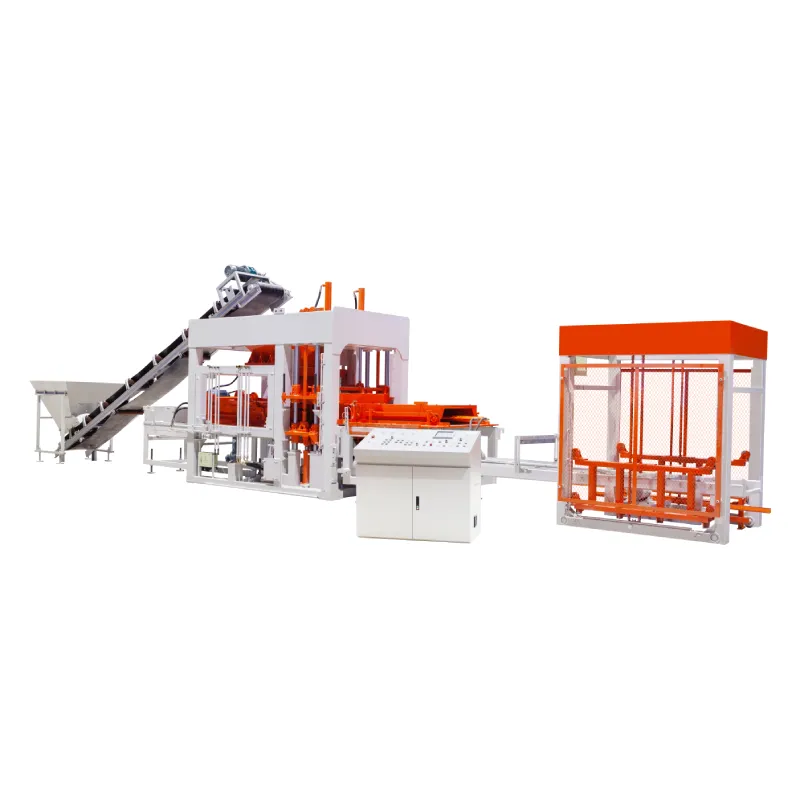
A fully automatic brick making machine, or more accurately, a production line, represents the zenith of block manufacturing technology. Here, human involvement is reduced to supervision and quality control. Every step, from the dosing of raw materials to the final packaging of cured bricks, is handled by an integrated system controlled by a Programmable Logic Controller (PLC).
Imagine a seamless ballet of machinery. Raw materials are fed from silos into a batching plant, which weighs them with digital precision. The mix is then transported to a high-efficiency mixer. From there, the concrete is delivered to the block machine. The machine, using powerful hydraulic pressure and high-frequency vibration, forms the blocks on pallets. These pallets are then automatically moved by a "finger cart" or transfer system to a curing chamber, where they remain for a set period. Once cured, a cubing machine automatically stacks the blocks into neat cubes, which are then wrapped and ready for transport.
The upfront cost of such a system is substantial. You are not just buying a single machine but a complete factory. The benefits, however, are equally immense. Production capacity is maximized, with some lines capable of producing tens of thousands of blocks in a single eight-hour shift. The consistency in block size, shape, and strength is unparalleled, meeting the highest international standards. Labor costs are drastically reduced, a significant factor even in regions with lower wage rates, as it also mitigates issues of labor availability and skill. For large-scale developers or building material suppliers in rapidly growing urban centers like Dubai, Riyadh, or Kuala Lumpur, a fully automatic line is often a necessary investment to meet market demand.
Factor 2: Production Capacity and Mold Versatility
When evaluating how much a brick making machine costs, its production capacity stands out as a primary driver of price. Capacity is not just a number; it is the heartbeat of your manufacturing operation, dictating the volume of your output and your ability to meet project deadlines. The concept is deeply intertwined with the molds the machine uses, as the size and type of the mold determine how many bricks are produced in each cycle.
Output Per Hour: The Core Metric
Production capacity is most commonly measured in blocks per hour or blocks per 8-hour shift. A small, semi-automatic machine like a QT4 model might produce around 4,000 standard hollow blocks (400x200x200 mm) in a day. In contrast, a large, fully automatic QT12-15 machine can churn out over 19,000 of the same blocks in the same timeframe (Hongfa Machinery, n.d.-a). This five-fold increase in output comes from a combination of a larger pallet size, which allows more blocks to be formed in a single press, and a much faster cycle time.
The cycle time—the duration it takes for the machine to complete one full sequence of filling, pressing, and demolding—is a key performance indicator. A machine with a 15-25 second cycle time, like the QT5-15, is significantly more productive than one with a 30-40 second cycle time . The engineering required to achieve faster cycle times without compromising on quality—stronger hydraulic systems, more efficient vibration motors, and robust control systems—contributes directly to a higher machine cost. Therefore, a prospective buyer must perform a careful calculation: what is the required daily output for my business? Buying a machine with insufficient capacity can lead to production bottlenecks and lost opportunities. Conversely, over-investing in a high-capacity machine that sits idle is an inefficient use of capital.
Mold Variety and Quality
The versatility of a brick making machine is defined by its ability to produce different types of blocks. By simply changing the mold, a single machine can be used to manufacture a wide array of products: standard hollow blocks for walls, solid bricks, interlocking pavers for driveways and walkways, curb stones for roads, and even specialized blocks like grass pavers or slope protection blocks.
The cost of the machine is often quoted for the main body alone, with molds being an additional expense. A single mold can cost anywhere from several hundred to a few thousand dollars, depending on its complexity and the quality of the steel used. Molds are subjected to immense pressure and high-frequency vibration, so their durability is paramount. High-quality molds are typically made from carburized steel that has undergone heat treatment to increase its hardness and wear resistance. While they cost more initially, they last much longer and produce more consistent blocks over their lifespan, representing a better long-term investment. When budgeting, it is essential to account for the cost of all the different molds you will need for your product range. The table below illustrates how a single machine's output can vary based on the mold in use.
| Block Type | Typical Size (L x W x H in mm) | Pieces per Mold (on a QT10-15 model) | Approx. Output per 8 Hours |
|---|---|---|---|
| 중공 블록 | 400 x 200 x 200 | 10 | 14,400 – 19,200 |
| 솔리드 브릭 | 240 x 115 x 53 | 48 | 69,120 – 92,160 |
| Interlocking Paver | 225 x 112.5 x 60 | 30 | 43,200 – 57,600 |
| Curb Stone | 1000 x 300 x 150 | 3 | 4,320 – 5,760 |
Data adapted from typical specifications for QT10-15 machines.
Factor 3: Machine Technology—Hydraulic, Static, and Mobile
The underlying technology that powers a block machine is a fundamental aspect of its design, performance, and ultimately, its price. While many machines may look similar from the outside, the mechanics of how they compact concrete into a dense, strong block can differ significantly. Understanding these technological distinctions is key to appreciating the value proposition behind different price points.
QT Series: The Hydraulic Vibration Standard
When you explore the market for Chinese-made block machines, you will frequently encounter the "QT" designation, such as QT4-15, QT6-15, or QT10-15. This series typically refers to machines that employ a combination of hydraulic pressure and mechanical vibration to form blocks. This dual-action method is highly effective and has become a standard for producing high-quality concrete products.
Let's break down how it works. First, a powerful hydraulic system, often operating at pressures of 16 MPa or more, exerts immense downward force on the mold (chinablockmachine.en.made-in-china.com). This initial compression forces the concrete particles closer together, expelling trapped air. Simultaneously, a vibration system, consisting of motors with eccentric weights, creates high-frequency vibrations on the molding table. This vibration acts like a fluidizer, allowing the aggregates to settle into their densest possible arrangement. The synergy between pressure and vibration results in finished blocks that are exceptionally strong, dense, and have a low water absorption rate (Soutsos et al., 2016). The power and sophistication of the hydraulic pump station and the vibration motors are major cost components. A machine with a higher-rated hydraulic system and a more powerful, precisely controlled vibration table will command a higher price, but it will also produce superior quality blocks.
Static Hydraulic Pressing Machines
A distinct category is the static hydraulic block pressing machine. Unlike the QT series, which relies heavily on vibration, these machines prioritize immense static pressure. They are often larger and more robustly built to withstand the colossal forces involved. They use a very powerful hydraulic cylinder to press the concrete mix into the mold, sometimes with pressures exceeding 100 tons.
These machines are particularly well-suited for producing large, high-density products like large paving slabs, artificial stones, or specialized architectural elements. The intense pressure creates a very smooth, fine-finished surface. Because they use less vibration, the operational noise level can be lower. However, the energy consumption is often higher due to the massive hydraulic pump required. The cost for these machines is generally greater than for a standard QT series machine of a similar physical size, reflecting the heavier construction and more powerful hydraulic components. They are a specialized investment for manufacturers focusing on high-end, large-format concrete products.
Mobile and Egg-Laying Machines
At the more affordable end of the spectrum, you will find mobile or "egg-laying" block machines. These are ingeniously simple designs that form blocks directly on a concrete floor, eliminating the need for pallets. The machine is on wheels; it forms a set of blocks, then moves forward to lay the next set, leaving rows of freshly made blocks behind it—much like a hen laying eggs.
Their primary advantage is cost. By doing away with the need for a pallet circulation system, a significant expense is removed. This makes them an attractive option for startups or for setting up temporary production sites directly at a large construction project. However, they come with limitations. They require a large, perfectly flat, and smooth concrete floor to operate on. The quality and compaction of the blocks may not be as high or consistent as those produced by stationary hydraulic machines. The process is also more labor-intensive, as the cured blocks must be collected manually from the floor. For businesses where the initial investment is the most significant hurdle, the egg-laying machine provides a pragmatic entry into block production.
Factor 4: Brand, Origin, and Component Quality
The question of "how much is a brick making machine" is deeply connected to its provenance—where it was made, who made it, and what it is made of. The global market for this machinery is diverse, with manufacturers from China, Germany, Turkey, and India all competing for business. For buyers in Southeast Asia and the Middle East, Chinese manufacturers have become a dominant force, offering a compelling balance of price and performance.
Chinese Manufacturers vs. European/Western Brands
There is a considerable price disparity between machines manufactured in China and those from countries like Germany or Italy. A fully automatic line from a top-tier German brand can easily cost several times that of a comparable line from a reputable Chinese supplier like or Yixin (hongfamach.com; yixinblockmachine.com). This difference is not arbitrary; it reflects variations in labor costs, engineering overhead, and the type of market each brand targets.
European machines are often lauded for their cutting-edge technology, precision engineering, and long operational lifespan. They are typically aimed at mature markets with very high labor costs, where maximizing automation and minimizing downtime are the absolute priorities. However, for many businesses in SEA and the Middle East, the return on investment for such a high-priced machine can be difficult to justify. Chinese manufacturers, on the other hand, have excelled at producing robust, reliable machinery at a much more accessible price point. Over the past two decades, the quality of Chinese industrial machinery has improved dramatically, moving beyond simple imitation to genuine innovation. They offer a pragmatic solution that aligns with the economic realities and operational needs of many developing markets.
The Quality of Components: A Look Inside
A brick making machine is a complex assembly of mechanical, hydraulic, and electrical systems. The quality and brand of these individual components are a reliable indicator of the machine's overall quality and will significantly influence its price. You can think of it like buying a car; two sedans might look similar, but the one with a premium engine and advanced electronics will cost more.
Reputable Chinese manufacturers often highlight their use of internationally recognized components in their marketing materials. It is common to see machines equipped with:
- PLCs (Programmable Logic Controllers): The "brain" of the machine. Brands like Siemens from Germany or Mitsubishi from Japan are frequently used. A Siemens PLC is known for its reliability, robust performance in harsh industrial environments, and global support network, which adds value and peace of mind for the buyer (Siemens, 2024).
- Hydraulic Systems: The "muscle" of the machine. High-quality hydraulic valves and pumps from brands like Yuken (Japan) or Rexroth (Germany) ensure consistent pressure, smooth operation, and a long service life.
- Electrical Components: Contactors, sensors, and switches from brands like Schneider Electric (France) or Omron (Japan) are signs of a quality build (hfblockmachine.com).
When a manufacturer uses these premium, often imported, components, the cost of the machine increases. However, it is an investment in reliability. A machine built with cheaper, generic components might have a lower initial price, but it is more likely to suffer from breakdowns, inconsistent performance, and difficulty in sourcing replacement parts, leading to higher long-term costs.
Factor 5: The Ecosystem of Auxiliary Equipment
A common oversight for first-time buyers is to focus solely on the price of the block forming machine itself. In reality, the machine is just the centerpiece of a larger production ecosystem. To operate effectively, it requires a suite of auxiliary equipment. The cost of these additional items must be factored into your total project budget to avoid unexpected financial strain. The question "how much is a brick making machine" must evolve into "how much is a complete brick production line?"
The Concrete Mixer: Where It All Begins
Before any block can be formed, you need high-quality, homogenously mixed concrete. The concrete mixer is therefore a non-negotiable part of the setup. For small-scale operations, a simple pan mixer might suffice. These are relatively inexpensive and are effective for smaller batches.
For semi-automatic and fully automatic lines, a twin-shaft compulsory mixer is the standard. These powerful machines feature two horizontal shafts with mixing paddles that rotate in opposite directions. This action creates an intense, compulsory mixing motion that ensures every particle of sand, cement, and aggregate is evenly coated with water and cement paste. The result is a high-strength, consistent concrete mix, which is essential for producing quality blocks (Wang & Liu, 2020). The capacity of the mixer, typically measured in liters (e.g., JS500, JS750), must be matched to the consumption rate of the block machine to ensure a continuous production flow. A larger, more powerful twin-shaft mixer is a significant investment, often costing several thousand dollars.
Batching Plant, Cement Silo, and Screw Conveyor
For medium to large-scale production, manual loading of the mixer is impractical and inefficient. A batching plant automates the process of measuring the raw materials. It consists of several aggregate bins (for different sizes of sand and gravel) and weighing hoppers connected to load cells. The PLC a dministrator enters the desired mix formula, and the batching plant automatically weighs the precise amount of each material for every batch.
To complement the batching plant, a cement silo is used to store cement in bulk, protecting it from moisture. A screw conveyor, an enclosed auger, is then used to transfer the cement from the silo to the weighing hopper of the batching plant. This automated system not only saves labor but also dramatically improves the consistency and quality of the final product by ensuring an accurate mix ratio every time. The cost of a batching plant, silo, and conveyor system can be substantial, sometimes approaching the cost of the block machine itself.
Stacker, Cuber, and Pallets
Once the blocks are formed, they need to be handled. In semi-automatic lines, a simple hydraulic stacker might be used. An operator uses the stacker to lift and move layers of blocks, typically 3-5 layers high, to the curing area.
In a fully automatic line, this process is handled by a more sophisticated finger cart or an automatic stacker/cuber. After curing, a cubing machine automatically arranges the blocks into perfectly stacked cubes, often with robotic arms, which can then be strapped and are ready for transport. These advanced handling systems are expensive but are essential for achieving the high throughput of a fully automated operation.
Finally, one must not forget the pallets. Stationary machines form blocks on top of pallets. These can be made of wood, plastic, or composite materials like GMT (Glass Mat Thermoplastics). A single production line requires hundreds, if not thousands, of pallets in constant circulation. While a single pallet may seem inexpensive, the total cost for a full set can add up to a significant amount and must be included in the initial budget.
Factor 6: Calculating the True Landed Cost
The price quoted by the manufacturer in China is often the FOB (Free On Board) price. This price includes the cost of the machine plus the cost of transporting it to the designated port of departure, for example, Qingdao or Shanghai. However, for a buyer in Riyadh, Saudi Arabia, or Manila, Philippines, the FOB price is just the beginning of the financial journey. To understand the true investment, you must calculate the "landed cost," which includes all expenses incurred to get the machine from the factory floor to your production site, fully installed and operational.
Shipping and Logistics to SEA and the Middle East
The first major cost after the FOB price is ocean freight. The cost of shipping a 40-foot container from China to a major port in Southeast Asia (like Singapore, Laem Chabang, or Jakarta) or the Middle East (like Jebel Ali, Dammam, or Jeddah) can vary significantly based on global shipping rates, fuel surcharges, and season. It is essential to get a current quote from a freight forwarder.
Upon arrival at the destination port, you will face a series of additional charges. These include port handling fees (THC – Terminal Handling Charges), customs clearance fees, and import duties or tariffs. The import duty rate varies by country and by the specific classification of the machinery. For example, the Harmonized System (HS) code for a brick making machine is often 8474.80. A buyer should consult their local customs authority or a customs broker to determine the applicable tariff for their country. For instance, some ASEAN countries may have preferential tariff rates for goods imported from China under the ASEAN-China Free Trade Area (ACFTA) agreement (ASEAN, n.d.). After clearing customs, you must arrange for inland transportation from the port to your factory site, which can be a considerable expense, especially if the site is in a remote location.
Installation, Commissioning, and Training
A brick making machine is not a "plug-and-play" device. It requires professional installation and commissioning. Most reputable suppliers offer to send one or two engineers to the buyer's site to oversee the process. The buyer is typically responsible for the engineers' round-trip airfare, visa costs, accommodation, meals, and a daily allowance or salary. This process can take anywhere from one to several weeks, depending on the complexity of the line.
During this time, the engineers will supervise the assembly of the machine, connect the hydraulic and electrical systems, test the machine's functions, and troubleshoot any initial problems. This is a vital service that ensures the machine is set up correctly for optimal performance and longevity.
Furthermore, the engineers will provide training to your local operators. This training is indispensable. They will teach your team how to operate the machine safely, perform daily maintenance routines, change molds, and diagnose common faults. A well-trained team is less likely to make costly mistakes, can perform basic troubleshooting to minimize downtime, and can operate the machine efficiently to maximize output. The cost of this on-site engineering and training service is a necessary investment in the successful launch of your operation.
Factor 7: The Value of After-Sales Support and Warranty
The relationship with your machine supplier should not end once the final payment is made. In fact, what happens after the sale is just as important as the purchase itself. A brick making machine is a piece of heavy industrial equipment that will operate under intense conditions. Wear and tear are inevitable, and occasional breakdowns can occur. The quality of the after-sales support and the terms of the warranty are intangible but highly valuable factors that should influence your purchasing decision.
Spare Parts Availability and Technical Support
Imagine your production line is running at full capacity to meet a crucial deadline, and a key hydraulic valve fails. If your supplier can quickly identify the part and ship a replacement via express air freight, you might be back online in a few days. However, if the supplier is unresponsive, or if the part is a custom component with a long lead time, your entire operation could be paralyzed for weeks, resulting in lost revenue and damaged client relationships.
When evaluating a supplier, inquire about their system for providing spare parts. Do they maintain a stock of common wear parts like seals, sensors, and hydraulic hoses? What is their typical lead time for shipping parts to your region? A supplier with experience exporting to Southeast Asia or the Middle East will likely have established logistics channels to facilitate this process.
Equally important is remote technical support. Many modern machines with PLC systems can be diagnosed remotely. If a problem arises, your operator can connect with the supplier's engineer via video call or a remote desktop connection. The engineer can often diagnose the issue by examining the PLC's error logs and guide your local team through the repair process, saving the time and expense of flying an engineer to your site. A responsive and knowledgeable technical support team is an invaluable asset.
Understanding the Warranty
Almost all new machines come with a warranty, typically for one year. It is important to read the terms of the warranty carefully. What exactly does it cover? Usually, the warranty covers defects in manufacturing and the failure of major components like the main frame, hydraulic station, and PLC under normal operating conditions. It generally does not cover "wear parts"—items that are expected to be replaced periodically through normal use.
Ask the supplier for a clear list of what is considered a wear part. Also, clarify the warranty claim process. If a major component fails, how is the replacement handled? Does the supplier ship the new part immediately? Who covers the shipping cost? Understanding these details upfront can prevent disputes and ensure a smooth resolution if a problem does occur. While a longer warranty period is always desirable, the supplier's reputation for honoring their warranty is even more significant. Seek out reviews or references from other buyers in your region to gauge the supplier's track record in providing after-sales support. A slightly higher initial price from a supplier with a stellar reputation for service is often a wise long-term investment.
자주 묻는 질문
How much does a small brick making machine cost in 2025?
A small, manual brick making machine can be purchased for as little as $1,000 to $10,000. For a small semi-automatic machine, which offers a better balance of output and labor efficiency, you can expect to pay between $15,000 and $25,000 for the main machine.
What is the most affordable type of concrete block machine?
The most affordable options are manual machines and mobile "egg-laying" machines. Egg-laying machines are particularly cost-effective as they do not require pallets, forming the blocks directly onto a concrete floor. This eliminates a significant upfront cost, making them a popular choice for startups.
How do I determine the right production capacity for my needs?
You should analyze your business plan and market demand. Calculate the number of blocks you need to produce daily or weekly to meet your project requirements or sales targets. It is often wise to choose a machine with slightly more capacity than your immediate needs to allow for future growth. A supplier can help you match a machine model to your specific output goals.
Are Chinese brick making machines reliable?
The quality of Chinese machinery has improved significantly. Reputable manufacturers now use high-quality, internationally recognized components like Siemens PLCs and Yuken hydraulic systems, which greatly enhances reliability. For buyers in Southeast Asia and the Middle East, a high-quality concrete block making machine from a good Chinese supplier offers an excellent balance of cost, performance, and durability.
Does the quoted price include shipping and installation?
Typically, no. The price quoted by most manufacturers is the FOB (Free On Board) price, which only covers the cost of the machine and its delivery to the port of departure in China. You must budget separately for ocean freight, customs duties, local transport, installation, and operator training.
What raw materials can be used to make bricks?
A major advantage of modern concrete block machines is their ability to use a wide variety of raw materials. Common materials include crushed stone, sand, cement, fly ash (a byproduct of coal power plants), slag (a byproduct of steel manufacturing), and other industrial wastes. This versatility can help reduce material costs and contribute to more sustainable construction practices.
How long is the typical warranty for a brick machine?
The standard warranty period offered by most manufacturers is one year from the date of shipment or installation. The warranty usually covers manufacturing defects and major components but excludes parts that wear out through normal use, such as seals, filters, and rubber pads.
결론
Determining how much a brick making machine costs is a process of careful evaluation that extends far beyond a simple price tag. The initial investment is shaped by the interplay of automation, production capacity, and technological sophistication. A manual machine offers an accessible entry point, while a fully automatic line is an industrial solution for mass production. For many entrepreneurs in the growing markets of Southeast Asia and the Middle East, the balanced capabilities of a semi-automatic QT series machine present a compelling value proposition.
Beyond the machine itself, a wise investor must account for the complete ecosystem: the essential auxiliary equipment, the complexities of international logistics, and the vital importance of after-sales support. The quality of components, from the PLC that serves as the machine's brain to the hardened steel of the molds, is a direct predictor of long-term reliability and performance. By thoughtfully considering these seven key factors, you can move from a general query about price to a comprehensive understanding of the total investment required, ensuring you select a machine that not only fits your budget but also serves as a robust foundation for your business's future success.
참조
ASEAN. (n.d.). ASEAN-China Free Trade Area. ASEAN | One Vision One Identity One Community. Retrieved from
Hongfa Machinery. (n.d.-a). Block Machine. Retrieved from
Hongfa Machinery. (n.d.-b). QT10-15 full automatic construction tools and equipment concrete block machine hollow brick making machinery. Retrieved from
Qingdao HF Machinery Co., Ltd. (n.d.). Block Machine Full Automatic Block Maker Qt 5-15 Hot Sale. Made-in-China.com. Retrieved from
Quanzhou Yixin Machinery Technology Co., Ltd. (n.d.). QT Series Concrete Block Machine Supplier. YIXIN. Retrieved from
Shandong Hongfa Scientific Industrial and Trading Co., Ltd. (n.d.). Home. Hongfa Machinery. Retrieved from
Siemens. (2024). SIMATIC Controllers. Siemens Global. Retrieved from
Soutsos, M. N., Tang, K., & Millard, S. G. (2016). The use of recycled demolition aggregate in precast concrete products – A review. Construction and Building Materials, 112, 268-277.
Wang, J., & Liu, Y. (2020). Mixing performance of a twin-shaft compulsory concrete mixer. Journal of Building Engineering, 32, 101509.
Yixin Machinery. (n.d.). Yixin Machinery Promotion Most Popular Shaped Paver Block Moulding Machine QT15-15. Retrieved from