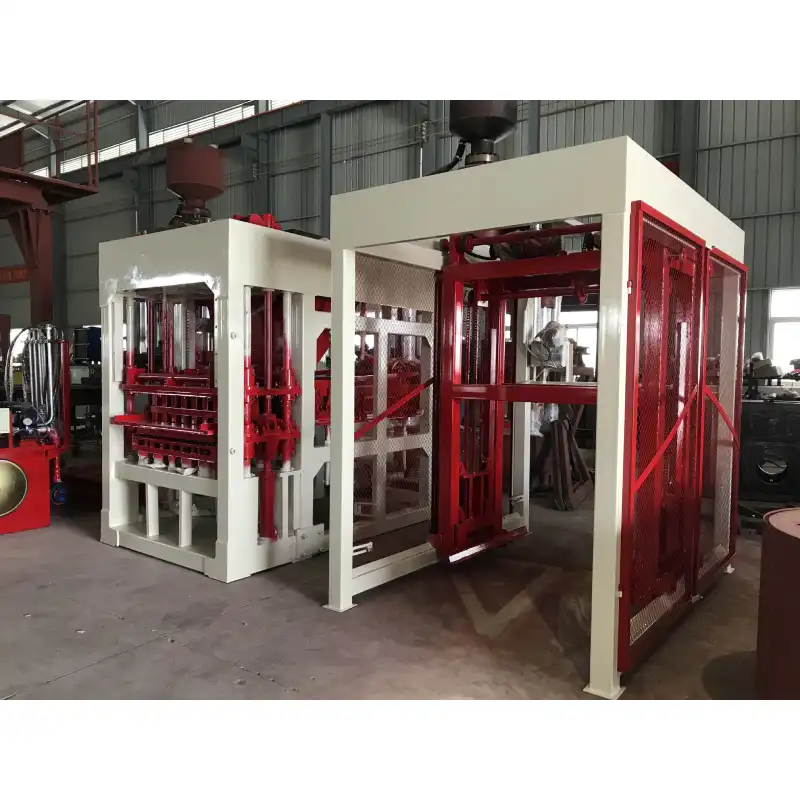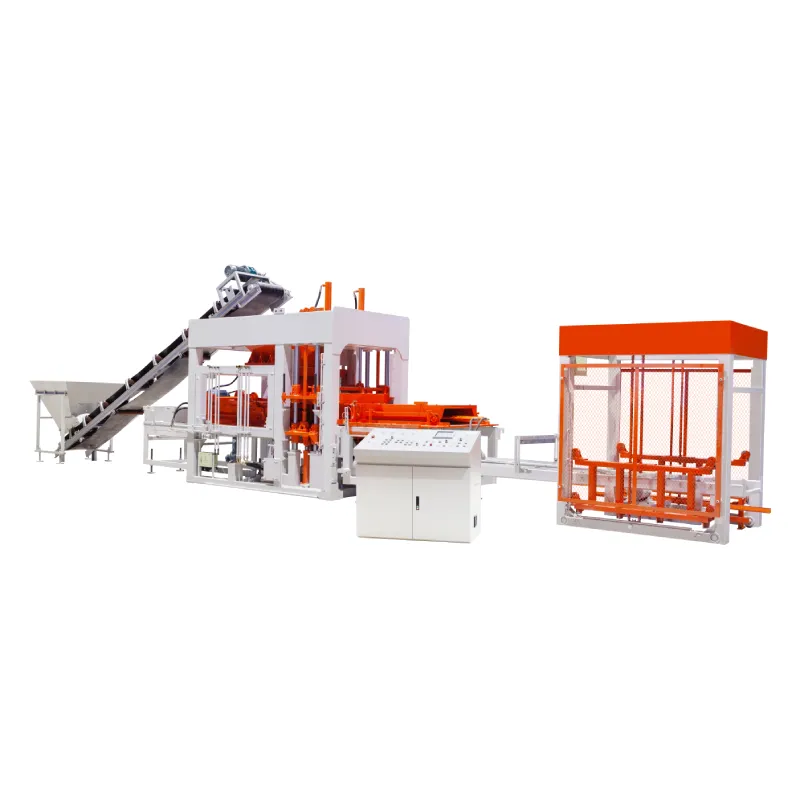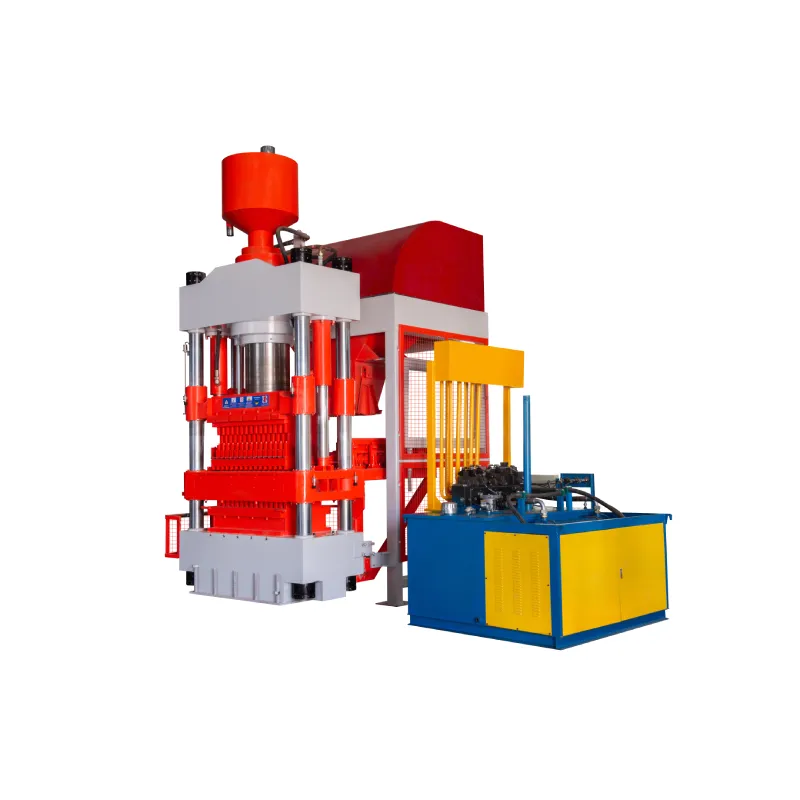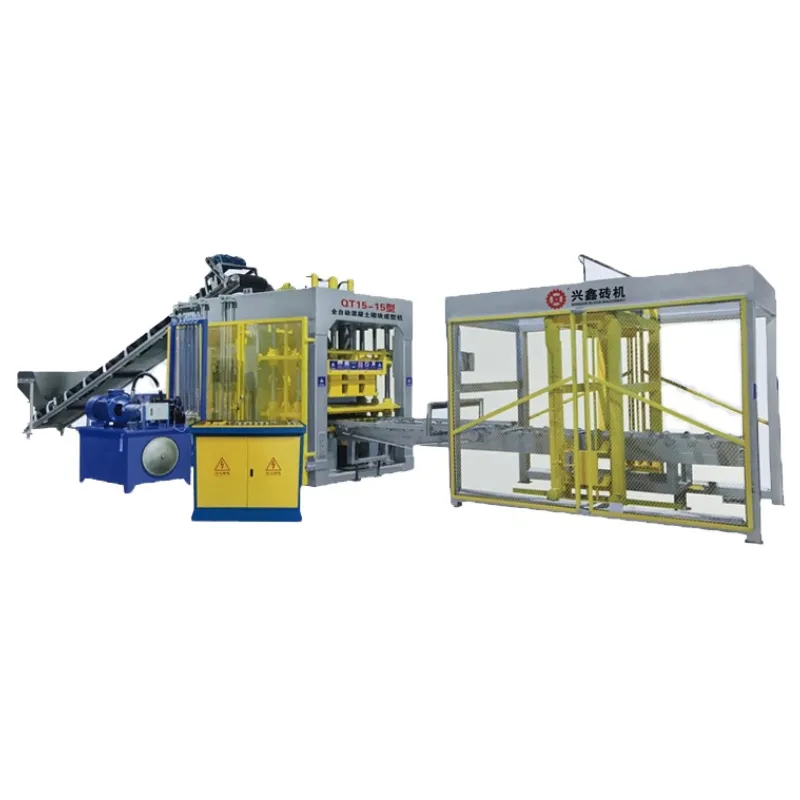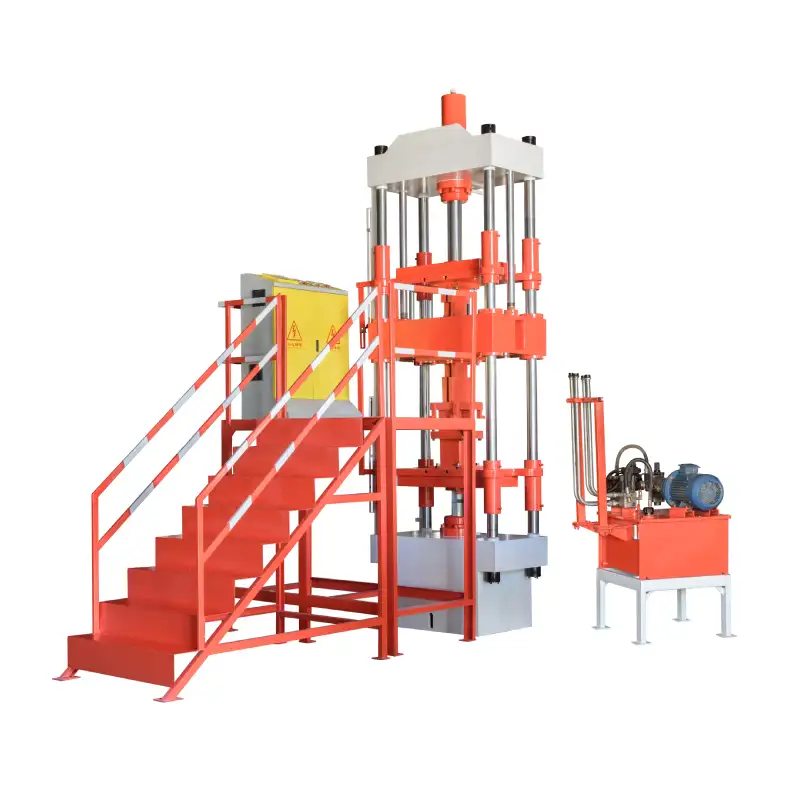

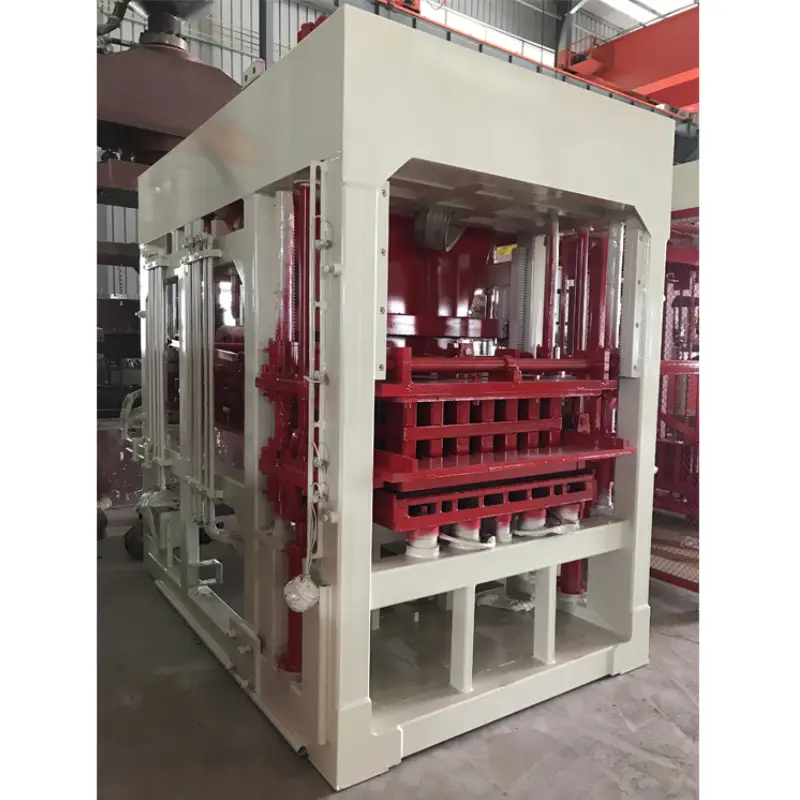
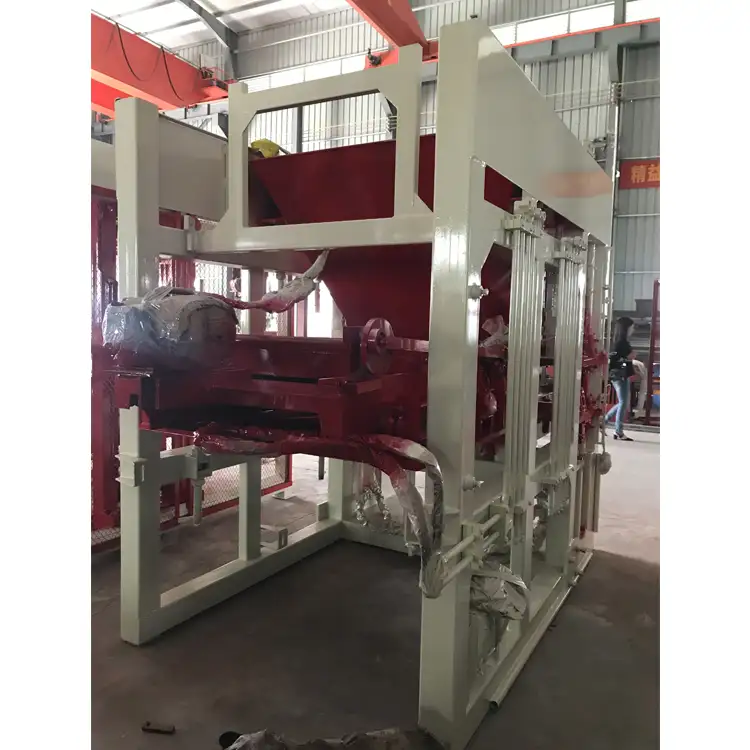
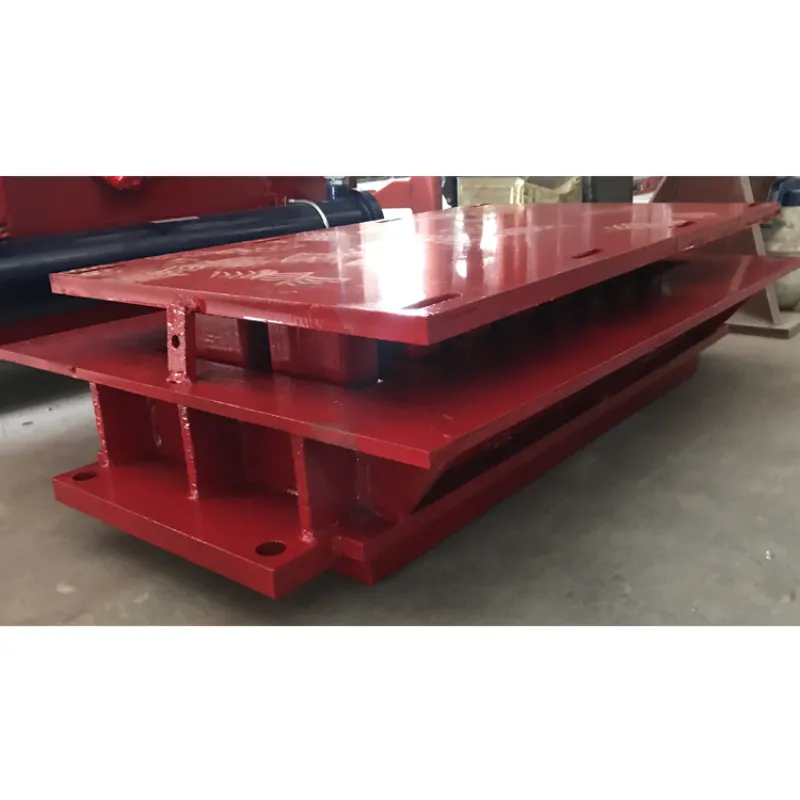
QT4-15 Máquina fabricadora de ladrillos y bloques
Why Kimberly the QT4-15?
The QT4-15 is designed around a different production requirement from larger high-output block machines. Instead of focusing only on maximum pieces per day, it combines compact machine dimensions, moderate installed power, flexible mold configurations and selected industrial components for customers that need dependable production across several concrete product types.Its 26.7 kW total power and 980 × 560 mm pallet size make the QT4-15 a practical choice for projects where production capacity, factory space and operating power all need to be considered together.
Compact Production Footprint
The main machine measures approximately 9450 × 3300 × 2700 mm and weighs about 6,200 kg.
The relatively compact machine configuration helps simplify plant layout planning compared with larger block production systems. The actual factory area should also include space for concrete mixing, material feeding, pallet circulation, fresh block handling and finished-product storage.
Moderate Power Requirement
The QT4-15 has a listed total power of 26.7 kW, making it suitable for production projects where electrical capacity is an important consideration.
When evaluating the complete production line, customers should also calculate the power requirements of the concrete mixer, conveyors, feeding equipment and other auxiliary machines.
Stable Hydraulic Vibration Forming
The QT4-15 uses hydraulic pressing together with vibration to form concrete products. The listed rated pressure is 25 MPa, while the vibration force reaches 68 kN.
This forming method is suitable for different mold configurations and concrete products, allowing the machine to serve more than one production application.
Frequency-Conversion Vibration
The vibration system uses a frequency-conversion motor to adjust vibration performance for different block types. According to the manufacturer's current specifications, this configuration is intended to support consistent product density across different concrete products.
This is particularly useful when one machine is configured for products with different dimensions and density requirements.
Descripción de la máquina bloquera QT4-15
Ventajas de la máquina formadora de bloques de hormigón serie QT de Kimberly Machinery:
- Acerca del armario de control PLC : PLC y botón de SIEMENS; relé de ABB; accesorios de Schneider etc. Además, hay y resistencia de dispassion calor adicional instalado el lado derecho de nuestro PLC para acelerar la dispassion y hace que el tiempo de ciclo más corto.
- Nuestro sistema de estación hidráulica y la válvula solenoide son de la marca Youken que es de Taiwán. Está completamente sellado por lo que no se preocupe fuga de agua y hay una cubierta para limpiar fácilmente.
- Acerca de la caja de vibración y la alimentación de materias primas: utilizamos el motor de conversión de frecuencia ventaja para hacer que la densidad de los diferentes tipos de bloques producidos son agradables.
- Toda la caja de vibración de fundición utilizada no soldada por placas de hierro para hacer nuestra caja de vibración más fuerte y más larga vida útil.
- Más ventajas de nuestras máquinas de bloques por favor no dude en contactar con nosotros, ¡gracias!
Choose the Machine According to Your Product
The QT4-15 is particularly suited to production projects where different concrete products need to be manufactured using corresponding molds.
For example:
- Hollow bricks: 4 pieces per mold
- Ladrillos porosos: 14 pieces per mold
- Ladrillos para adoquines: 14–16 pieces per mold
- Solid bricks: 26–28 pieces per mold
Smaller products generally allow more cavities per mold, while larger hollow blocks require fewer cavities. Therefore, the target product should be confirmed before determining the expected daily production capacity.
Block Products Supported by QT4-15
Hollow Bricks
The QT4-15 can produce 390 × 190 × 190 mm hollow bricks with the corresponding mold configuration. Hollow bricks are commonly used for wall and building construction applications.
Porous Bricks
The machine can be configured for 240 × 115 × 90 mm porous bricks. This configuration provides 14 pieces per mold according to the current production data.
Paver Bricks
For paving applications, the QT4-15 can use a dedicated paver mold. The current data lists 14–16 pieces per mold for 200 × 100 × 60 mm paver bricks.
Solid Bricks
The QT4-15 can also produce solid bricks with a dedicated mold. The listed 238 × 115 × 51 mm configuration produces 26–28 pieces per mold.
Other Mold Configurations
Additional product configurations can be evaluated according to the required block dimensions and mold design.
When requesting a quotation, provide the target product drawing or dimensions whenever possible. This allows the machine and mold configuration to be evaluated more accurately.
Industrial Components
The QT4-15 uses several named electrical and hydraulic components that should be highlighted as part of the machine configuration rather than presented as generic “high-quality components.”
Siemens PLC Control
The PLC control cabinet uses a Siemens PLC and buttons, providing a recognized industrial control platform for the production system.
ABB Relay
ABB relay components are used in the control cabinet configuration.
Schneider Electrical Accessories
The control system also incorporates Schneider electrical accessories according to the manufacturer's current specifications.
Yuken Hydraulic System
The hydraulic station and solenoid valve use Yuken components from Taiwan. The hydraulic station is designed as a sealed system, with a cover that also facilitates cleaning and maintenance.
Cast Vibration Box for Long-Term Use
One of the structural features of the QT4-15 is its whole cast vibration box.
Rather than using a vibration box assembled from welded iron plates, the machine uses a cast structure. The manufacturer states that this construction is intended to provide a stronger vibration assembly and longer service life.
This component deserves specific attention because the vibration box directly participates in the block forming process. Stable vibration is important for concrete compaction and product consistency.
Frequency-Conversion Vibration System
The QT4-15 uses a frequency-conversion motor for the vibration system and raw material feeding system.
The purpose is to allow the vibration performance to be adjusted for different concrete products rather than relying on one fixed vibration setting for every mold.
This configuration is particularly relevant when the same machine is used for:
- Hollow bricks
- Porous bricks
- Paver bricks
- Solid bricks
Different products can have different dimensions, cavity structures and concrete requirements, so vibration settings should be adjusted according to the actual production configuration.
Sistema hidráulico
The hydraulic system provides the main pressing force required during block formation.
The QT4-15 has a listed rated pressure of 25 MPa and uses a Yuken hydraulic station and solenoid valve configuration.
The hydraulic system should be inspected regularly for:
- Hydraulic oil level
- Oil leakage
- Hydraulic hose condition
- Valve operation
- Pressure stability
- Abnormal temperature
- Connection condition
Maintenance intervals should follow the machine manual and actual operating conditions.
PLC Control and Machine Operation
The QT4-15 control system manages the production sequence through the PLC control cabinet.
The control system can be used to coordinate the main machine functions during:
- Material feeding
- Mold filling
- Vibración
- Prensado hidráulico
- Demolding
- Pallet movement
- Cycle completion
Operators should receive training on machine startup, shutdown, control-panel operation, basic parameter adjustment and routine inspection before independent production.
Mold Selection
The mold determines the final product dimensions and the number of pieces produced during each cycle.
Before selecting a QT4-15 mold, confirm:
- Product type
- Product length
- Product width
- Product height
- Number of cavities
- Required production capacity
- Product surface design
- Required strength
- Concrete mix
A customer producing hollow blocks will require a different mold from a customer producing pavers or solid bricks.
If you have a product drawing, send it with your inquiry so the mold configuration can be evaluated together with the machine.
Raw Materials for Concrete Block Production
The QT4-15 can be used with cement-based concrete mixtures. The actual raw materials and mix proportions depend on the target product and local material availability.
Typical materials may include:
- Cement
- Sand
- Crushed stone
- Fly ash
- Suitable additives
- Other approved mineral aggregates
The final mix ratio should be determined through production testing according to the required block strength, density, surface finish and applicable local standards.
QT4-15 Production Line
The QT4-15 can be installed as part of a complete concrete brick and block production line.
A typical production process is:
Raw Material Storage → Batching → Concrete Mixing → Material Feeding → QT4-15 Molding → Pallet Transfer → Curing → Stacking → Packing
A complete project may include:
| Equipment | Función |
|---|---|
| Cubos para áridos | Raw material storage |
| Batching System | Material proportioning |
| Concrete Mixer | Concrete preparation |
| Conveyor / Feeder | Material transfer |
| QT4-15 | Brick and block molding |
| Pallets | Fresh block support |
| Pallet Handling System | Product transfer |
| Curing Area | Block curing |
| Palletizer | Finished product stacking |
| Packing Machine | Product packing |
The final configuration should be selected according to production capacity, product type, factory layout and automation requirements.
Factory Layout and Space Planning
The QT4-15 main machine measures approximately 9450 × 3300 × 2700 mm. The machine weighs approximately 6,200 kg.
However, these dimensions should not be treated as the total factory requirement.
A production facility should also reserve space for:
- Aggregate storage
- Cement storage
- Concrete mixing
- Material feeding
- Machine operation
- Pallet circulation
- Fresh block handling
- Curado
- Finished block storage
- Forklift movement
- Acceso para mantenimiento
For a complete line, the required factory area depends on the selected auxiliary equipment and production process.
Factory Layout Assistance
If you already have a factory drawing, building dimensions or available production area, provide them with your target block size and output requirement.
The production-line configuration can then be planned around the available space.
Electrical Requirements
The QT4-15 has a listed total power of 26.7 kW.
The actual electrical installation should also account for auxiliary equipment, including the concrete mixer, feeding system, conveyors and other machines in the complete line.
Before production, confirm:
- Local voltage
- Frequency
- Three-phase power supply
- Main electrical capacity
- Control cabinet requirements
- Grounding
- Auxiliary equipment power
The final electrical configuration should be confirmed before manufacturing according to the destination market.
Quality and Performance Verification
The machine should be checked against the agreed technical specifications before shipment.
Key verification items can include:
| Artículo | QT4-15 Data |
|---|---|
| Total Power | 26.7 kW |
| Rated Pressure | 25 MPa |
| Fuerza de vibración | 68 kN |
| Duración del ciclo | 15–23 s |
| Tamaño de la paleta | 980 × 560 mm |
| Machine Weight | 6,200 kg |
| Main Machine Size | 9450 × 3300 × 2700 mm |
These values are based on the manufacturer's published QT4-15 technical data.
For customized orders, the final machine configuration and technical parameters should be recorded in the quotation and technical agreement.
Factory Testing
Before shipment, the machine can be checked according to the agreed testing procedure.
Typical inspection items include:
- Machine assembly
- Hydraulic system
- Electrical control system
- PLC operation
- Vibration system
- Mold installation
- Production cycle
- Product molding
- Safety functions
- Packing condition
For a complete production line, auxiliary equipment should also be checked according to the agreed project scope.
Installation and Operator Training
The QT4-15 requires correct installation and commissioning before regular production.
Technical support can cover:
- Installation guidance
- Machine commissioning
- Mold installation
- Control-panel operation
- Production parameter adjustment
- Operator training
- Routine maintenance
- Basic troubleshooting
Operators should understand the machine sequence and safety procedures before starting continuous production.
Mantenimiento
Routine maintenance helps keep the hydraulic, vibration and electrical systems operating consistently.
Daily Inspection
Check:
- Machine cleanliness
- Hydraulic oil level
- Hydraulic leakage
- Mold condition
- Pallet condition
- Electrical connections
- Abnormal noise
- Abnormal vibration
Regular Inspection
Inspect:
- Hydraulic components
- Solenoid valves
- Vibration system
- Motor
- Electrical cabinet
- Mold wear
- Fasteners
- Lubrication points
Maintenance intervals should follow the manufacturer's operating manual.
QT4-15 Applications
The QT4-15 is suitable for block production projects that need several concrete product options while keeping the main machine's installed power and footprint at a moderate level.
Typical applications include:
- Hollow brick production
- Solid brick production
- Paver manufacturing
- Porous brick production
- Building material manufacturing
- Construction projects
- Small and medium block production plants
- Local concrete product businesses
The most suitable configuration depends on the target product and required output.
QT4-15 vs. Higher-Capacity Block Machines
The QT4-15 and larger QT-series machines should not be selected only by model number. The correct machine depends on the required production capacity, product dimensions, available factory space and electrical capacity.
| Consideration | QT4-15 |
|---|---|
| Total Power | 26.7 kW |
| Fuerza de vibración | 68 kN |
| Tamaño de la paleta | 980 × 560 mm |
| Main Machine Weight | 6,200 kg |
| Duración del ciclo | 15–23 s |
| Production Focus | Flexible multi-product production |
| Typical Product Range | Hollow, porous, paver and solid bricks |
The QT4-15 is therefore better positioned around compact production and flexible product selection, while higher-capacity machines should be considered when maximum output is the primary requirement.
¿Por qué elegir Kimberly Machinery?
Kimberly Machinery supplies concrete block making machines, molds and supporting equipment for brick and block production projects.
For the QT4-15, the equipment configuration combines:
- Siemens PLC
- ABB relay
- Schneider electrical accessories
- Yuken hydraulic station
- Frequency-conversion vibration motor
- Cast vibration box
- Hydraulic and vibration molding
These components form the basis of the machine's control, hydraulic and vibration systems.
Beyond the main machine, Kimberly Machinery can also support customers with mold selection and related production equipment.
Talk to our Block Machine Specialist
Frequently Asked Questions
What is the QT4-15 brick block making machine?
The QT4-15 is a hydraulic vibration machine for producing concrete hollow bricks, porous bricks, paver bricks, solid bricks and other molded concrete products with suitable molds.
What is the total power of the QT4-15?
The listed total power is 26.7 kW. The electrical requirement for a complete production line will be higher because auxiliary equipment must also be included.
What is the cycle time?
The listed cycle time is 15–23 seconds. Actual production depends on the mold, concrete mixture and operating conditions.
How many hollow bricks can the QT4-15 produce?
For the listed 390 × 190 × 190 mm hollow brick configuration, the machine produces 4 pieces per mold and has a listed capacity of 5,760–7,680 pieces per 8 hours.
Can the QT4-15 produce paver bricks?
Yes. The current production data lists a 200 × 100 × 60 mm paver brick configuration with 14–16 pieces per mold and an 8-hour output of 18,200–23,100 pieces.
What is the vibration force of the QT4-15?
The listed vibration force is 68 kN.
What PLC does the QT4-15 use?
The machine's control cabinet uses a Siemens PLC. The published configuration also lists ABB relay and Schneider electrical accessories.
What hydraulic system does the machine use?
The hydraulic station and solenoid valve use Yuken components from Taiwan according to the manufacturer's published specifications.
What is special about the vibration box?
The QT4-15 uses a whole cast vibration box rather than a vibration box made by welding iron plates. The manufacturer states that the cast construction is intended to provide greater strength and longer service life.
Can one QT4-15 produce different products?
Yes. Different molds can be used for hollow bricks, porous bricks, pavers, solid bricks and other suitable concrete products.
Does the QT4-15 include molds?
The mold configuration depends on the required product. Different block dimensions and shapes require corresponding molds.
What information should I provide when requesting a quotation?
Provide the following information whenever possible:
- Product type
- Block dimensions
- Target production per hour or day
- Raw material information
- Available factory area
- Local voltage and frequency
- Required automation level
A product drawing is also useful when a customized mold is required.
Can the QT4-15 be integrated into a complete production line?
Yes. The machine can be combined with batching, concrete mixing, feeding, pallet handling, curing, stacking and packing equipment according to the project requirements.
How much factory space is required?
The main machine measures approximately 9450 × 3300 × 2700 mm. Additional space is required for raw materials, mixing, feeding, pallet movement, curing, finished products and maintenance access.