
Ligne de production de blocs de béton

Ligne de production de blocs de béton

Kimberly Machinery provides complete concrete block production line solutions for manufacturers producing hollow blocks, solid bricks, paving blocks, kerbstones, and other concrete products. From batching and mixing to block forming, curing, palletizing, and packing, each stage can be configured around your production requirements.

From Raw Materials to Finished Blocks: Custom Production Systems

A concrete block production line is an integrated system that transforms raw materials into finished concrete products. While the block making machine is the heart of the forming process, a high-efficiency line relies on a seamless workflow—from batching and mixing to pallet handling, curing, palletizing, and final packing.

At Kimberly Machinery, we don't just supply individual machines; we engineer complete, synchronized production systems tailored to your specific operational goals.

What Determines Your Production Line Configuration?

  • Output: Required pieces per hour, shift, or day
  • Products: Block, brick, paver, kerbstone, or other concrete products
  • Molds: Product dimensions, cavity layout, and number of molds required
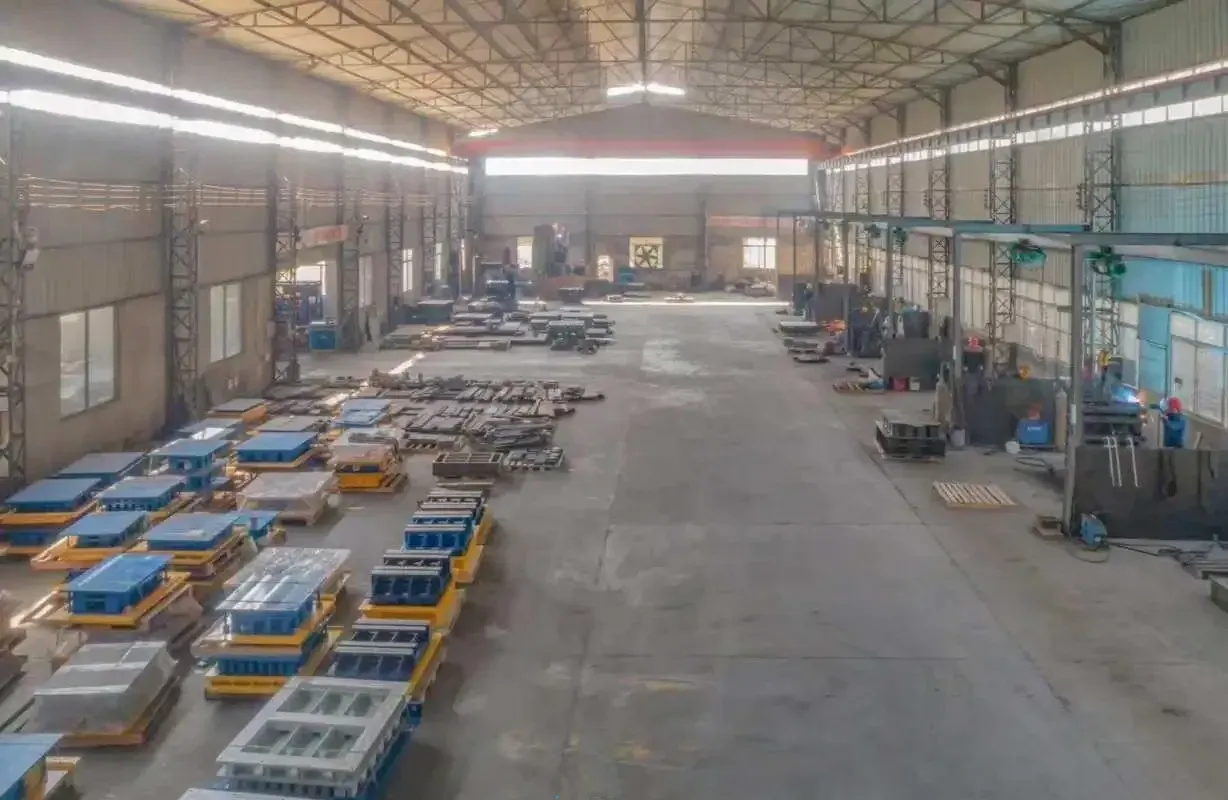
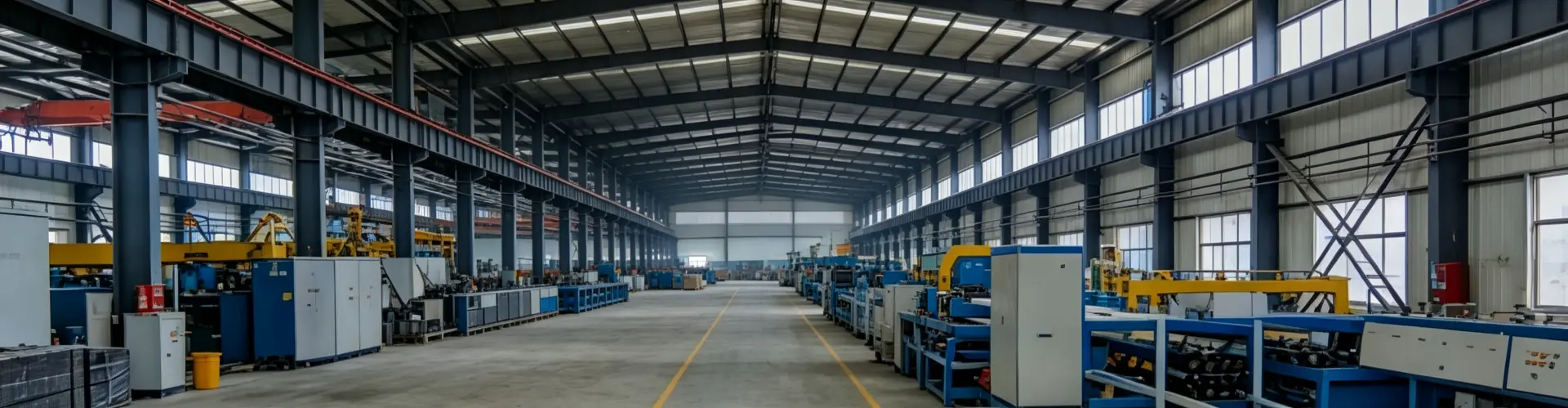
  • Factory: Available production, curing, storage, and material handling space
  • Matériaux : Cement, sand, aggregates, fly ash, slag, or recycled materials
  • Puissance : Local voltage, frequency, and available electrical capacity
  • Travail : Available operators and the level of automation required

Complete Concrete Block Production Process

  1. 1

    Raw Material Storage

    Cement, sand, aggregates and other materials are stored and prepared.

  2. 2

    Batching

    Raw materials are accurately measured according to the required mix ratio.

  3. 3

    Mélange

    Measured materials are mixed with water to produce a uniform concrete mixture.

  4. 4

    Formation de blocs

    Concrete is formed into blocks through controlled vibration and pressure.

  5. 5

    Pallet Transfer

    Freshly formed blocks are transferred on production pallets to curing.

  6. 6

    Durcissement

    Fresh blocks are cured under suitable conditions to develop required strength.

  7. 7

    Palletizing

    Cured blocks are grouped and stacked for storage or transportation.

  8. 8

    Emballage

    Finished blocks are packed and prepared for storage and delivery.

Equipment in a Complete Concrete Block Production Line

A complete line does not have a single fixed equipment list. The configuration should be built around the production process, target output, product range, and desired level of automation.

Equipment Main Function Main Selection Factors
Machine à béton Measures and feeds raw materials Batch capacity, material types, automation
Concrete Mixer Produces a consistent concrete mixture Mixing capacity, cycle time
Machine à fabriquer des blocs de béton Forms concrete products Product type, mold, output, cycle time
Pallet Handling Equipment
Transfers production pallets Pallet size, line layout, automation
Curing Equipment Supports product strength development Curing method, climate, factory space
Palettiseur de blocs Stacks finished products Output, stacking pattern, automation
Packing Machine Packs finished products Product type, packing method, output

Configure the Production Line Around Your Factory

A concrete block production line should be configured around the products you plan to manufacture, the output you need, and the conditions of your factory.

Request a Quote
1

Capacité de production

Production capacity determines the required capacity of batching, mixing, forming, curing, and handling equipment. The line should be sized according to the complete production cycle.

Key Factors
  • Target output per hour or day
  • Product size and weight
  • Products per forming cycle
  • Working hours
  • Allowance for future capacity increases
2

Product Range

The product range affects mold configuration, pallet requirements, handling, curing, and stacking.

Key Factors
  • Product type and dimensions
  • Product weight
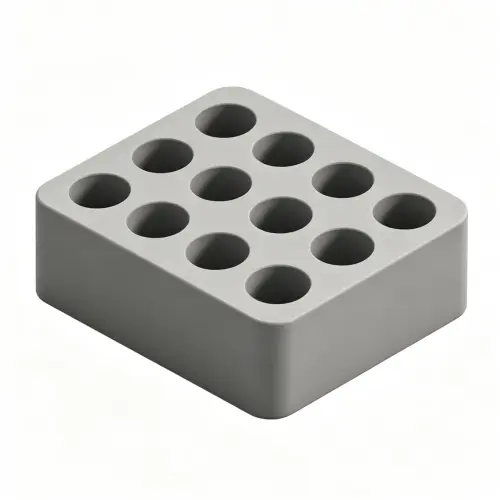
  • Mold size and cavity arrangement
  • Number of molds required
  • Product changeover frequency

A line producing several block types should be checked for machine, mold, pallet, and handling compatibility.

3

Factory Layout

Factory space determines how equipment, materials, pallets, and finished products move through the line.

Key areas include:
  • Raw material storage
  • Batching and mixing
  • Block forming
  • Durcissement
  • Finished-product storage
  • Packing and loading

The layout should also allow space for maintenance, pallet circulation, and future expansion.

4

Matières premières

Available raw materials affect storage, batching, and mixing requirements.

Key Factors
  • Cement, sand, aggregates, fly ash, slag, or other materials
  • Material moisture and particle size
  • Storage capacity
  • Mix ratio
  • Batching accuracy

The batching and mixing system should match the actual materials and concrete mix used at the plant.

5

Power Supply

The complete line requires power for batching, mixing, forming, conveying, pallet handling, palletizing, packing, and control systems.

Before installation, confirm:
  • Voltage and frequency
  • Three-phase power supply
  • Transformer capacity
  • Total line electrical load

Kimberly can provide the required electrical load information for plant preparation.

6

Labor & Automation

Automation affects labor requirements and material handling throughout the production line.

Principales considérations
  • Available labor
  • Production volume
  • Material handling
  • Pallet transfer
  • Stacking
  • Emballage

Higher automation can reduce manual handling, while semi-automatic configurations may be suitable where labor is readily available.

7

Curing Capacity

Curing capacity needs to match production output and curing time. Insufficient curing space can restrict the flow of fresh blocks.

Key Factors
  • Daily production
  • Curing time
  • Curing method
  • Product size
  • Available curing space
  • Pallet quantity
8

Pallet Circulation

Production pallets move between forming, transfer, curing, and palletizing. Their quantity and circulation speed should match the production cycle.

Key Factors
  • Machine cycle time
  • Daily output
  • Curing time
  • Taille de la palette
  • Pallet storage
  • Transfer distance

Adequate pallet circulation helps prevent interruptions at the forming machine.

Production Lines for Different Concrete Products

The products you plan to manufacture will determine the machine, mold, and production setup required for your line. Different block types may also have different requirements for forming, curing, handling, and stacking.

Hollow Concrete Blocks

Hollow Concrete Blocks

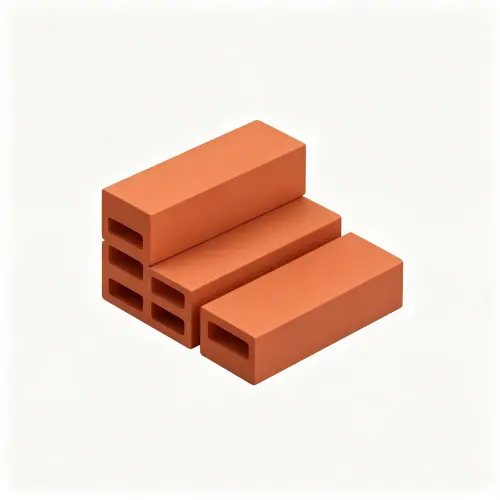
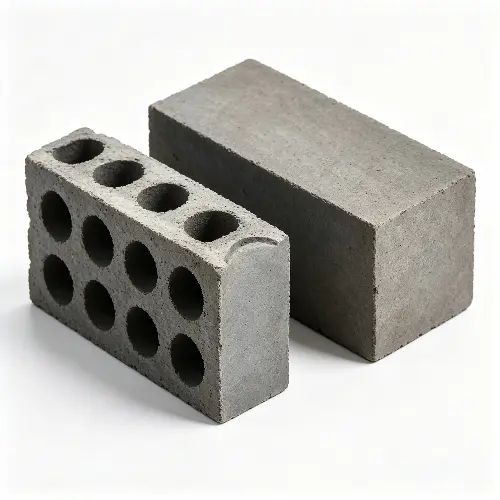
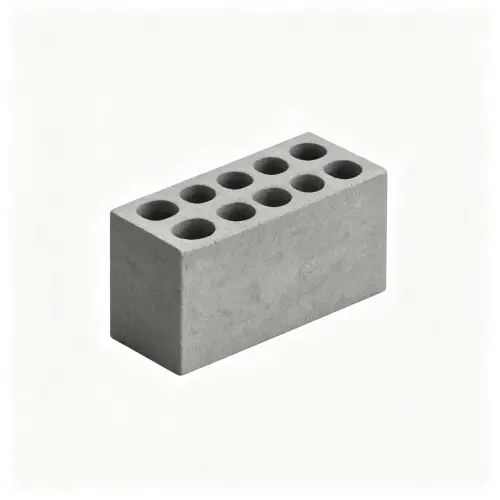
Commonly used for building walls and partitions. Product size, cavity structure and production output are determined by matched machine and mold.

Solid Concrete Bricks

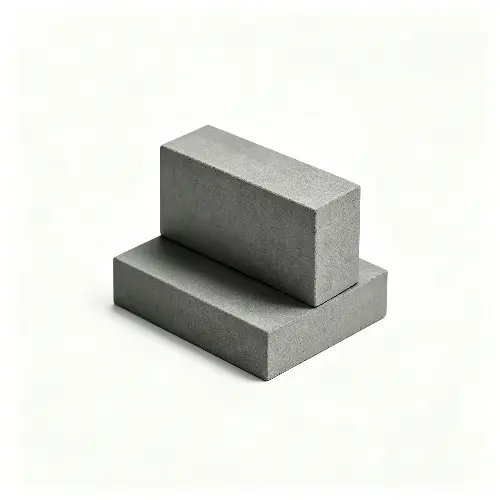
Solid Concrete Bricks

Widely applied in construction and landscaping for solid structural needs. Machine and mold can be customized per brick size and output requirements.

Paving Blocks

Paving Blocks

Ideal for roads, sidewalks, driveways and parking lots. Production focuses on precise dimension, stable surface quality and standardized forming, curing and stacking.

Pavés autobloquants

Pavés autobloquants

Featured with special interlocking edges for tight installation. Custom molds matching machine parameters are required for exclusive shapes.

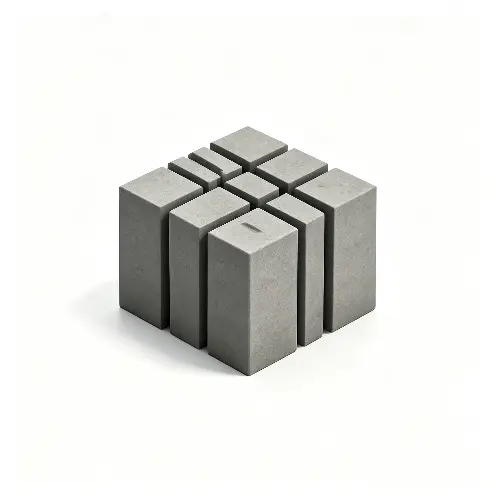
Kerbstones

Kerbstones

Used for road and landscape edge lining. Larger and heavier than ordinary blocks, requiring customized machines, molds, pallets and handling systems.

Permeable Blocks

Permeable Blocks

Designed for water permeability in sponge city and landscape paving. Production needs dedicated materials, molds and optimized curing & handling process.

Choose Your Production Line Based on Output and Automation

Setting up a concrete block manufacturing business requires balancing capital expenditure (CapEx), labor costs, and projected daily output. Kimberly Machinery configures production lines across three scalable tiers to match your budget and market maturity:

Small Production Setup

Target Output: Moderate daily production, ideal for regional suppliers or emerging markets.

Configuration: Semi-automatic block machine, manual or semi-automated pallet handling, and simple stacking systems.

Operational Profile: Lower initial investment, higher reliance on manual labor, requiring a compact factory area (approx. 2,000 — 3,500 m²).

Medium Production Line

Target Output: High-volume commercial construction and infrastructure supply.

Configuration: Fully automatic hydraulic block machine (e.g., QT10-15 / QT12-15), automated batching and mixing, conveyor systems, and mechanical pallet circulation.

Operational Profile: Optimal balance of price and performance, automated curing management, moderate labor requirements, and a mid-sized plant footprint (approx. 4,000 — 7,000 m²).

High-Capacity Production Line

Target Output: Massive industrial output for metropolitan infrastructure, large contractors, and export-grade manufacturing.

Configuration: High-yield machinery (QT18-15 or Heavy-Duty Hydraulic Press Series), automatic finger cars, curing kilns, robotic palletizing, and automated wrapping/packing lines.

Operational Profile: Maximum daily throughput, minimal manual labor, near-zero bottlenecks, and a comprehensive industrial facility (8,000+ m²).

Machines Kimberly

Pourquoi choisir Kimberly Machinery ?

Investing in an industrial production line is a long-term commitment. Global manufacturers partner with Kimberly Machinery for our proven reliability and end-to-end accountability:

  • Advanced Core Technology: High-frequency servo vibration, precision hydraulic controls, and heavy-duty frames engineered for 24/7 continuous operation.
  • Turnkey Project Management: Complete support from pre-investment planning and custom 3D factory layouts to manufacturing, shipping, and on-site commissioning.
  • Wear-Resistant Molds: High-grade alloy steel (quenched and heat-treated 16Mn) built for clean edges and extended operational life.
  • Global Support & Spares: Extensive stock of high-wear components for rapid dispatch, minimizing costly plant downtime.

Questions fréquemment posées

Standard production lines typically require 30 to 60 days of manufacturing and quality testing, depending on the scale of the automation system and custom mold requirements. Shipping times vary based on destination port.

Yes. Kimberly Machinery dispatches experienced mechanical and electrical engineers directly to your job site to supervise equipment installation, line alignment, electrical wiring, and trial test runs. We also conduct hands-on training for your local operators and maintenance staff.

Our systems are fully customizable to match local industrial electrical standards (e.g., 380V/50Hz, 415V/50Hz, or 440V/60Hz, 3-phase). During the initial layout phase, our engineers provide detailed electrical load requirements and transformer specifications needed for your plant.

We provide lifetime technical support via remote diagnostics, video troubleshooting, and direct engineer communication. For spare parts, we keep a comprehensive inventory ready for immediate air or sea freight delivery, ensuring your plant maintains peak operational uptime.

Laissez votre message

×

Laissez votre message